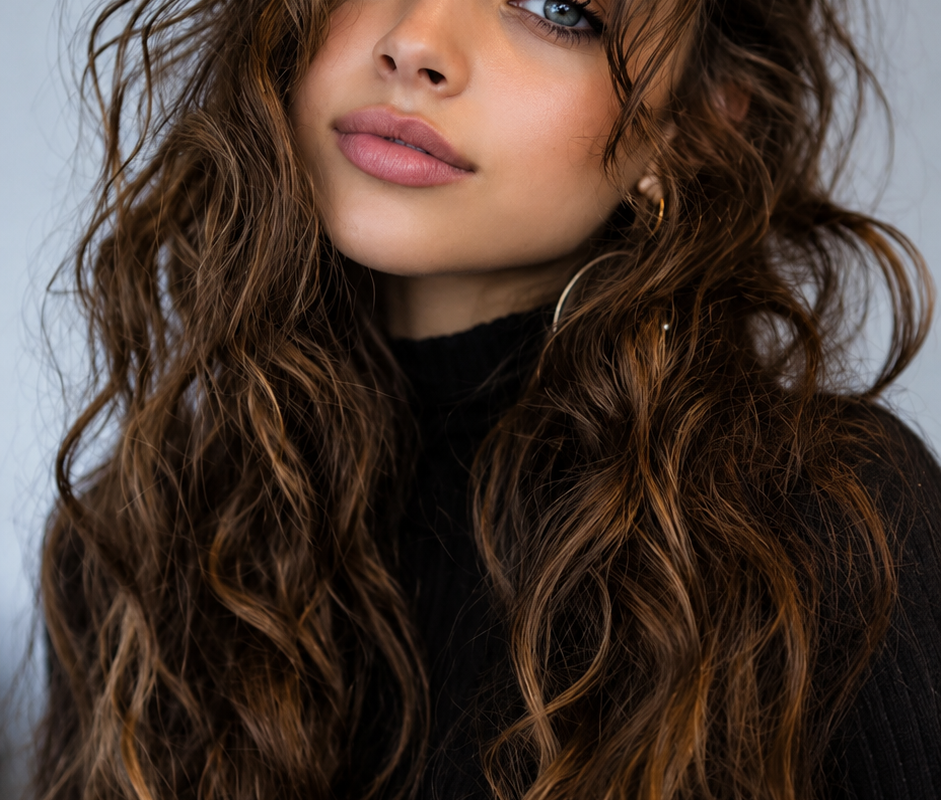
Long curly hair has a personality of its own. It moves, it bounces, and it draws attention without trying. The shag haircut works beautifully with curly texture because the layers do exactly what curls want to do naturally. They fall at different lengths, create volume at the crown, and reduce bulk at the ends.
1. Classic Long Curly Shag with Face-Framing Layers
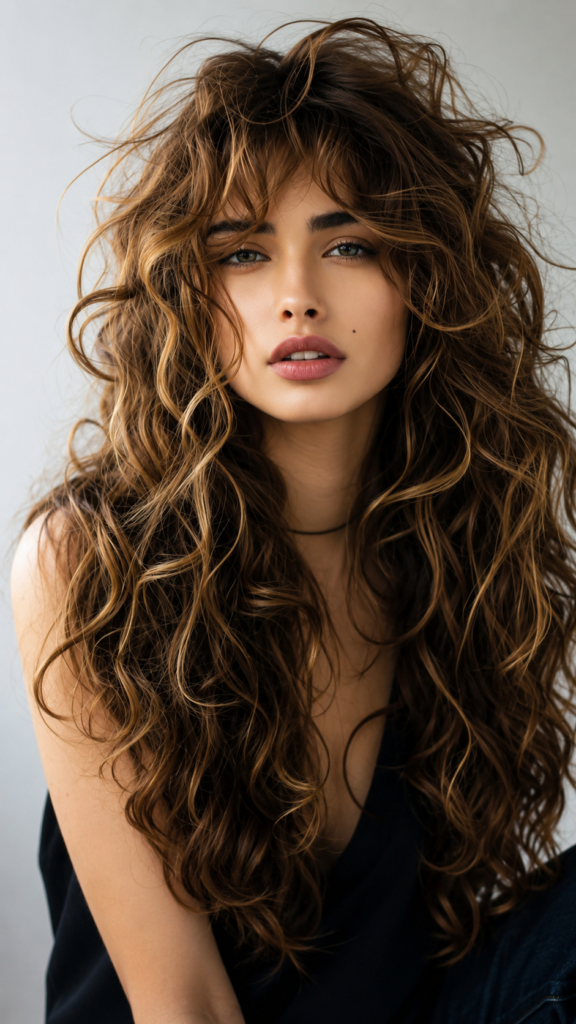
The classic long curly shag is the foundation of this entire style family. It features long layers throughout the hair, with shorter pieces cut around the face to frame the features. The layers start at the cheekbones and blend down through the length. This creates a soft, rounded silhouette that works well on most face shapes.
For oval and round faces, this cut adds definition without making the face look wider. The face-framing layers draw the eye inward and downward, which creates the appearance of length. For square faces, the soft layering around the jaw softens the angles naturally.
Maintenance for this style is straightforward. Use a sulfate-free shampoo to keep the curls hydrated. Apply a leave-in conditioner while the hair is still wet, then scrunch in a curl cream or gel. Diffuse on low heat or let the hair air dry. Refresh second-day curls with a light mist of water and a small amount of curl cream.
2. Curly Shag with Curtain Bangs
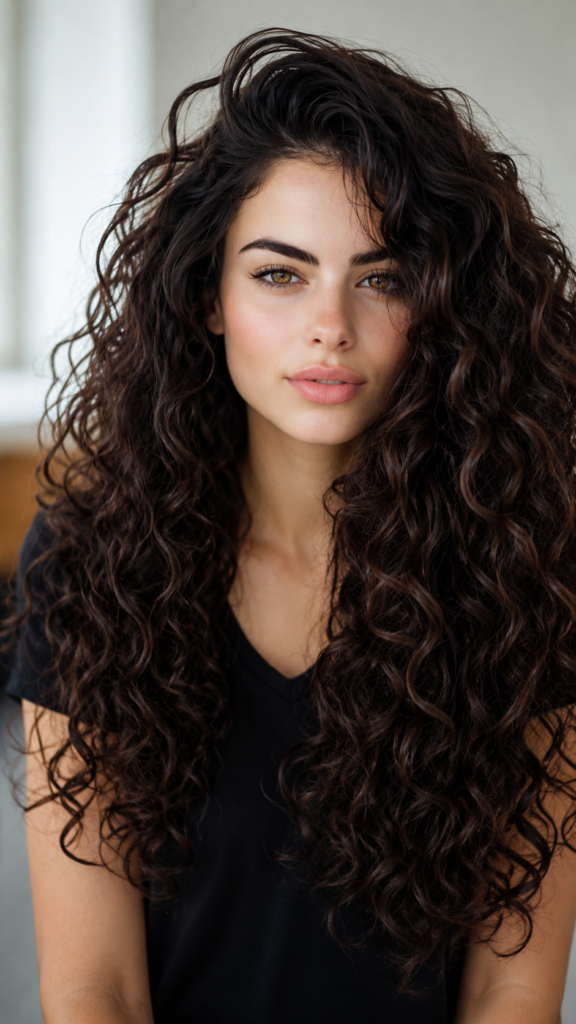
Curtain bangs have become one of the most requested additions to the shag haircut. They part in the middle and sweep outward toward the temples, framing the face like a set of open curtains. On curly hair, they take on a soft, slightly wavy shape that looks relaxed and natural.
This variation works especially well for heart-shaped faces. The bangs draw attention to the center of the forehead and balance out a wider forehead by blending it into the rest of the style. For long faces, curtain bangs add horizontal width at the top, which shortens the overall appearance of the face.
Curtain bangs on curly hair require a little more attention than the rest of the shag. Because curls spring up when they dry, the bangs can end up shorter than expected. A good stylist will cut them longer than they appear when wet. You can train them to fall in the right direction by pinning them while they dry or using a round brush with a diffuser.
3. Voluminous Curly Shag for Thick Hair
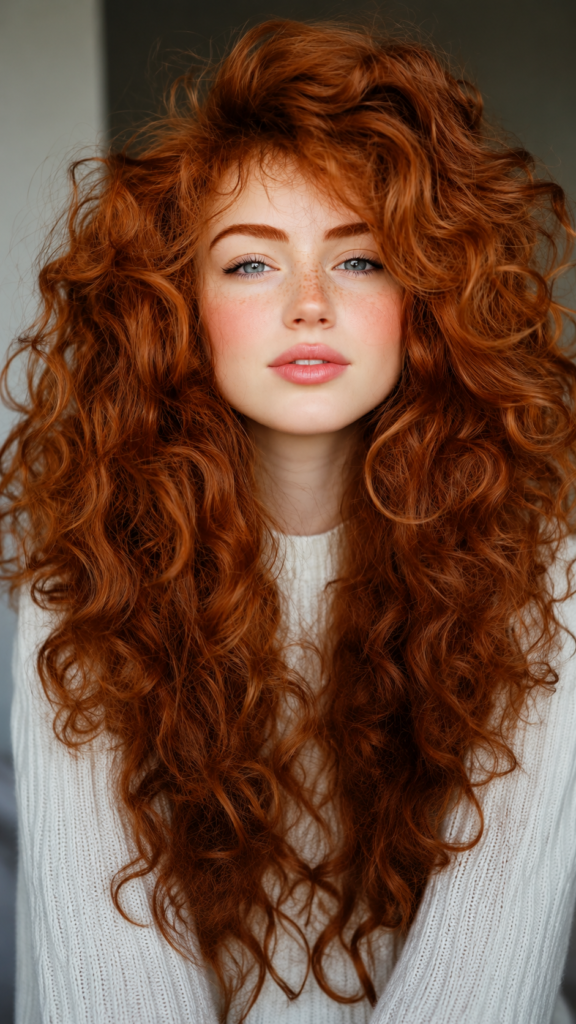
Thick curly hair can feel overwhelming without the right cut. The shag solves this problem by removing weight strategically. Layers are cut throughout the mid-lengths and ends, which allows the hair to move freely instead of sitting in a heavy, dense mass.
This variation of the shag is built for volume. The layers are cut to encourage the curls to spring outward and upward rather than pulling straight down from their own weight. The result is a full, rounded shape that looks intentional and lively.
For people with thick hair, the biggest concern is frizz. When there is too much volume without enough definition, the hair can look puffy rather than full. The solution is moisture. Deep condition once a week and use a heavy curl cream to keep the strands defined. Avoid touching the hair while it dries, as this breaks up the curl pattern and creates frizz.
4. Loose Wave Curly Shag for Fine Hair
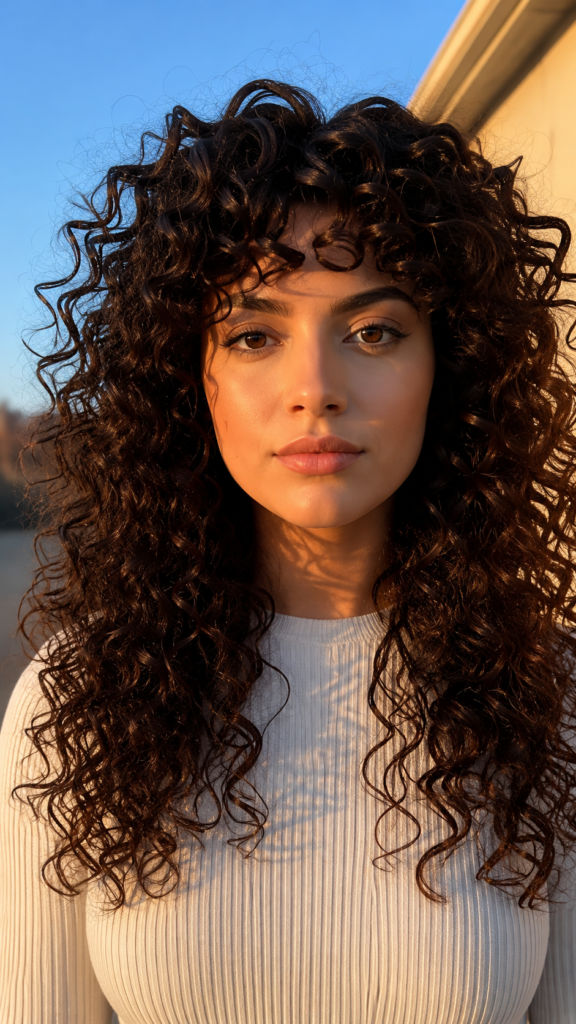
Fine hair with a loose wave pattern benefits enormously from the shag cut. The layers add the appearance of thickness and body without requiring any heat styling. The natural wave pattern does the work, and the layers give it structure.
This variation keeps the layers longer and more subtle than a classic shag. Too many short layers on fine hair can make it look thin at the ends. Instead, the stylist focuses on removing weight from the mid-lengths while keeping the ends full enough to maintain density.
The face-framing pieces are kept soft and blended. Sharp, short layers around the face can look choppy on fine hair. A gradual blend from the shortest layer to the longest creates a more polished result.
For styling, a volumizing mousse applied to wet hair gives fine waves the lift they need. Scrunch the mousse through the hair from the ends upward, then let it air dry or diffuse on low heat. Avoid heavy creams or oils, as these can weigh down fine hair and flatten the wave pattern.
5. Curly Shag with Defined Ringlets
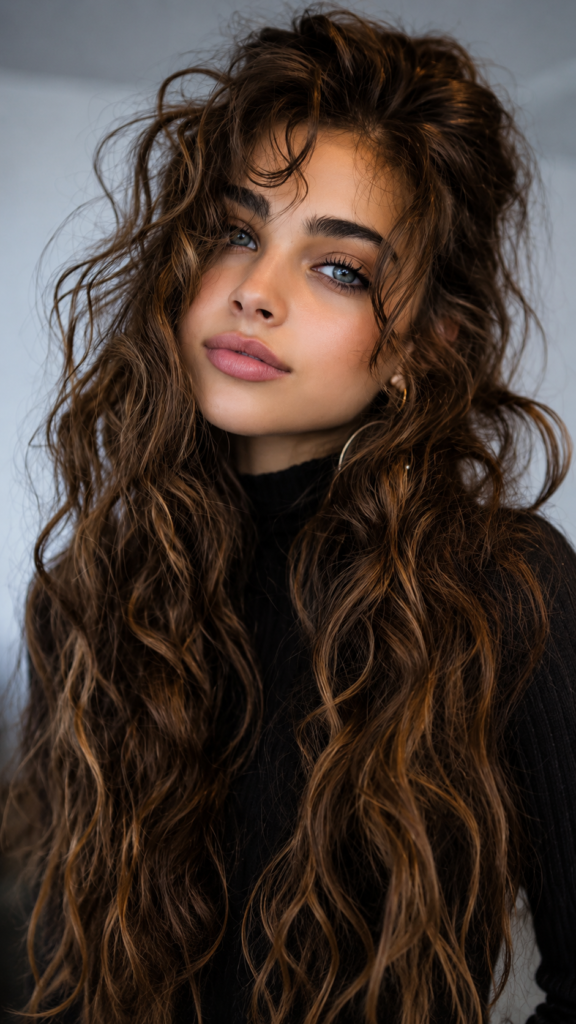
Defined ringlets bring a different energy to the shag cut. Instead of a loose, tousled look, this variation is polished and structured. The curls are tight and uniform, and the layers are cut to let each ringlet hang freely without clumping together.
This style works best for people with naturally tight curl patterns, such as type 3b or 3c curls. The shag layers prevent the hair from forming a pyramid shape, which is a common problem with tight curls at longer lengths. By removing weight from the mid-section, the layers allow the curls to fall in a more even, rounded silhouette.
Moisture is the foundation of defined ringlets. Use a rich conditioner every wash and follow with a curl-defining cream or gel. Apply the product in sections while the hair is soaking wet, smoothing it over each curl from root to tip. This technique, often called the praying hands method, helps coat each strand evenly and encourages definition.
Avoid touching the hair while it dries. Once the curls are set, scrunch out the crunch from any gel with a small amount of oil on your palms. This gives the curls a soft, touchable finish without losing definition.
6. Curly Shag with Undercut Layers
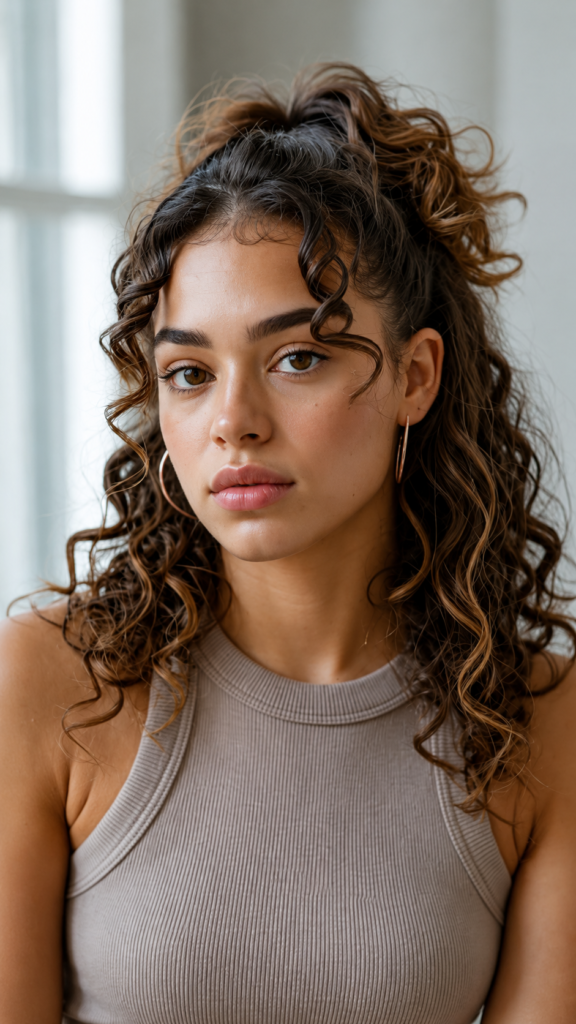
The undercut shag takes the classic style one step further. Hidden layers are cut underneath the top section of hair, removing bulk from the interior while leaving the outer shape intact. This technique is especially useful for very thick or dense curly hair.
From the outside, the style looks like a standard long curly shag. But the hidden layers underneath allow the top curls to sit higher and the overall shape to feel lighter. People with thick hair often describe this cut as transformative because it removes so much weight without changing the visible length.
The undercut layers also add movement. When the hair moves, the lighter underlayers shift independently from the top layers, creating a dynamic, multi-dimensional effect. This is one of the reasons the style photographs so well.
Styling an undercut shag is similar to styling a standard shag. Apply curl cream or gel to wet hair, scrunch, and diffuse. The difference is that the hair dries faster because there is less density. This is a practical benefit for people who find diffusing thick hair to be a long process.
7. Bohemian Curly Shag with Textured Ends
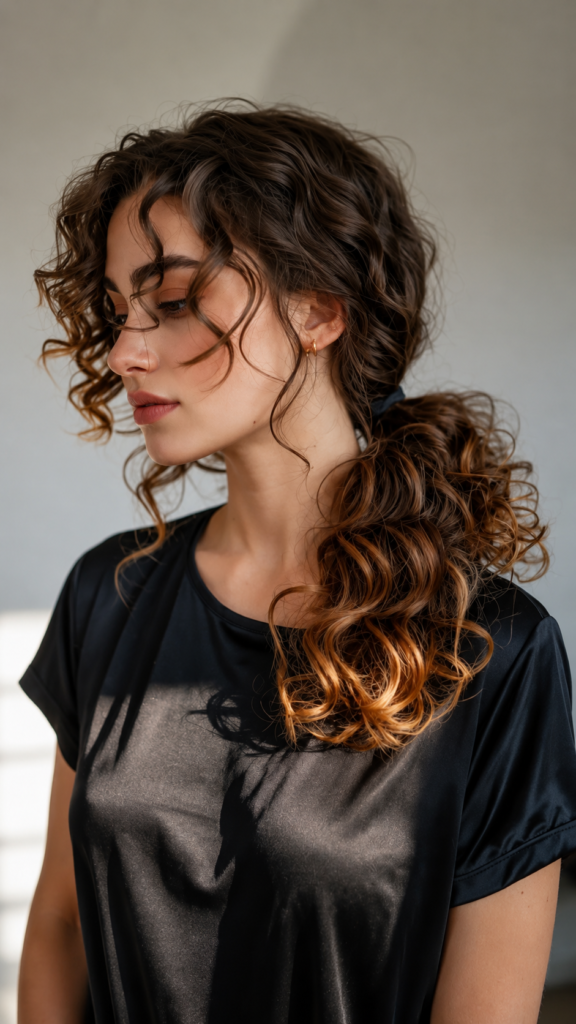
The bohemian curly shag leans into a relaxed, undone aesthetic. The ends are cut with a razor or point-cut technique to create a feathered, textured finish. This removes the hard line at the bottom of the hair and gives the style a free-spirited, effortless look.
This variation is popular among people who want a style that looks good even when it is not freshly styled. The textured ends blend naturally with second or third-day curls. The style does not rely on precision, which makes it forgiving and easy to maintain.
The layers in this cut are cut loosely rather than in precise sections. This creates a more organic shape that varies slightly from person to person depending on their natural curl pattern. No two bohemian shags look exactly alike, which is part of the appeal.
For styling, a sea salt spray applied to damp hair enhances the texture and gives the curls a beachy, relaxed finish. Follow with a light curl cream to add definition without making the style look too polished. Let the hair air dry for the most natural result.
8. Curly Shag with Side-Swept Fringe
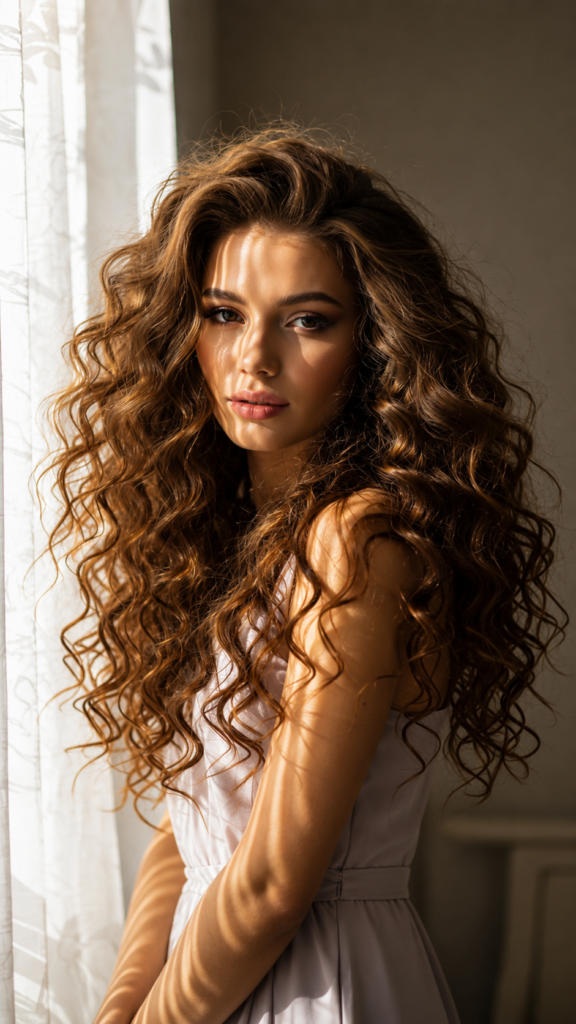
A side-swept fringe adds asymmetry to the curly shag. Instead of falling straight across the forehead or parting in the middle, the fringe sweeps to one side and blends into the face-framing layers. This creates a dynamic, slightly edgy look that still feels soft because of the curly texture.
This variation works well for people who want to add interest to their style without committing to a full fringe. The side-swept fringe is easier to grow out than a straight bang and requires less daily styling. On curly hair, it often falls naturally into place with minimal effort.
For square faces, the side-swept fringe softens the forehead and draws the eye diagonally, which reduces the appearance of sharp angles. For heart-shaped faces, it balances a wider forehead by directing attention to one side rather than across the full width.
Styling the fringe requires a little attention. Apply a small amount of curl cream to the fringe while it is wet and guide it to the side with your fingers. Pin it in place while the rest of the hair dries, then release it once it is fully set. This helps the fringe hold its direction without needing heat tools.
9. Curly Shag for Natural Hair
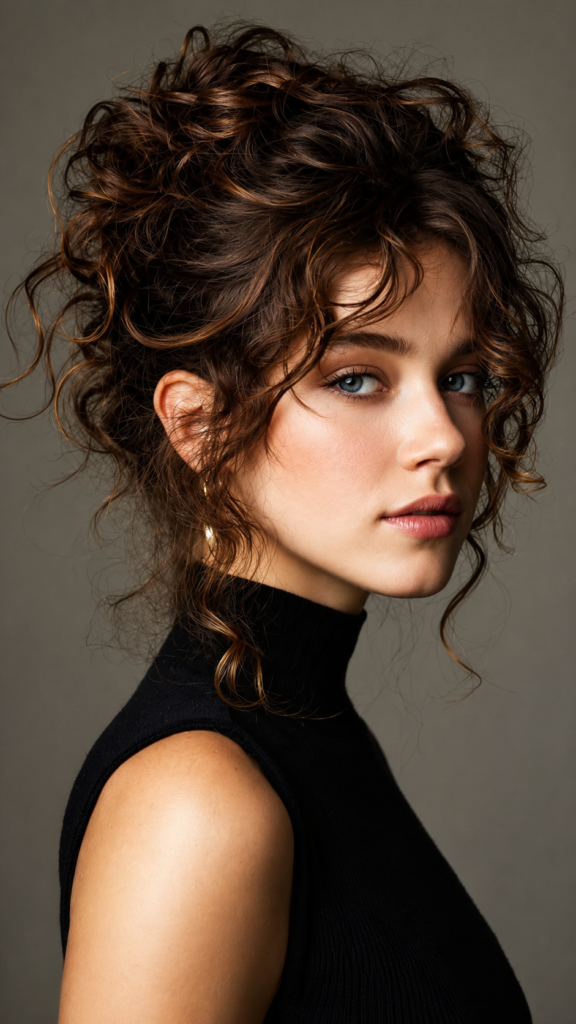
Natural hair textures, including type 4 coils and kinky curls, can absolutely rock the shag cut. The key is working with a stylist who understands natural hair and knows how to cut it dry. Wet cutting on natural hair can lead to unexpected results because the shrinkage changes the length significantly.
The shag on natural hair focuses on creating shape and removing bulk. Layers are cut to allow the coils to expand outward rather than pulling downward. The result is a full, rounded afro-inspired shag that celebrates the natural texture rather than fighting it.
Moisture is non-negotiable for this style. Natural hair tends to be drier than other curl types, so a consistent moisturizing routine is essential. Use a rich leave-in conditioner, a curl cream, and seal with a light oil. The LOC method (liquid, oil, cream) works well for maintaining moisture between wash days.