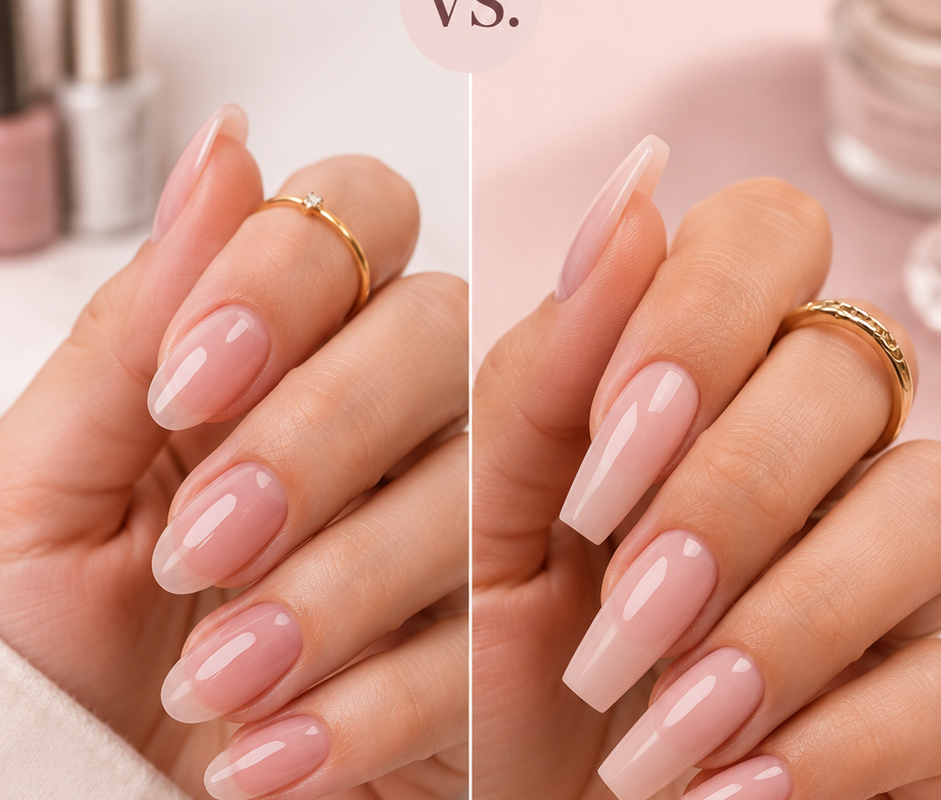
Choosing between gel and acrylic nails can feel overwhelming. Both options deliver long-lasting color and strength, yet they work in completely different ways. Gel nails cure under UV or LED light and offer a glossy finish that feels natural to the touch. Acrylic nails use a powder and liquid mixture that hardens in air, creating a sturdy extension that lasts for weeks.
The right choice depends on your lifestyle, budget, and nail health goals. Some people prefer the flexibility of gel. Others swear by the durability of acrylics. Understanding the 13 key differences between these two popular enhancements will help you make an informed decision that suits your needs. This guide breaks down everything from application time to removal methods, cost comparisons, and maintenance routines. By the end, you’ll know exactly which option works best for your hands.
1. Durability
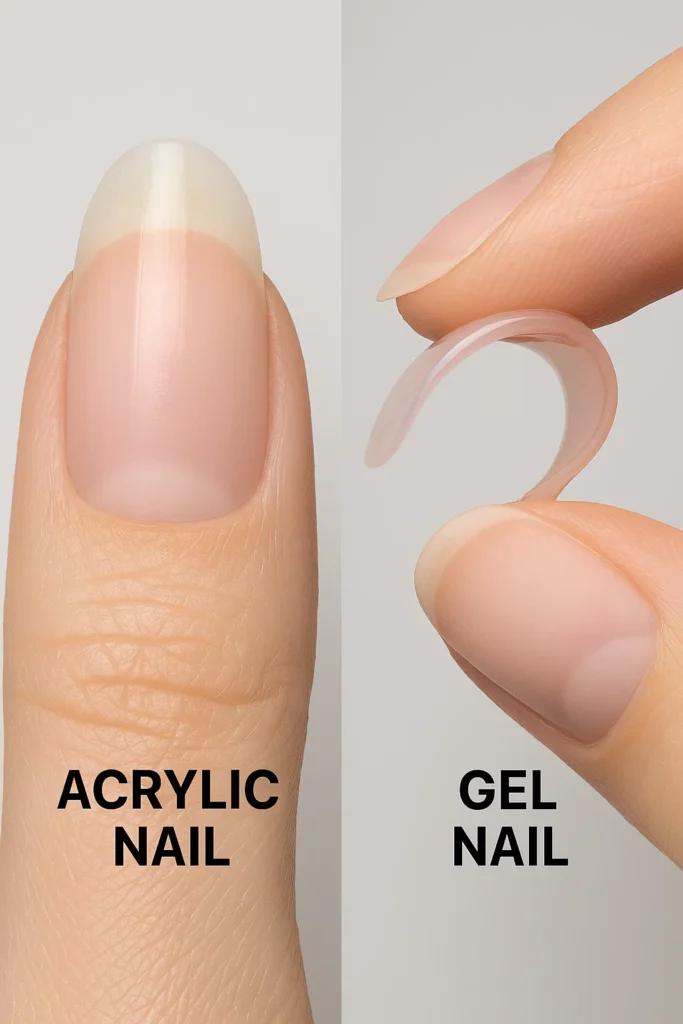
In terms of durability, acrylic nails are often considered the more robust option. The mixture of liquid monomer and powder polymer forms a hard, resilient layer that can withstand a lot of pressure. Acrylic nails are less prone to damage and are ideal for people with weak nails or those who use their hands frequently.
Gel nails, though durable, are generally more flexible. This flexibility can make them less prone to cracking compared to acrylic nails but also means that gel nails are more likely to experience damage, such as chipping or breaking under strain.
2. Appearance
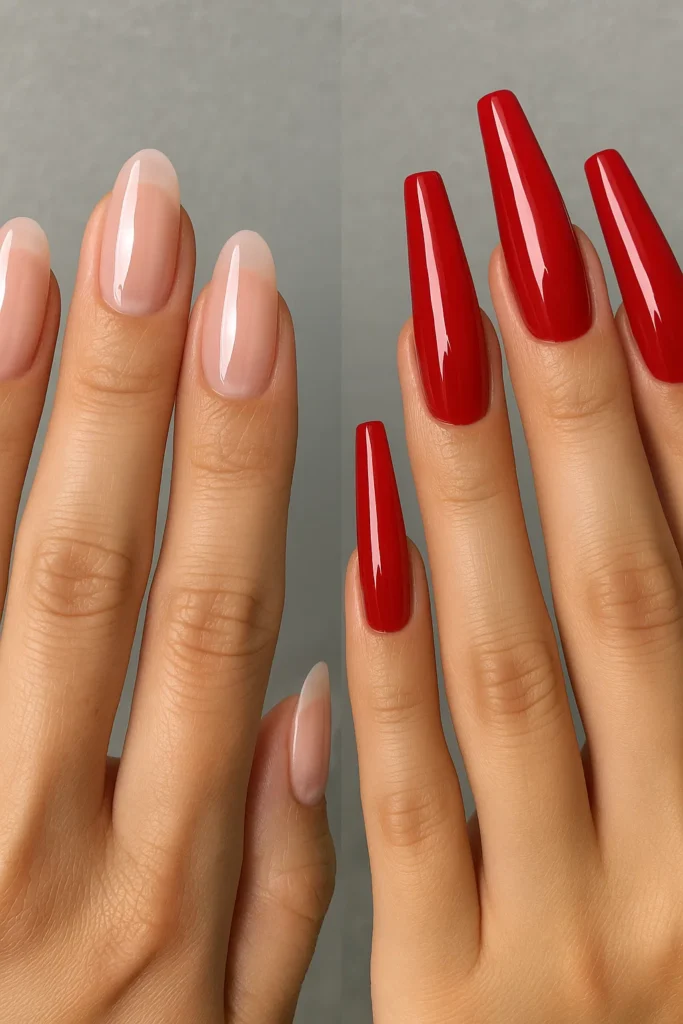
When it comes to appearance, gel nails are often preferred by those who want a natural look. The gel has a smooth, glossy finish and mimics the appearance of natural nails more effectively than acrylic nails. It also tends to be thinner, providing a more subtle and less bulky appearance.
Acrylic nails, while still beautiful, tend to have a thicker, more artificial appearance. They offer more options for custom length and dramatic shapes but may not have the same shiny, smooth finish as gel nails. Acrylic nails are more suited for people who want to make a bold statement or need to add extra length to their nails.
3. Application Process
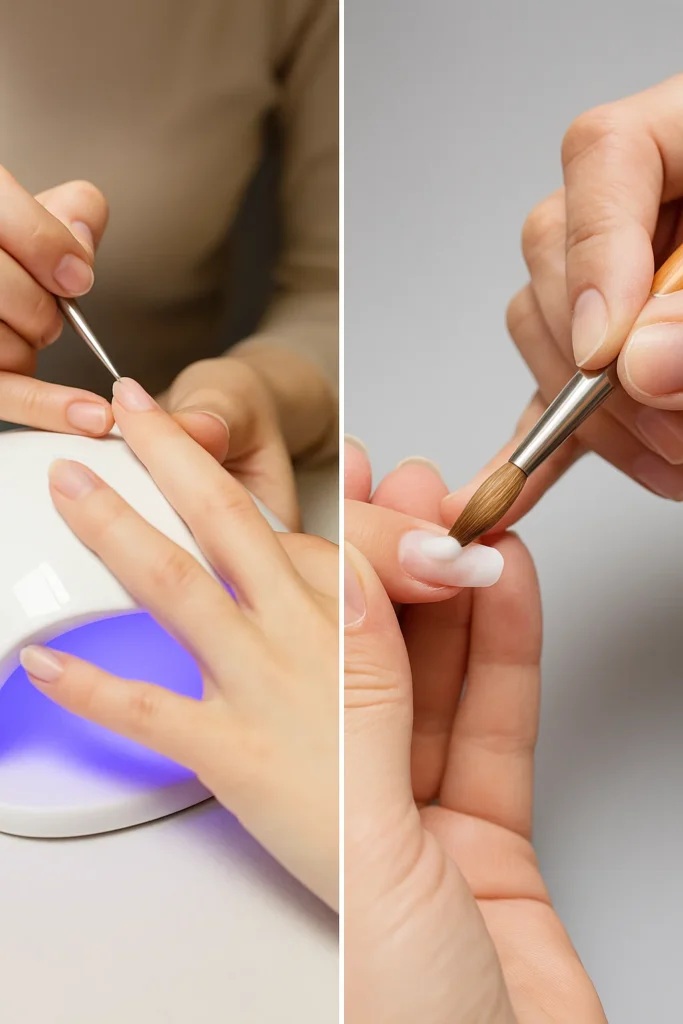
The application process for both gel and acrylic nails requires precision, but they differ in their approach:
-
Gel Nails: The process begins by applying a base coat of gel, followed by a few layers of gel. Each layer is cured under UV or LED light for about 30-60 seconds. The curing process helps the gel harden, and each layer needs to be exposed to the light before proceeding to the next one.
-
Acrylic Nails: Acrylic nails are created by mixing a liquid monomer and powder polymer. The technician applies the mixture directly onto the natural nail, sculpting it into the desired shape. Unlike gel nails, acrylics don’t require UV light for curing, as the mixture hardens in the open air.
Both processes can take anywhere from 30 minutes to an hour, depending on the complexity of the design. However, the acrylic application tends to be a bit more time-consuming because it requires more shaping and filing.
4. Removal Process
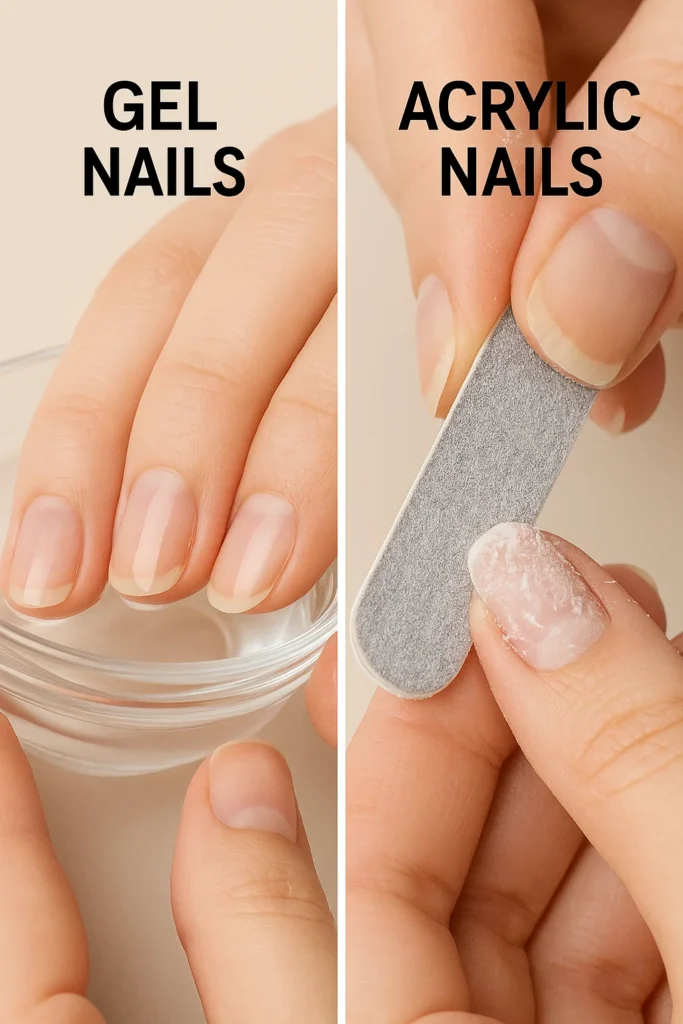
The removal process for gel and acrylic nails is another key area of difference.
-
Gel Nails: Removal is generally easier and less harsh on the natural nail. Gel nails can be soaked off using a special gel remover solution. After soaking, any leftover residue is gently scraped away. This method is less damaging and more gentle on the natural nails compared to acrylics.
-
Acrylic Nails: Acrylics are typically removed by soaking in acetone for 15-20 minutes. Once the nails have softened, the acrylic can be scraped off. However, the removal process for acrylic nails often involves filing to remove the bulk of the material, which can be harsh on natural nails if not done carefully.
5. Cost
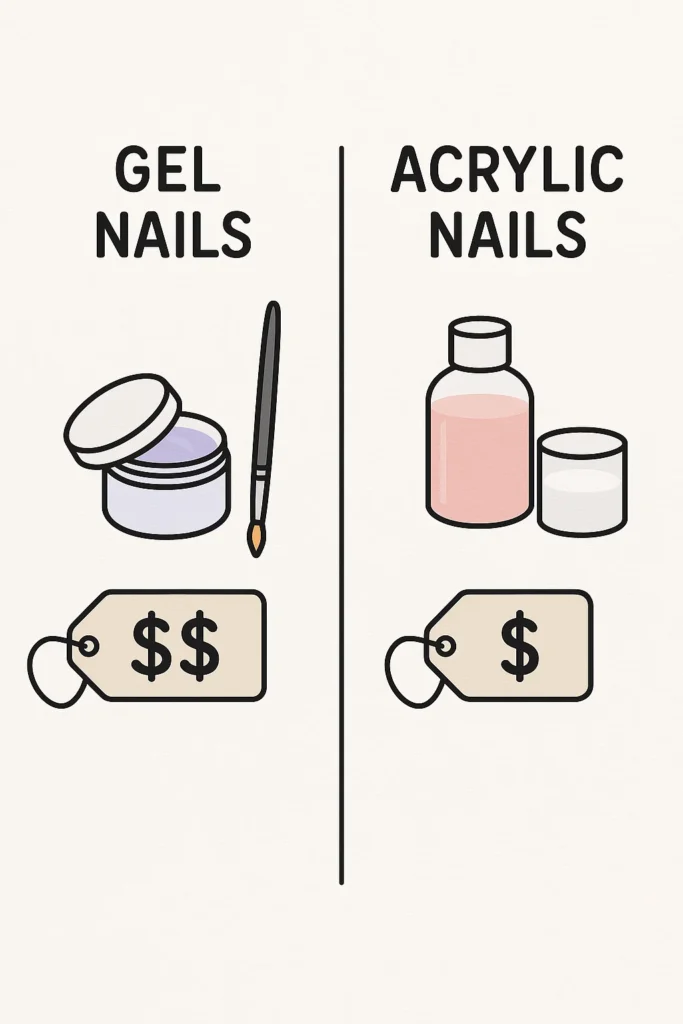
While the exact cost of both options depends on location and the nail technician, gel nails tend to be more expensive than acrylic nails. Gel nails require specialized equipment, such as UV or LED lamps to cure the gel, and the materials used can be pricier.
Acrylic nails are generally more affordable because the materials (monomer and polymer powder) are cheaper, and no special equipment is needed to cure the nails. Acrylic nails are usually the go-to choice for people on a budget.
6. Maintenance
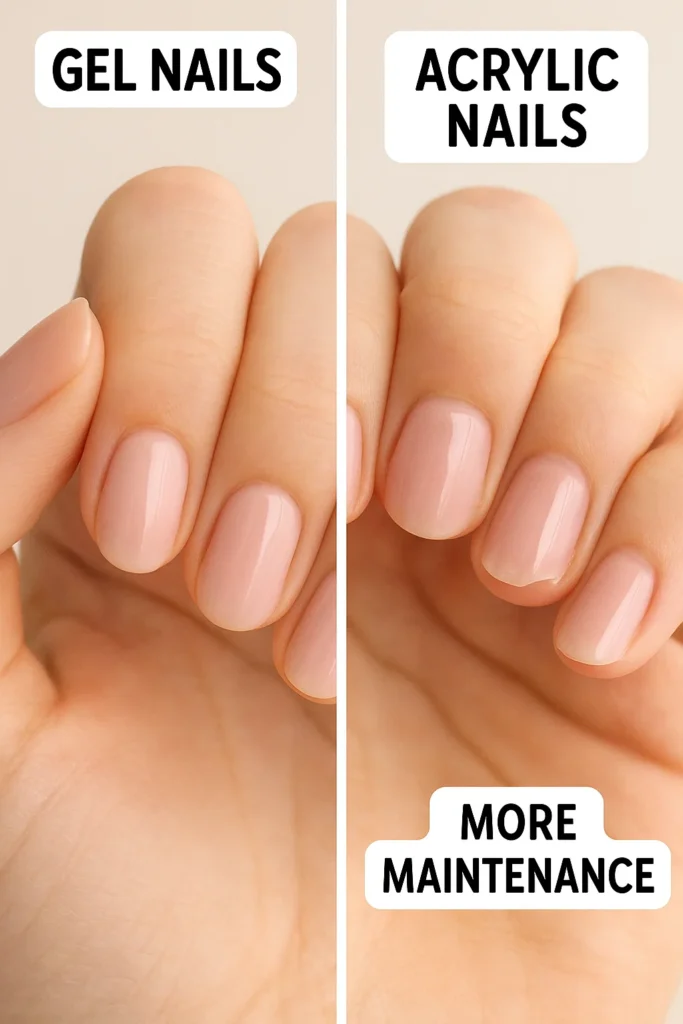
Both gel nails and acrylic nails require regular maintenance, but gel nails are generally easier to maintain. They are less prone to chipping and lifting, meaning they stay looking fresh for longer. With gel nails, you might only need a refill every 3-4 weeks, depending on how fast your nails grow.
Acrylic nails require more frequent maintenance because they are more likely to chip or lift over time. Acrylic nails will often need refills every 2-3 weeks, and you may need to touch up the edges and refill the gaps as your natural nails grow.
7. Flexibility and Comfort
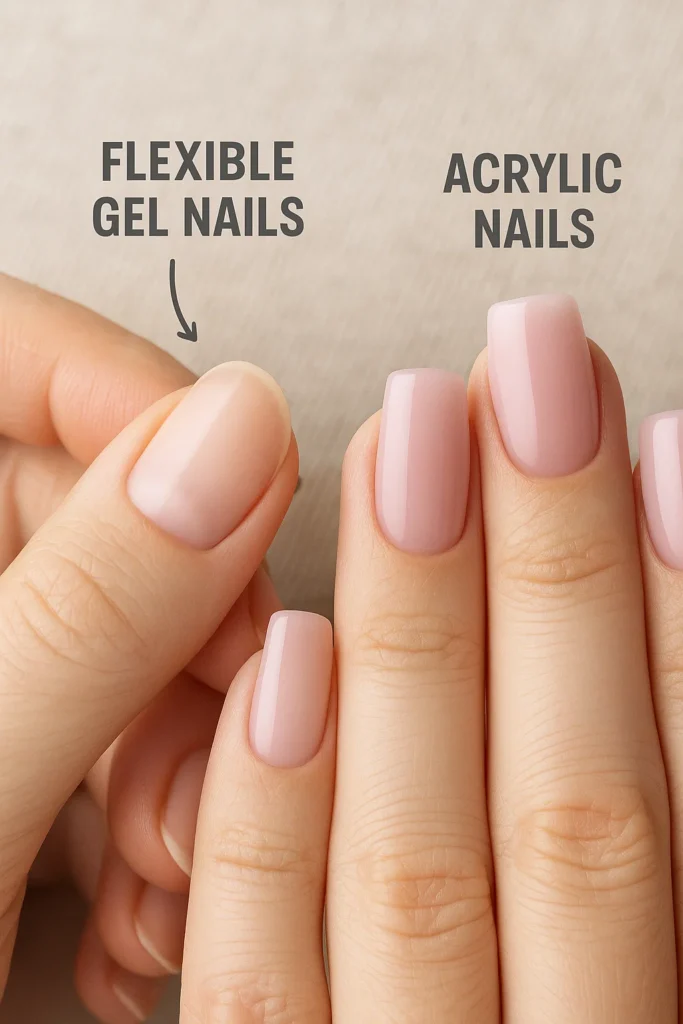
One of the key selling points of gel nails is their flexibility. The gel is soft and bendable, providing a more natural feel on your nails. It moves with your natural nails, making it feel as though you’re wearing nothing at all.
In contrast, acrylic nails are stiff and can feel bulky. This can take some getting used to, especially if you’ve never had artificial nails before. Acrylic nails can be a bit uncomfortable for the first few days after application because of their rigid structure.
8. Strength
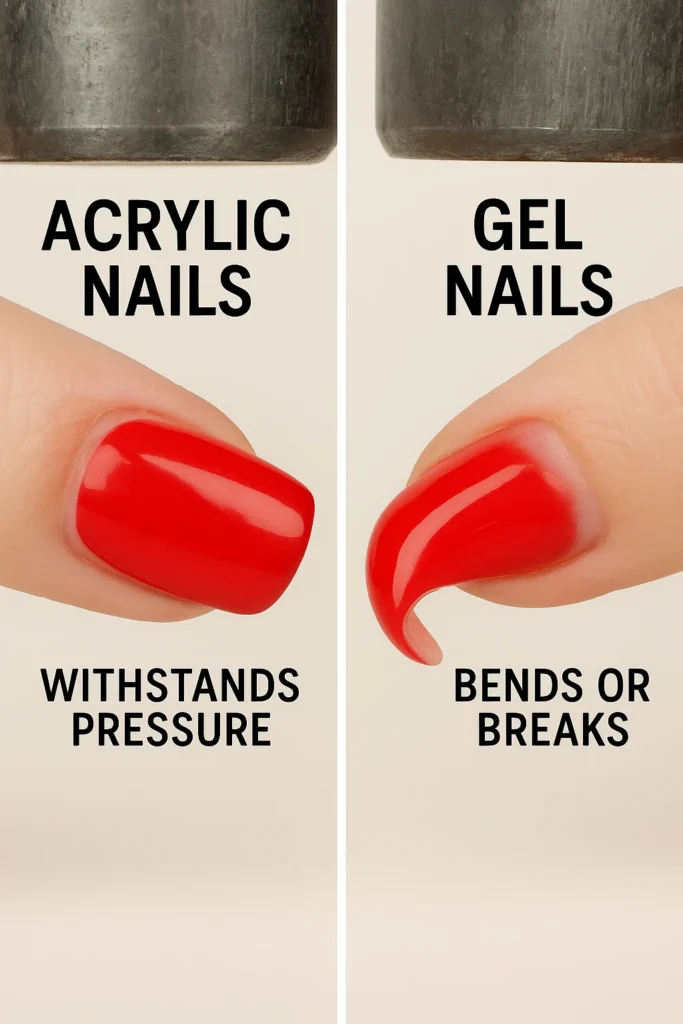
While gel nails are durable and flexible, acrylic nails are much stronger overall. The material used for acrylic nails provides a sturdier structure, making them ideal for people who need long-lasting wear and strength. Acrylic nails are especially useful for individuals with weak nails or those who want to add significant length.
Gel nails, while flexible and durable in their own right, can sometimes feel softer and more prone to damage, such as cracking or chipping under heavy use.
9. Environmental Impact
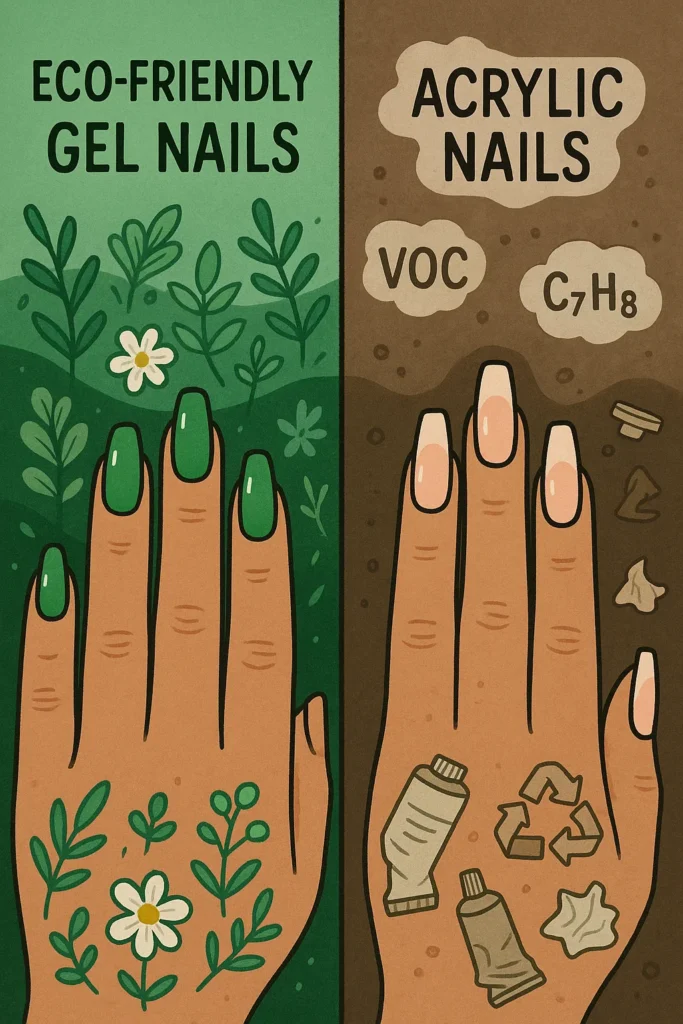
Both gel and acrylic nails have an environmental impact. Acrylic nails tend to involve more toxic chemicals in their formulation, including formaldehyde and toluene. These chemicals are harmful both to your health and the environment.
Gel nails, on the other hand, are considered to be less harmful in terms of chemicals. However, the use of UV lamps for curing can contribute to energy consumption, which is another environmental consideration. While gel nails are not completely environmentally friendly, they do tend to be less damaging than acrylic nails.
10. Health Considerations
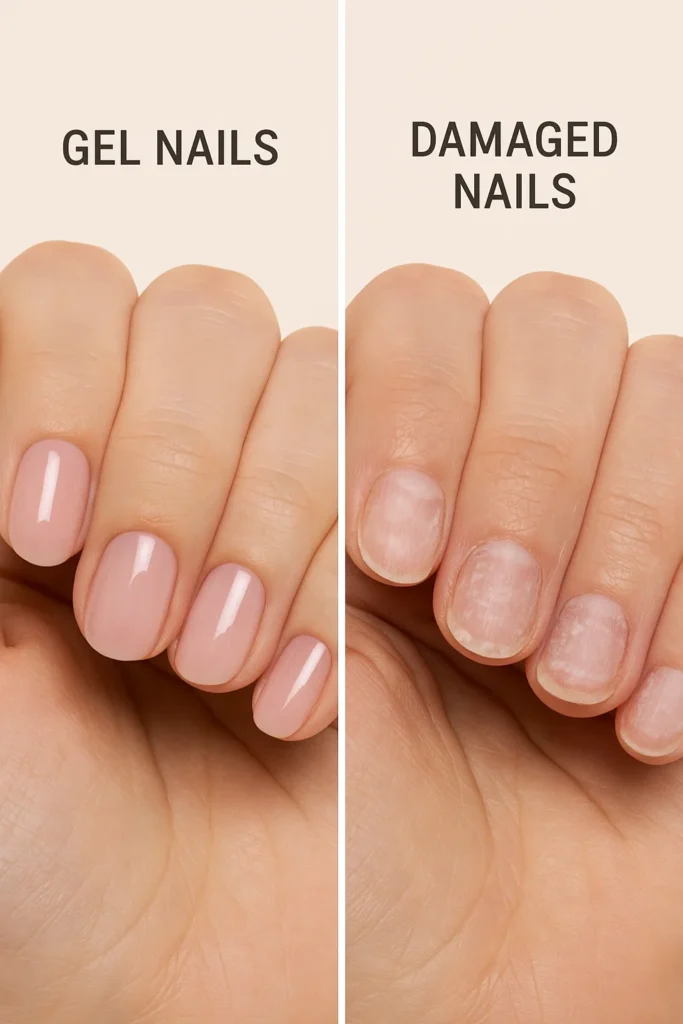
When choosing between gel and acrylic nails, it’s important to consider the health of your natural nails. Both options can be safe when applied and removed correctly. However, improper removal or overuse of nail enhancements can lead to nail damage such as thinning, brittleness, or infections.
While gel nails are generally considered less damaging to natural nails due to the gentler removal process, acrylic nails can sometimes lead to more noticeable damage if not properly taken care of. The removal process for acrylic nails often requires more filing and soaking, which can weaken the natural nail.
11. Lifespan
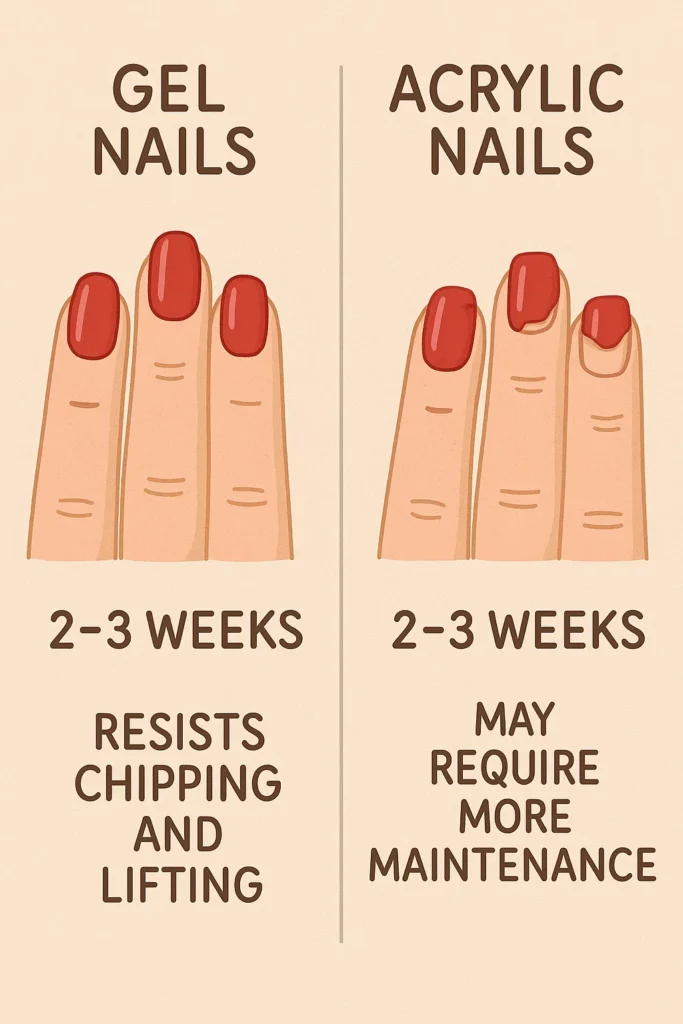
Both gel nails and acrylic nails last approximately 2-3 weeks, depending on how fast your natural nails grow. Acrylic nails may last a little longer due to their strength, but gel nails are typically less prone to damage like chipping and lifting, making them a good option for those who want something that feels more natural.
12. Customization Options
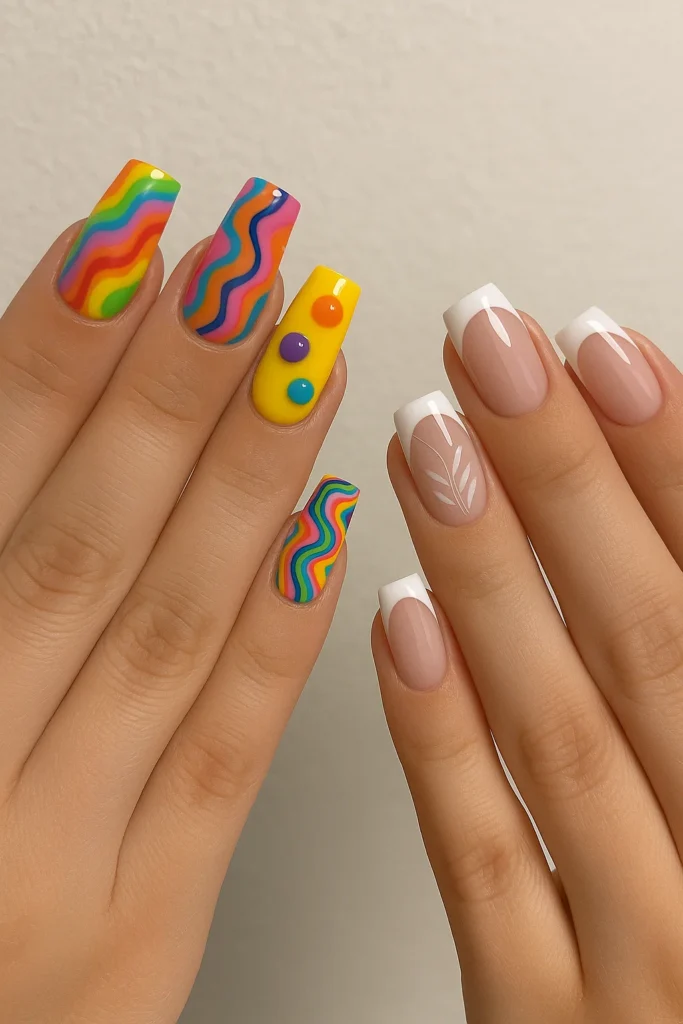
If you love experimenting with nail art and creating dramatic designs, acrylic nails offer more customization options. You can create longer extensions, sculpt unique shapes, and apply complex designs like glitter, rhinestones, or 3D art. Acrylic nails are perfect for people who want to express their creativity through their nails.
While gel nails can also be customized with colors and glitter, they tend to be better suited for those who prefer a more elegant, natural look. Gel nails are great for subtle designs, such as French tips, ombré, or simple patterns.
13. Which One is Better for You?
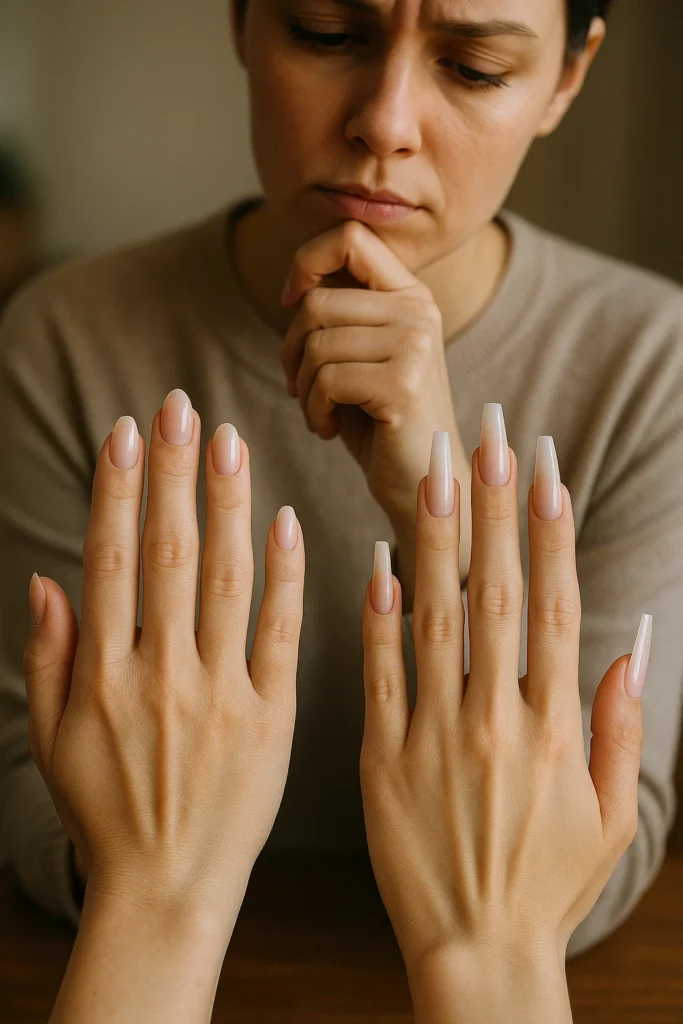
The choice between gel nails and acrylic nails depends entirely on your personal preferences, budget, and desired look. If you want natural-looking nails with flexibility and glossy shine, gel nails might be the perfect choice. They’re also great for people with sensitive nails or those who want something that doesn’t feel too bulky.
However, if you’re looking for strength, durability, and customization, acrylic nails are a great option. They’re ideal for those who need long-lasting wear and like to experiment with different nail shapes and lengths.




Leave a Reply