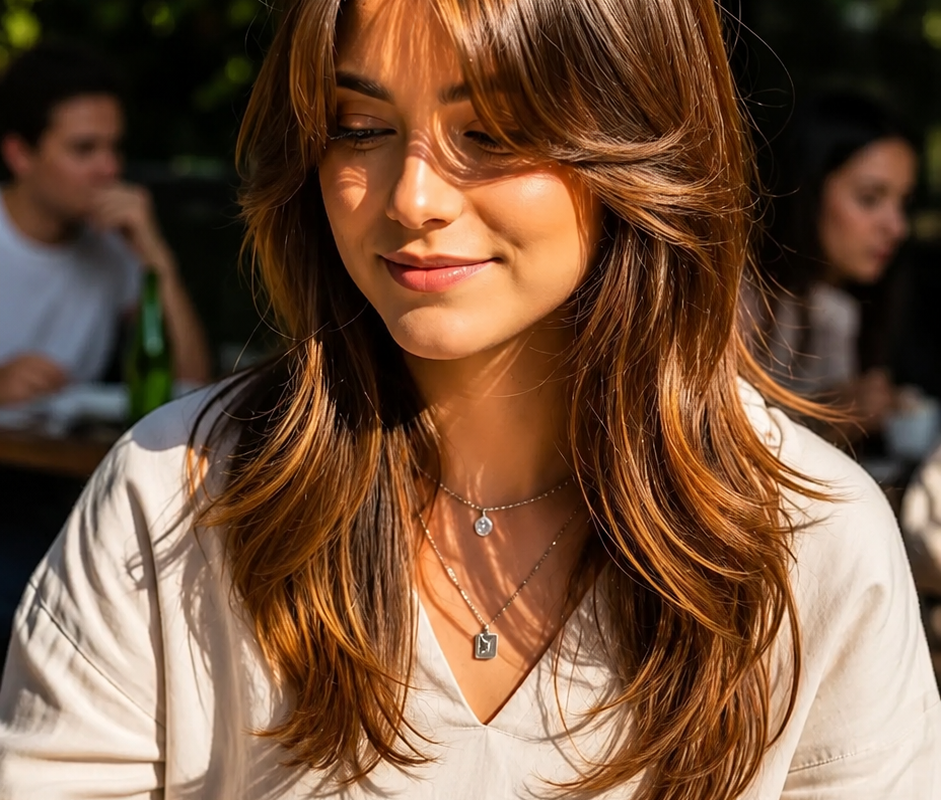
The shag haircut has made a serious comeback, and medium length is where it truly shines. Most people assume a shag always comes with a curtain of fringe across the forehead. That assumption is wrong. You can get all the texture, volume, and layered movement of a shag without a single strand falling over your brows.
1. Layered Medium Shag Without Bangs
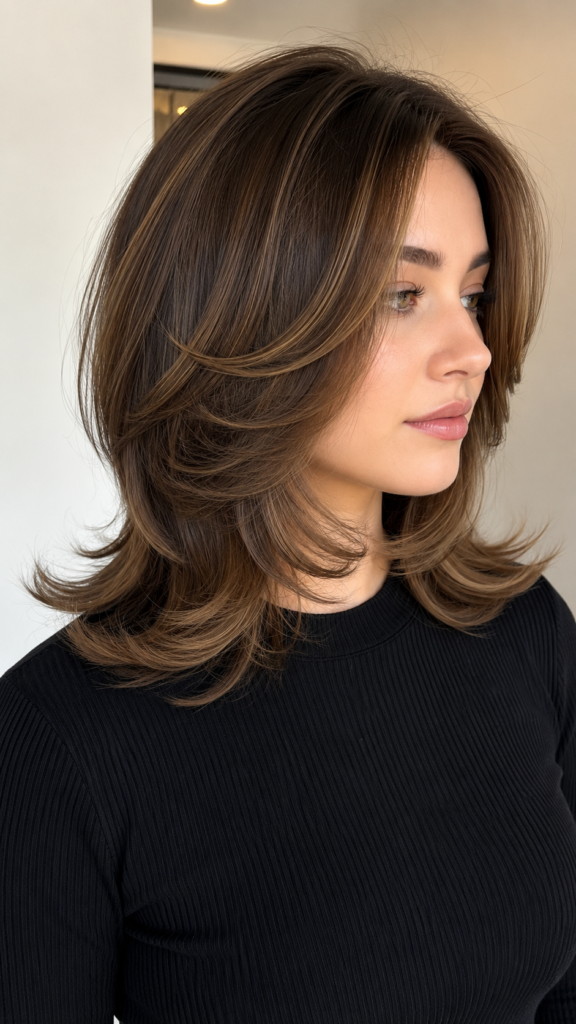
The layered medium shag without bangs is the foundation of this entire style family. The cut relies on strategic layering through the crown and mid-lengths to create volume and movement. Without bangs pulling attention to the forehead, the layers become the visual centerpiece of the look.
A stylist typically starts this cut by establishing the perimeter length, usually landing somewhere between the chin and the collarbone. From there, layers are cut in throughout the interior of the hair. These layers are not uniform. They vary in length to create that signature shaggy, undone texture that makes the style so appealing.
The key difference between a layered shag and a standard layered cut is the degree of layering. A shag uses more aggressive layering, often with razor cutting or point cutting at the ends to soften and fragment the tips. This gives the hair a feathered, airy quality that a blunt layer cut simply cannot replicate.
For straight hair, this layering creates visible movement and prevents the hair from lying flat and lifeless. For wavy or curly hair, the layers encourage the natural curl pattern to spring up and take shape. The result looks intentional without requiring a lot of effort to achieve.
Styling this version is straightforward. Apply a lightweight mousse or texturizing spray to damp hair. Scrunch gently and let it air dry, or use a diffuser on low heat. The layers will fall into place naturally. A small amount of finishing cream or light oil on the ends adds shine and controls any frizz without weighing the hair down.
Maintenance is manageable. A trim every eight to ten weeks keeps the layers fresh and prevents the ends from looking scraggly. Because there are no bangs to maintain, you can stretch appointments slightly longer than you might with a fringed version of the same cut.
2. Curtain Part Medium Shag
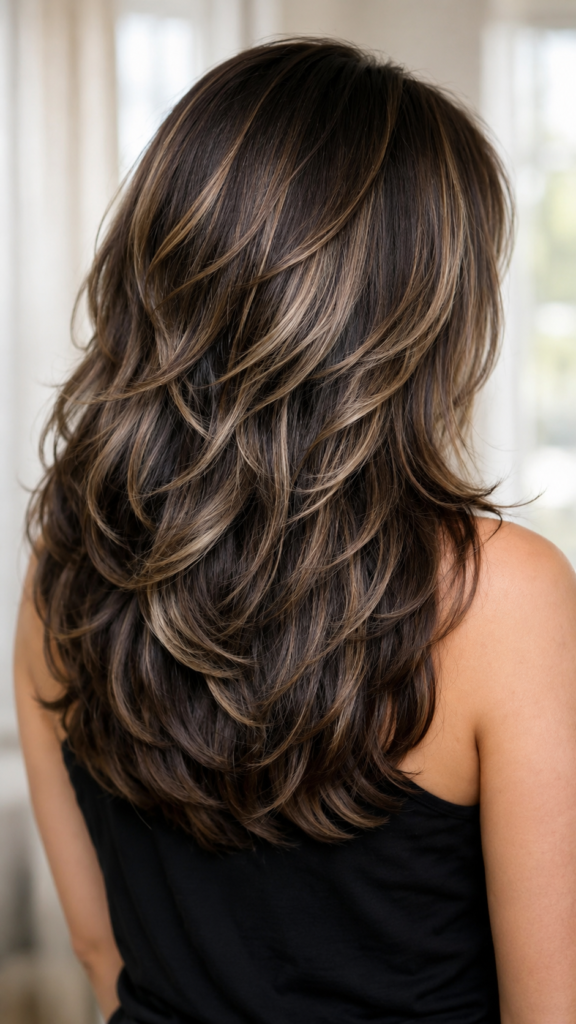
The curtain medium shag is one of the most popular bang-free variations of this cut. Instead of bangs, the front sections of the hair are grown out and parted down the middle or slightly off-center. These longer front pieces frame the face on both sides, creating a soft, open look that echoes the aesthetic of curtain bangs without the commitment.
This approach gives you the face-framing effect that bangs provide, but with far more flexibility. The front pieces can be tucked behind the ears, swept to one side, or left to fall naturally. They grow out gracefully and do not require the frequent trims that true bangs demand.
The rest of the cut follows the same principles as a standard layered shag. Layers throughout the mid-lengths and ends create texture and movement. The perimeter is usually cut with some softness, avoiding a blunt or heavy line at the bottom.
Styling the curtain part version is simple. A center or slightly off-center part is all you need to set the look in motion. Use a round brush or your fingers to smooth the front pieces slightly while blow-drying, or let them air dry for a more relaxed finish. A tiny amount of pomade or wax on the tips of the front pieces adds definition without stiffness.
This version works especially well for people who have tried bangs before and found them too high-maintenance. It captures the spirit of the fringed shag while keeping the forehead clear and the styling routine light. It also transitions beautifully through different seasons, sitting closer to the face in winter and being easily pinned back in summer.
3. Wavy Bang-Free Medium Shag
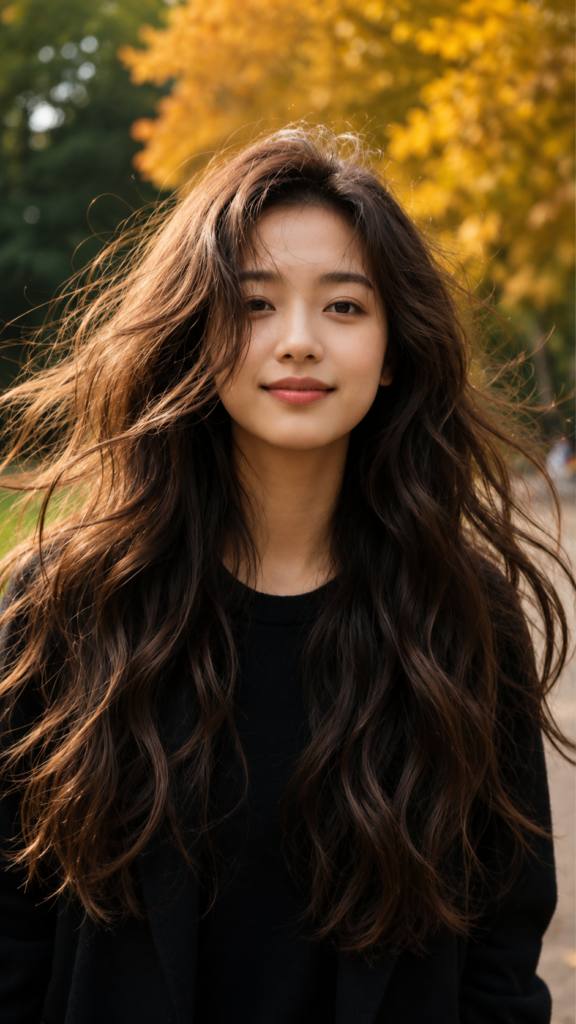
Wavy hair and the bang-free medium shag are a natural match. The natural wave pattern does a significant portion of the styling work on its own. Layers in a wavy shag encourage each wave to form more distinctly, creating a look that appears effortlessly styled even on days when you do minimal work.
The cut for wavy hair differs slightly from the version designed for straight hair. A stylist will typically use more conservative layering to avoid creating too much volume or frizz. Razor cutting is used carefully, as it can sometimes disrupt the wave pattern if overdone. Point cutting or slide cutting tends to work better for wavy textures.
The length for a wavy bang-free shag usually lands at or just below the collarbone. This length allows the waves to fully form before the hair ends, which creates a more polished and intentional look. Cutting too short can cause wavy hair to puff out rather than wave, which changes the character of the style entirely.
Styling a wavy bang-free shag is one of the easiest routines in the medium-length category. Apply a curl-enhancing cream or a light gel to soaking wet hair. Scrunch from the ends upward and either air dry or diffuse on low heat. Avoid touching the hair while it dries to prevent frizz. Once dry, break up the waves gently with your fingers and add a light oil or serum for shine.
On second and third day hair, a small amount of water in a spray bottle revives the waves quickly. A light texturizing spray adds grip and definition without making the hair feel crunchy or stiff. This style genuinely improves with a day or two of wear, which makes it a practical choice for busy schedules.
4. Straight Hair Medium Shag Without Bangs
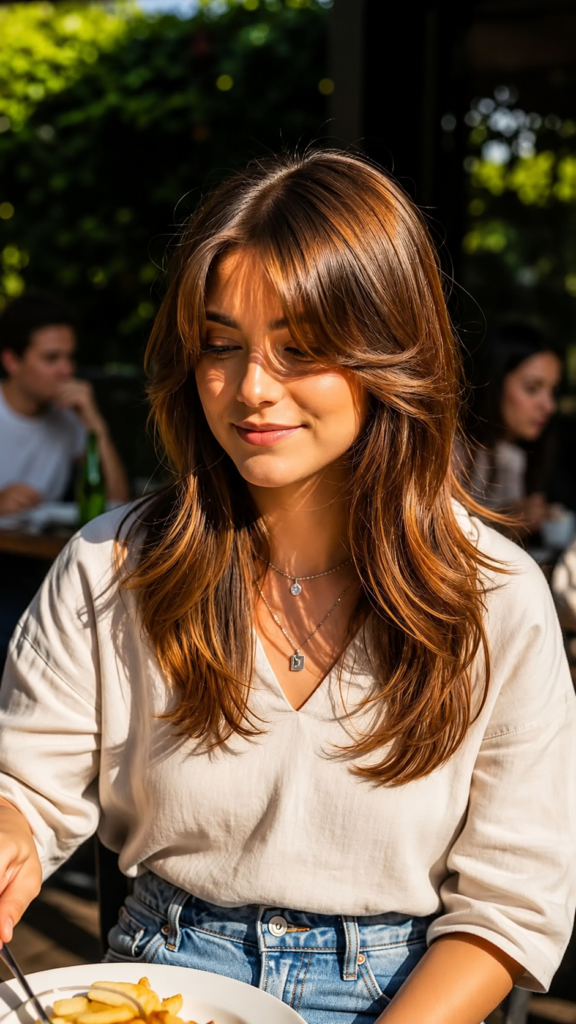
Straight hair can absolutely carry a bang-free medium shag, though it requires a slightly different approach than wavy or curly textures. The layers need to be cut with enough precision to create visible movement, since straight hair does not have a natural wave pattern to add dimension on its own.
A stylist working with straight hair will often use a combination of point cutting and razor cutting to fragment the ends and create that signature shaggy texture. The layers are cut to fall at different lengths throughout the interior of the hair, which prevents the style from looking flat or one-dimensional when the hair is worn down.
The perimeter of a straight-hair shag is typically cut with a slight softness rather than a blunt line. A blunt perimeter on straight hair can look heavy and dated, which works against the light, airy quality that defines the shag aesthetic. A softened or slightly curved perimeter keeps the look modern and fresh.
Styling straight hair into a shag requires a bit more effort than styling wavy or curly hair. A round brush blow-dry adds volume at the roots and creates a slight bend through the mid-lengths. Alternatively, a large-barrel curling iron or wand can be used to add loose, undone waves that give the layers more visual separation and movement.
A texturizing spray or dry shampoo at the roots adds grip and lift, which prevents the style from going flat by midday. Finish with a light-hold spray or a small amount of pomade worked through the ends to define the layers and add a subtle shine.
5. Shaggy Lob Without Bangs
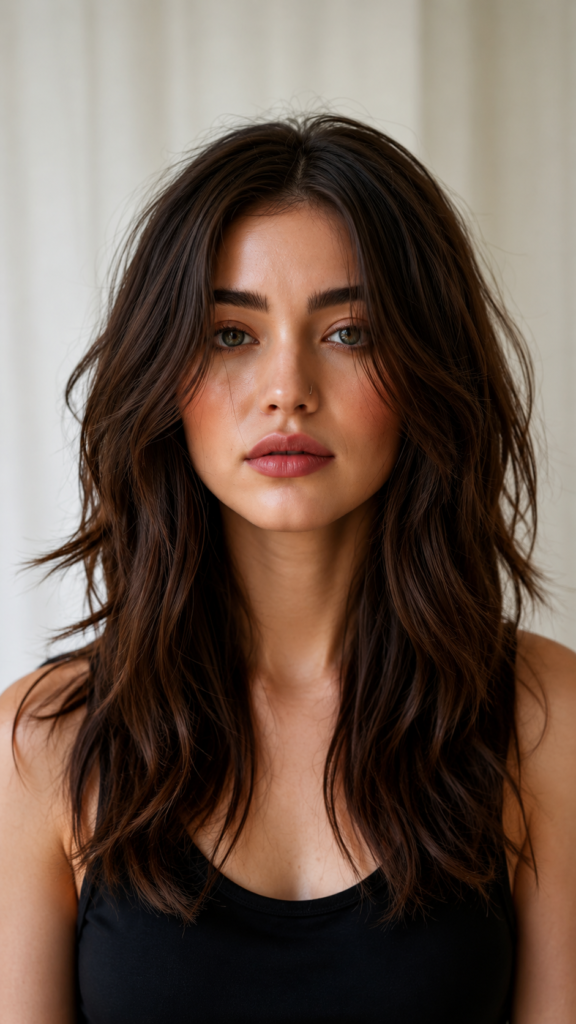
The shaggy lob sits at the shorter end of the medium-length spectrum, typically landing between the chin and the collarbone. It combines the clean, modern proportions of a lob with the textured, layered character of a shag. The result is a cut that feels both polished and relaxed at the same time.
Without bangs, the shaggy lob keeps the face completely open. The layers start higher up in the cut, often beginning just below the ears, which creates a lot of volume and movement through the mid-lengths. The ends are cut with texture rather than bluntness, giving the style its signature shaggy finish.
This version of the bang-free shag is a strong choice for people who want the look and feel of a shag but prefer a slightly more structured silhouette. The lob length provides a clean foundation that keeps the style from looking too undone or overly casual. It works well in professional settings and translates easily from a workday to an evening out.
Styling the shaggy lob is quick and low-effort. A small amount of mousse or texturizing cream on damp hair, followed by a rough blow-dry with a diffuser or a medium-size round brush, brings the layers to life. For a sleeker finish, a flat iron on a low setting can be used to smooth the mid-lengths while leaving the ends slightly bent and textured.
The shaggy lob also holds up well in updos and half-up styles. The layers add grip and texture that make ponytails and buns look fuller and more interesting. A simple half-up twist or a low bun with a few pieces left out around the face is a quick and flattering option for days when you want the hair off your neck.
6. Textured Medium Shag for Thick Hair
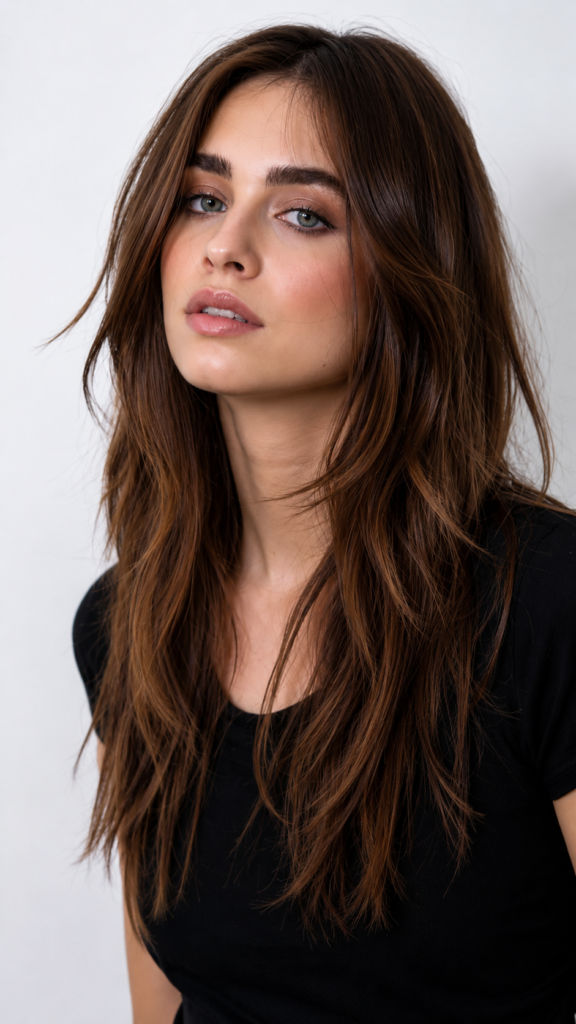
Thick hair and the bang-free medium shag are a natural pairing, but the cut needs to be approached carefully to avoid creating too much bulk. The goal is to use the layers to remove weight from the interior of the hair while preserving the shape and length at the perimeter. Done correctly, this transforms thick hair from heavy and unmanageable into something light, bouncy, and full of movement.
A stylist working with thick hair will typically use a technique called internal layering or undercutting to remove bulk from beneath the surface of the hair. This reduces the overall weight without dramatically changing the visible shape of the cut. The top layers are then cut to create the shaggy, textured finish that defines the style.
Razor cutting is particularly effective on thick hair in a shag cut. The razor fragments the ends and removes bulk simultaneously, creating a feathered, airy finish that would be difficult to achieve with scissors alone. The result is a cut that moves freely and does not feel heavy or stiff.
Styling thick hair in a bang-free shag is easier than most people expect. A lightweight mousse or a volumizing spray applied to damp hair adds lift without adding weight. A rough blow-dry with a diffuser or a large round brush brings the layers to life and prevents the hair from drying flat. Finish with a light texturizing spray to separate the layers and add definition.
On days when you do not want to style your hair, thick hair in a shag cut air-dries beautifully. The layers fall into a natural, undone shape that looks intentional rather than neglected. A quick scrunch with your hands and a small amount of finishing cream is all you need to pull the look together.