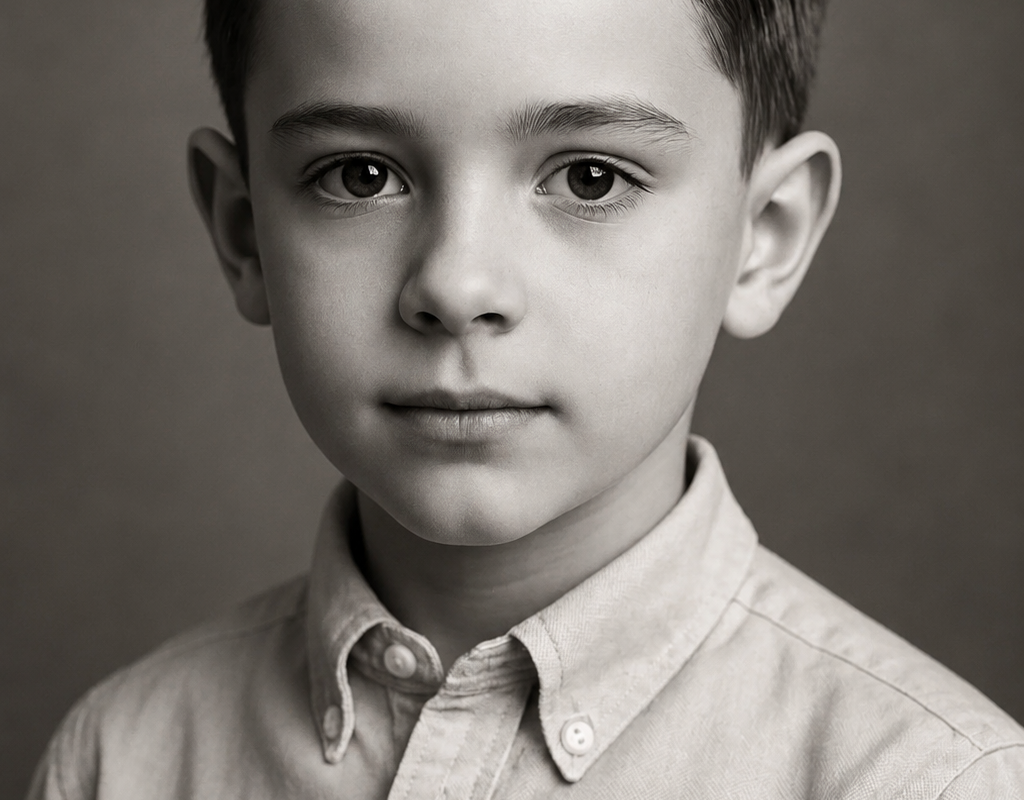
A good haircut shapes how a boy feels about himself. It builds confidence. It shows he cares about his appearance. The right style works across seasons and occasions, from school to family events to casual outings.
Boys’ haircuts have evolved, yet certain styles remain timeless. They work because they’re easy to maintain, suit most face shapes, and look sharp without fuss. Whether your son has straight hair, curly texture, or something in between, there’s a cut that fits his personality and lifestyle.
This guide covers four essential haircut categories that stay relevant year after year. Each style has staying power because it balances simplicity with visual impact. You’ll find cuts that work for active kids, styles that suit formal settings, and options that let boys express their individuality. The best part: most of these cuts require minimal daily styling, which means less morning stress for parents and more confidence for boys.
Understanding the basics helps you communicate with your barber. You’ll know what to ask for, what works with your son’s hair type, and how to keep the cut looking fresh between appointments. Let’s explore four standout categories that define smart boys’ haircuts.
1. Classic Crew Cut with Modern Texture
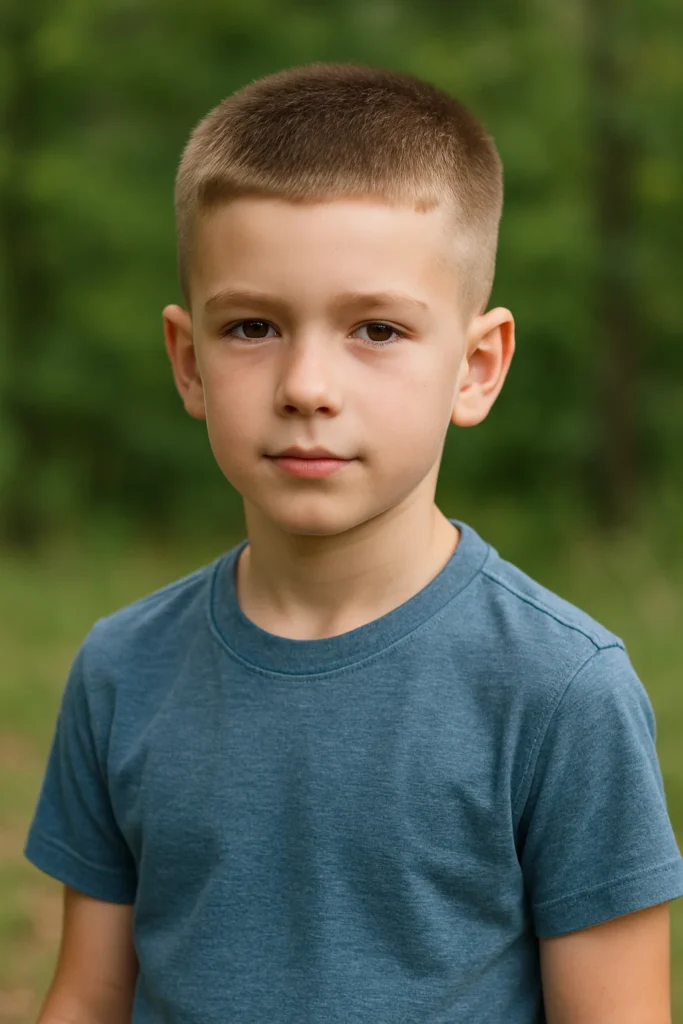
The crew cut remains one of the most versatile cuts in barbering. It’s short on the sides and back, with slightly more length on top. This simplicity is its strength. The cut works on nearly every boy, regardless of hair type or face shape.
What makes a crew cut smart is texture. Instead of a flat, uniform cut, modern versions add dimension. The barber leaves the top slightly longer and textures it with clippers or scissors. This creates movement and prevents the “helmet head” look that older crew cuts sometimes had. Boys can style it with a light product or wear it natural, depending on the occasion and their preference.
Maintenance is straightforward. A trim every three to four weeks keeps the shape clean. The sides stay short enough to look neat without constant fading. Parents appreciate this cut because it’s forgiving. A week past the appointment, it still looks intentional rather than overgrown. The cut suits boys from age six through their teens and beyond.
This style works for school, sports, and formal events. It photographs well and never looks out of place. Barbers love cutting crew cuts because the technique is fundamental, which means you’ll find quality execution at most shops. The cut also transitions smoothly as boys grow. A ten year old and a sixteen year old can both wear a textured crew cut and look age appropriate.
For boys with curly or textured hair, the crew cut offers real advantages. The shorter length reduces bulk and makes curls easier to manage. A barber experienced with textured hair can create a crew cut that enhances natural curl pattern rather than fighting it. This approach celebrates the boy’s hair type instead of trying to force it into a shape it doesn’t naturally take.
2. Disconnected Undercut with Fade
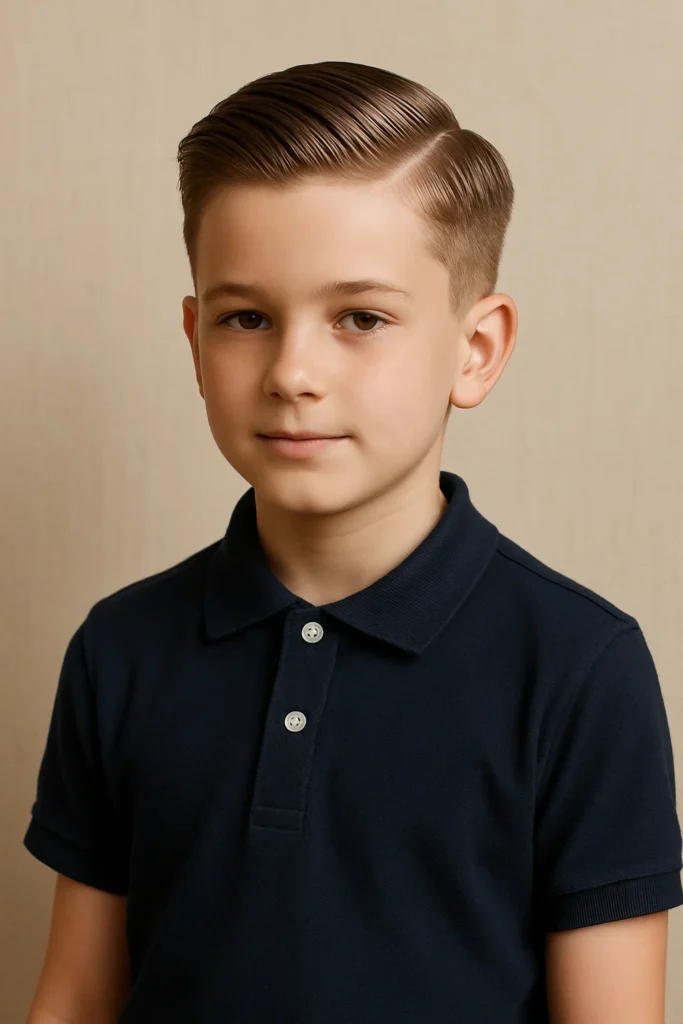
The disconnected undercut represents modern barbering at its best. It features a clear separation between the short sides and the longer top. The “disconnect” means there’s no gradual blend. Instead, you get a defined line where the fade ends and the longer hair begins.
This cut appeals to boys who want something with visual impact. The contrast draws attention to the top, where length and texture create style. The sides fade down to skin or near skin, which keeps the overall look clean and sharp. It’s a cut that says the wearer cares about his appearance without looking overdone.
The undercut works across different hair types. Boys with straight hair get clean lines and definition. Those with wavy or curly hair can use the length on top to showcase natural texture. The fade on the sides keeps everything proportional, so the top doesn’t look too heavy. A skilled barber can adjust the disconnect point based on the boy’s face shape and head shape, ensuring the cut flatters rather than exaggerates features.
Styling options expand with this cut. Boys can wear it slicked back for a polished look, textured and messy for casual days, or parted to one side for versatility. A small amount of pomade, clay, or matte product gives control without shine. Many boys find they can style it multiple ways depending on their mood or the occasion.
The disconnected undercut requires more frequent maintenance than a crew cut. Fades look best when fresh, so appointments every two to three weeks keep the cut sharp. The longer top grows out gradually, which means the style evolves between cuts. Some boys like this progression. Others prefer to keep the top length consistent, which requires regular trims.
This cut suits boys from early teens through adulthood. Younger boys can wear it too, though the styling options and maintenance commitment might be more than they need. It’s a cut that grows with a boy’s interest in personal grooming and style expression.
3. Textured Crop with Tapered Sides
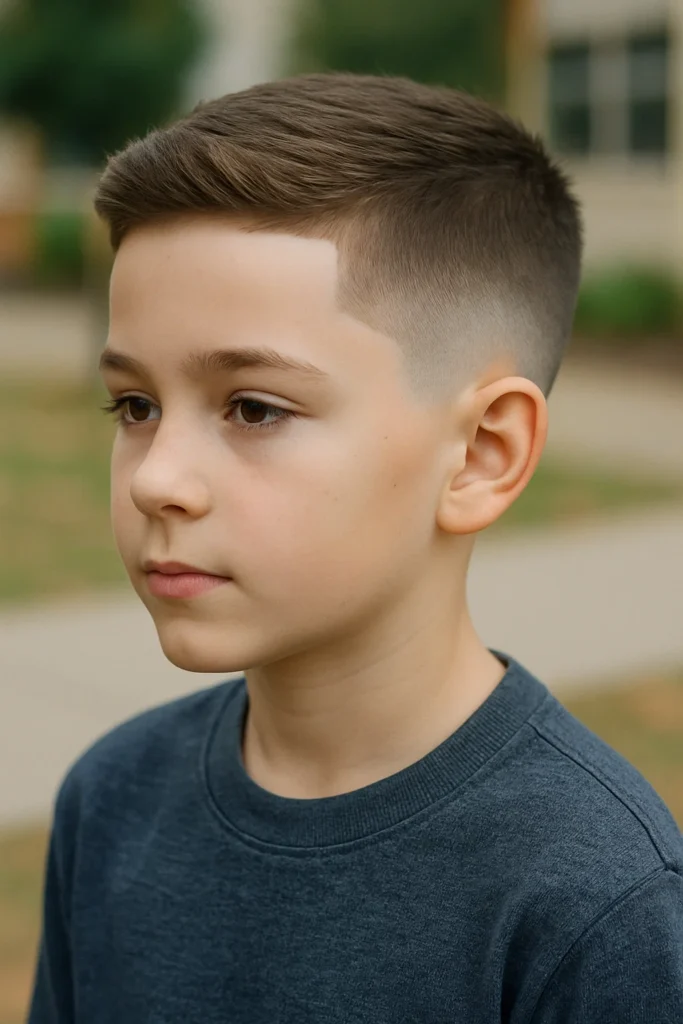
The textured crop sits between the crew cut and the undercut in terms of length and contrast. The top has enough length to show texture and movement, while the sides taper down gradually. There’s no sharp disconnect, but there’s clear definition between the different lengths.
This cut works beautifully for boys with naturally wavy or curly hair. The texture on top becomes a feature rather than something to manage. A barber can cut the top to enhance the natural wave pattern, creating a cut that looks effortlessly styled. Boys with straight hair also benefit from this cut. The texture comes from the cutting technique, which creates layers and movement.
The tapered sides keep the cut looking intentional and neat. The taper starts higher than a fade, which means more hair remains on the sides compared to an undercut. This creates a softer overall silhouette while still showing clear barbering skill. The cut suits boys with rounder faces because the taper on the sides creates definition without the stark contrast of a full fade.
Styling is flexible. The crop can be worn tousled and casual, combed back for a more polished look, or parted to the side. Many boys find they can style it in the morning with minimal product. Some days they might skip product entirely and let the natural texture show. This versatility appeals to active boys who don’t want to spend time on their hair.
Maintenance falls in the middle range. A trim every four weeks keeps the shape fresh and the taper clean. The longer top grows out gradually, which means the cut looks good even as it ages. Parents appreciate this because it extends the time between appointments compared to a fade based cut.
The textured crop suits boys from age eight through their teens. It’s sophisticated enough for formal occasions but casual enough for everyday wear. The cut also photographs well, which matters for school pictures and family events. Many boys find this cut strikes the balance they’re looking for between low maintenance and intentional style.
4. Slicked Back Pompadour for Formal and Casual Wear
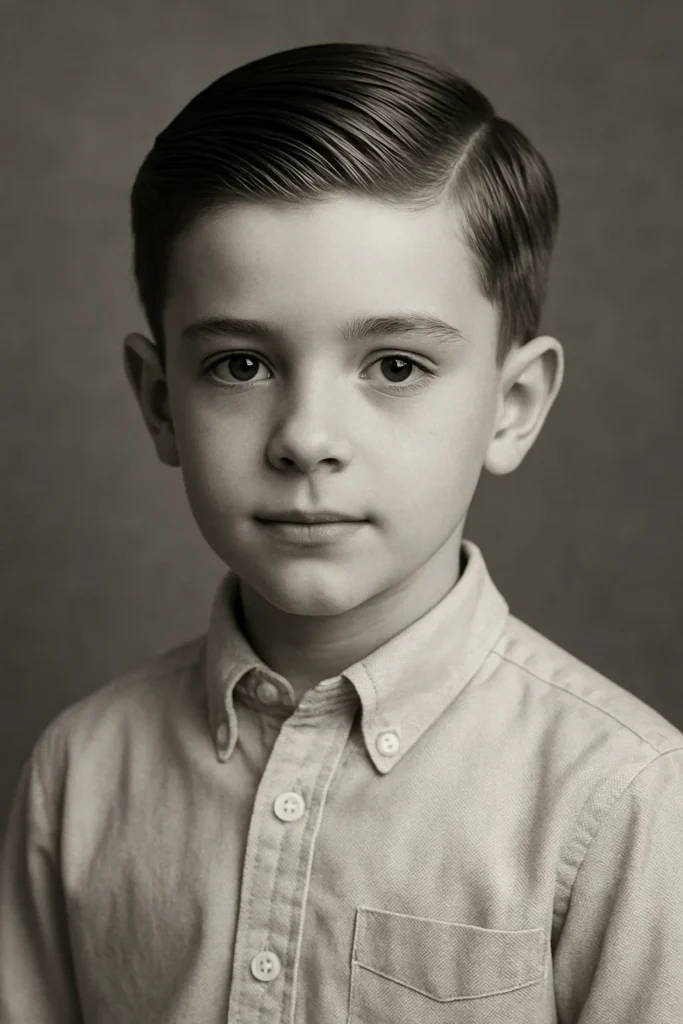
The pompadour is a classic cut that’s experienced a real resurgence in recent years. It features longer hair on top that’s styled back and up, with shorter sides. The cut creates volume and presence. It’s a statement cut that works for boys who want their hair to be part of their overall look.
The pompadour requires more length on top than other cuts discussed here. A barber will typically leave two to three inches or more, depending on the boy’s hair type and styling preference. The sides stay short, usually tapered or faded, which keeps the overall proportions balanced. The contrast between the long top and short sides is what defines the style.
This cut suits boys with straight to wavy hair best. Curly hair can work, but it requires more styling effort to achieve the slicked back look. Boys with straight hair find the pompadour easiest to style. A small amount of pomade or styling cream, applied to damp hair and combed back, creates the classic look. As the hair dries, it holds the shape.
The pompadour works for both casual and formal settings. Styled with product, it’s sharp enough for weddings, school dances, or family photos. Worn more casually, with less product and a messier texture, it suits everyday wear. This versatility makes it a smart choice for boys who want one cut that adapts to different occasions.
Maintenance requires regular trims to keep the top length consistent. Every three to four weeks works well for most boys. The sides need attention too, as the fade or taper grows out. Between appointments, boys need to style the hair to maintain the pompadour shape. This requires more daily effort than a crew cut or crop, but less than some other longer styles.
The pompadour suits boys from early teens onward. Younger boys can wear it, but they need to be willing to style their hair daily. It’s a cut for boys who enjoy grooming and want their hairstyle to be a visible part of their personal style. The cut builds confidence because it’s intentional and distinctive.


Leave a Reply