Hair loss affects millions of women over 60, whether due to alopecia, hormonal changes, or natural aging. The emotional impact can be significant, but the good news is that many stylish, flattering hairstyles work beautifully with thinning hair or visible scalp areas. The right cut, color, and styling technique can boost confidence and help you feel like yourself again.
This guide explores nine hairstyles specifically chosen for women over 60 experiencing hair loss. Each style works with your hair’s current texture and volume rather than against it. You’ll learn why certain cuts work better than others, how to style them at home, and what to discuss with your stylist. Many of these options require minimal daily maintenance.
1. The Textured Pixie Cut for Volume and Movement
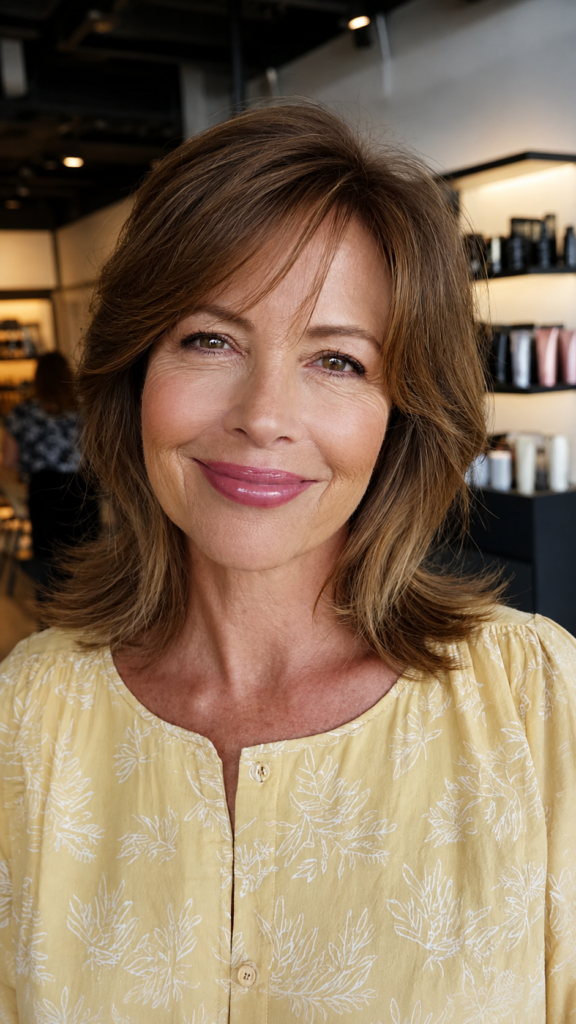
The textured pixie cut remains one of the most flattering options for women over 60 with hair loss. This short style works because it removes length, which can weigh down thinning hair and make sparse areas more noticeable. A good pixie cut sits close to the head while creating the illusion of fullness through strategic layering.
What makes this style work for alopecia is the layering technique. Your stylist should create short, choppy layers throughout the crown and sides. These layers catch light and create visual texture, making hair appear thicker than it actually is.
The pixie cut works best when you have at least some hair coverage on your scalp. If you have significant bald patches, you may want to consider a slightly longer style. However, if your hair loss is more diffuse or you’re experiencing overall thinning, the pixie is an excellent choice.
Styling a textured pixie is straightforward. Wash your hair with volumizing shampoo and conditioner designed for fine hair. While damp, apply lightweight mousse or volumizing spray to the roots. Use a blow dryer with a concentrator nozzle, directing air upward to create lift. Once dry, use a small amount of texturizing paste to define the layers and add movement.
Color choices matter with a pixie cut. Darker shades can make hair appear thicker because they create more contrast with the scalp. If you prefer lighter colors, ask your stylist about highlights or lowlights that add dimension and depth.
Maintenance requires regular trims every four to six weeks. As your hair grows, the layers lose their shape and the style becomes less effective. Regular trims keep the cut sharp and maintain that textured, full appearance.
2. The Layered Bob With Strategic Texture
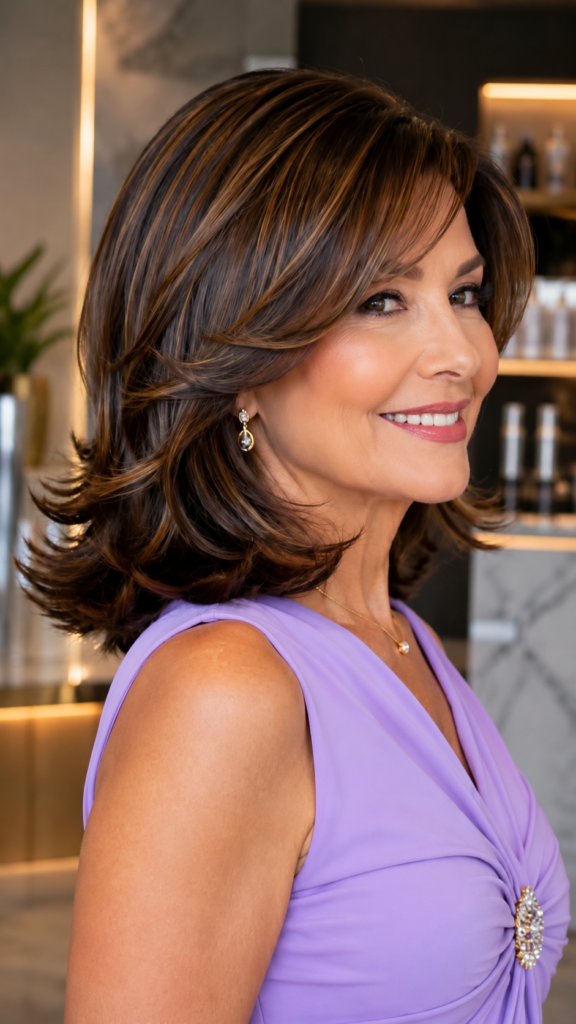
A layered bob sits between short and medium length, offering more styling versatility than a pixie while remaining manageable for thinning hair. The key is the layering. Blunt bobs can emphasize sparse areas because the weight pulls hair down and makes thinning more visible. Layered bobs create movement and the appearance of fullness.
The best layered bobs for women over 60 with alopecia sit at chin length or slightly shorter. This length removes enough weight to prevent hair from looking limp. Your stylist should create layers throughout, not just at the ends. Layers starting at the crown help lift hair away from the scalp and create volume where you need it most.
Ask your stylist to focus on shorter layers at the crown and longer layers toward the front. This creates a flattering frame for your face while adding height and fullness on top. The longer front layers can be styled to cover any areas of concern if needed.
Styling a layered bob requires a bit more effort than a pixie, but it’s still manageable. Start with volumizing shampoo and conditioner. Apply volumizing mousse or spray to damp roots. Blow dry your hair, using a round brush to create lift at the crown. Once dry, you can curl the ends slightly with a curling iron to enhance the layers and add movement.
The layered bob pairs beautifully with waves or curls. If your hair is naturally straight, adding texture through styling makes the layers more visible and creates the appearance of thicker hair. Soft, loose waves are often more flattering and age appropriate.
Color is equally important with a bob. Consider asking your stylist about balayage or face framing highlights. These techniques add lighter pieces around your face and throughout the hair, creating dimension that makes hair appear fuller.
A layered bob requires trims every six to eight weeks to maintain its shape and texture. Regular maintenance keeps your bob looking fresh and full.
3. The Cropped Curly Style for Natural Texture
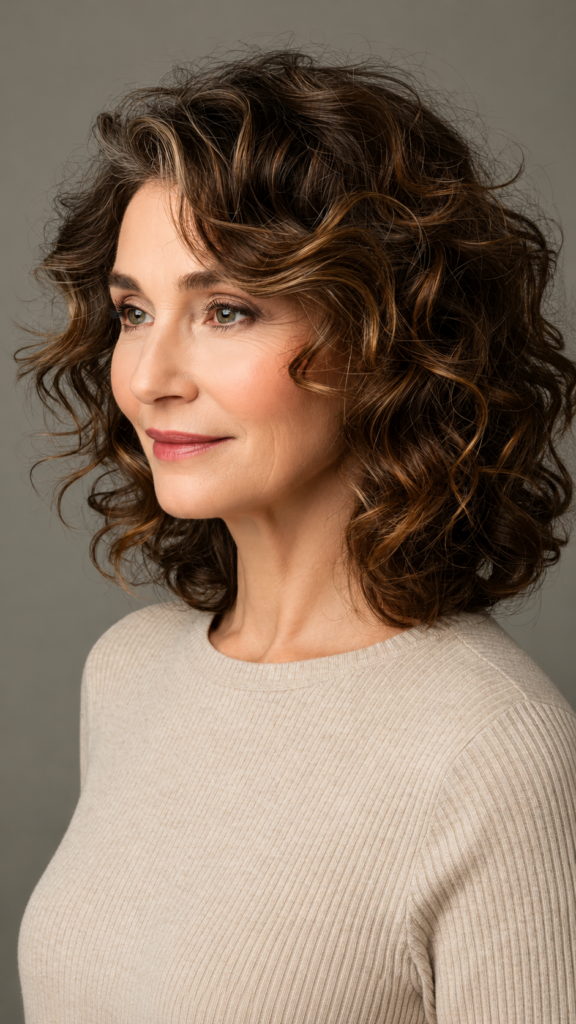
If you have naturally curly or wavy hair, a cropped curly style can be incredibly flattering when dealing with hair loss. Curls and waves create natural texture and volume, which makes hair appear fuller than it actually is. A cropped length removes weight and allows your curls to spring up and away from your scalp.
This style works particularly well if your hair loss is diffuse rather than in specific patches. The texture of curls helps camouflage areas where hair is thinner.
To make this style work, you need a stylist who understands curly hair. They should cut your hair dry, not wet, because curls shrink as they dry. A good curly cut is shorter when wet and longer when dry. Your stylist should create layers that work with your natural curl pattern.
Styling a cropped curly style is often simpler than styling straight hair. Wash your hair with curl-friendly shampoo and conditioner. Apply a curl-defining cream or gel to damp hair. You can air dry or use a diffuser attachment on your blow dryer.
Many women with curly hair find that they need less frequent trims with a cropped style. Curls hold their shape longer than straight hair, so you might only need a trim every eight to ten weeks.
Color works beautifully with curly hair. Highlights or lowlights add dimension and make curls appear fuller. Darker roots with lighter ends create a dimensional look that’s very flattering.
4. The Tousled Shag for Effortless Volume
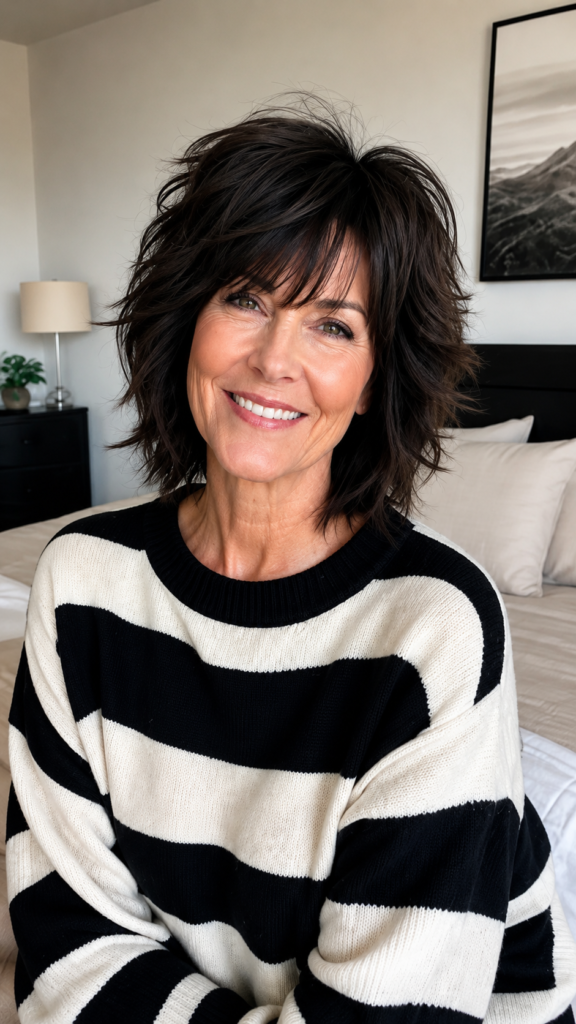
The shag cut has made a comeback in recent years, and it’s an excellent option for women over 60 with hair loss. A shag is essentially a very layered cut that creates movement and texture throughout. The choppy layers make hair appear fuller and more voluminous than it actually is.
A modern shag for mature women should be updated from the 1970s version. Ask your stylist for a contemporary shag with shorter layers on top and slightly longer layers underneath. The length should be chin length or slightly shorter.
The beauty of a shag is that it looks good with minimal styling. You can wash your hair, apply a texturizing product, and let it air dry for a tousled, effortless look. Or you can blow dry it for more control. Either way, the layers create movement and the appearance of fullness.
A shag works well with both straight and wavy hair. If your hair is naturally wavy, the shag enhances those waves and creates beautiful movement. If your hair is straight, you can add waves with a curling iron for extra texture and volume.
Color choices for a shag should emphasize the layers. Ask your stylist about highlights that follow the movement of the cut. Lighter pieces throughout the hair create dimension and make the layers more visible.
Maintenance for a shag requires trims every six to eight weeks. The layers need to be refreshed regularly to maintain the shape and texture.
5. The Sleek Undercut With Longer Top
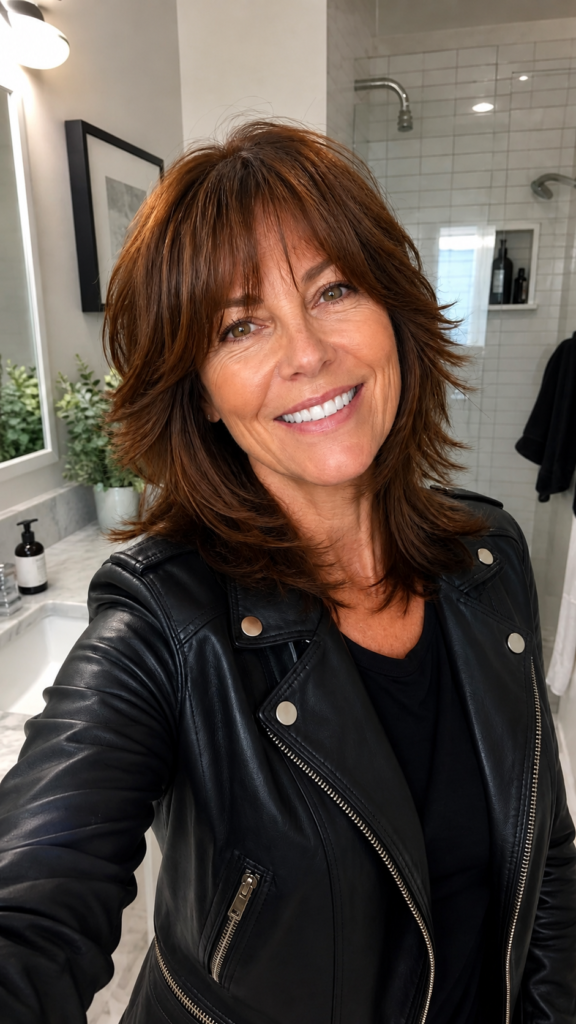
An undercut is a bold choice that works surprisingly well for some women over 60 with hair loss. This style features very short sides and back with longer hair on top. The contrast creates a modern, edgy look that can be very flattering.
The undercut works best if your hair loss is primarily on top or if you have significant thinning throughout. By keeping the sides and back very short, you remove weight and make the overall style look intentional rather than like you’re trying to hide hair loss. The longer top can be styled with texture and movement to create fullness.
This style requires confidence and a willingness to embrace a more modern aesthetic. Many women find that the bold style actually makes them feel more confident and in control of their appearance.
Styling an undercut requires regular maintenance. The sides and back need to be trimmed every three to four weeks to maintain the sharp contrast. The top can be styled in various ways. You can wear it slicked back for a sleek look, or you can style it with texture and movement for a more casual appearance.
Color works beautifully with an undercut. You can keep the top and sides the same color, or you can use color to create contrast. Some women choose a lighter color on top and darker on the sides, or vice versa.
6. The Soft Waves With Volume at the Crown
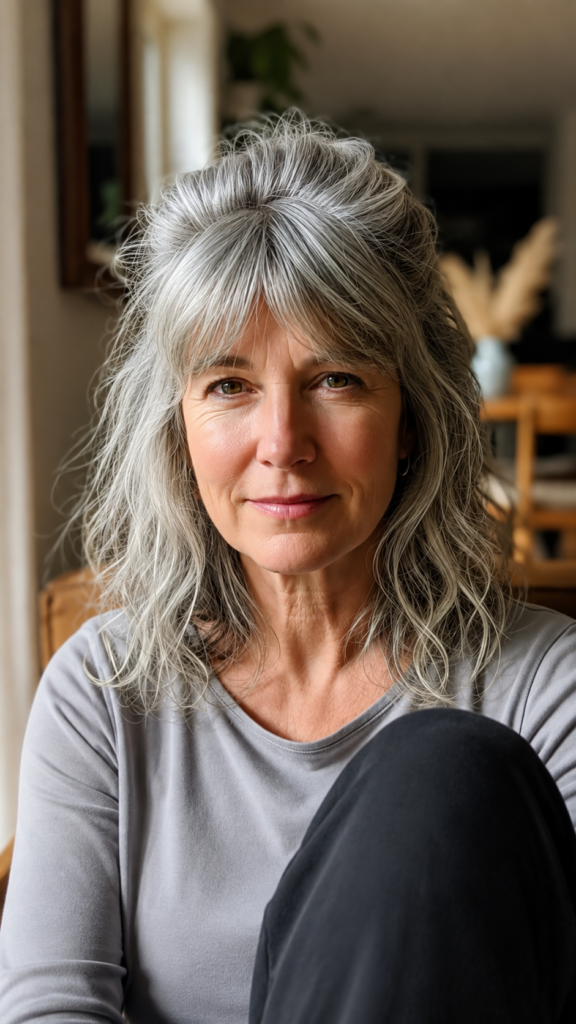
Soft waves are a classic, feminine option that works beautifully for women over 60 with thinning hair. This style is versatile, flattering, and can be achieved with various hair lengths. The key is creating volume at the crown where you need it most.
For this style, aim for hair that’s chin length to shoulder length. This length is long enough to create waves but short enough that it doesn’t weigh down thinning hair. Ask your stylist to create layers throughout, with shorter layers at the crown to add lift and fullness.
Styling soft waves requires a blow dryer and a curling iron or wand. Start with volumizing shampoo and conditioner. Apply volumizing mousse or spray to damp roots. Blow dry your hair, using a round brush to create lift at the crown. Once dry, use a curling iron or wand to create soft waves throughout your hair.
The waves don’t need to be tight or perfect. Loose, relaxed waves are more flattering and age appropriate. They also require less heat styling, which is gentler on thinning hair.
Color is important with this style. Soft waves pair beautifully with dimensional color. Ask your stylist about highlights or lowlights that add depth and make hair appear fuller. Lighter pieces throughout the hair create movement and draw the eye away from sparse areas.
This style requires regular trims every six to eight weeks to maintain the layers and shape.
7. The Textured Crop With Longer Bangs
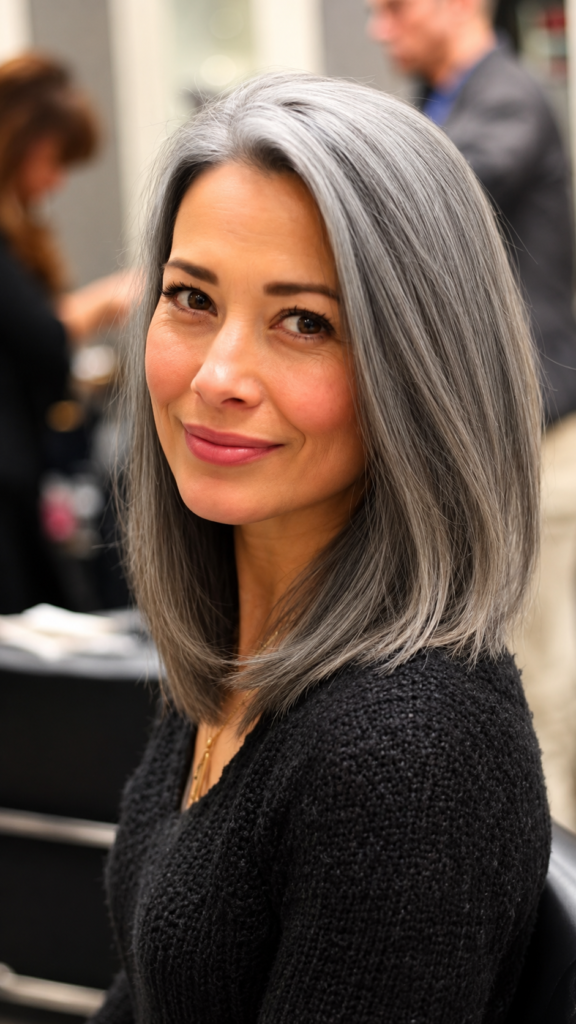
A textured crop with longer bangs is a modern, flattering option for women over 60 with hair loss. This style features a very short, textured cut on the sides and back with longer hair on top and longer bangs that frame the face.
The longer bangs are key to this style’s success. They frame your face beautifully and can help cover any areas of concern on your forehead or temples. The bangs also add fullness to the front of your hair, which is often where women experience the most noticeable hair loss.
Ask your stylist to create choppy, textured layers throughout the top section. These layers create movement and the appearance of fullness. The contrast between the very short sides and back and the longer top creates a modern, intentional look.
Styling this cut requires regular blow drying. Wash your hair with volumizing shampoo and conditioner. Apply volumizing mousse or spray to damp roots. Blow dry your hair, directing air upward to create lift. Use a small round brush to style the bangs and create movement throughout the top section.
You can also use a texturizing product to define the layers and add movement. A small amount of texturizing paste applied to damp hair before blow drying creates a tousled, textured look.
Color works beautifully with this style. The longer bangs and textured top are perfect for dimensional color. Highlights or lowlights add depth and make hair appear fuller.
This style requires trims every four to six weeks to maintain the sharp contrast between the short sides and longer top. The bangs also need regular trims to maintain their length and shape.