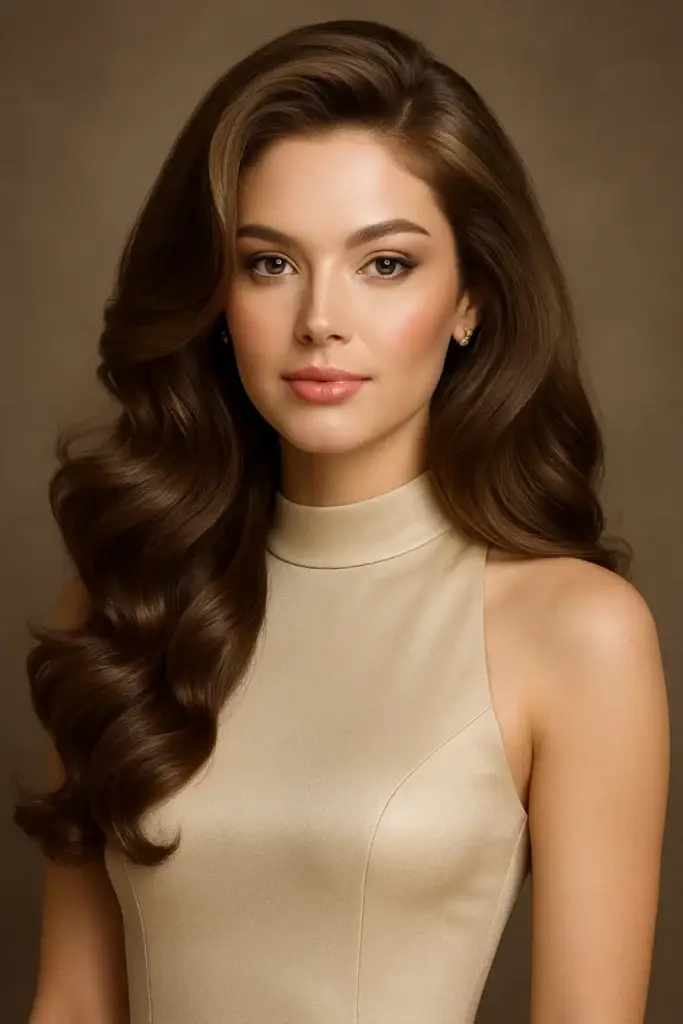
Round face shapes benefit from hairstyles that create vertical lines and add dimension to the cheeks and jawline. Short shag styles combine texture, movement, and strategic layering to enhance facial features. A shag haircut works by breaking up roundness with choppy layers and varied lengths that draw the eye upward and outward.
This article explores nine short shag styles designed for round faces. Each uses different techniques to add definition and create a sculpted appearance. Whether you prefer a tousled, casual look or polished finish, there is a shag style that suits your lifestyle and aesthetic. Short shag haircuts have made a major comeback in recent years. Modern versions offer more versatility than 1970s shags for everyday wear. The key to success is proper layering, which creates the illusion of a longer face and breaks up facial roundness.
1. The Classic Textured Shag with Side Swept Bangs
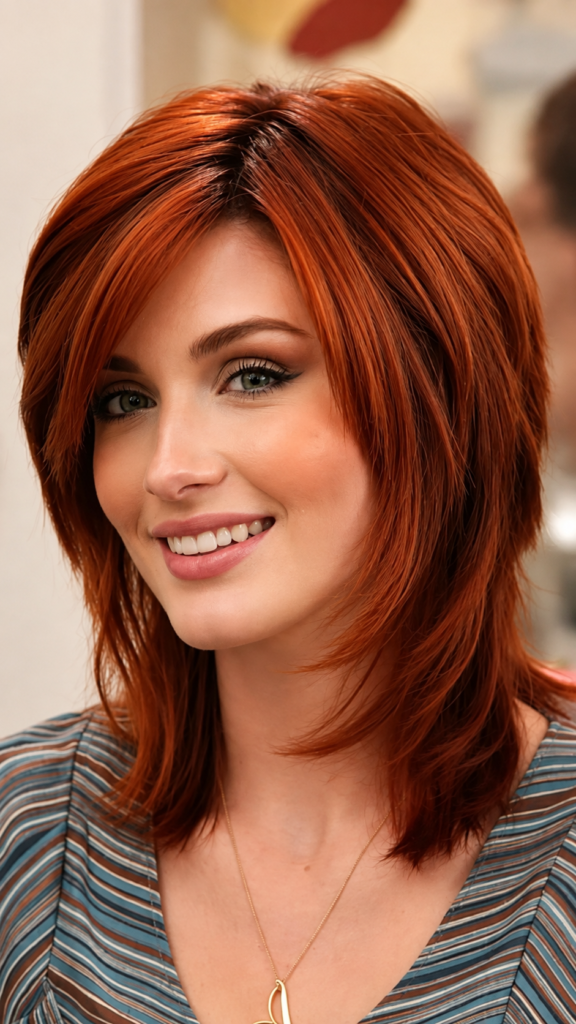
The classic textured shag remains one of the most flattering options for round faces. This style features choppy, layered sections throughout the crown and sides, creating movement that adds height and dimension. Side swept bangs are crucial because they elongate the face and draw attention upward rather than across the cheeks.
The texture comes from strategic cutting that removes bulk and creates separation between strands. A skilled stylist cuts shorter layers on top and gradually longer layers toward the back, building a shape that frames the face without adding width. Side swept bangs should fall just below the cheekbones and angle toward the ear, creating a diagonal line that flatters round proportions.
Styling requires minimal effort. Apply texturizing spray or sea salt spray to damp hair, then use your fingers to tousle and separate layers. Blow dry with a round brush for volume or air dry for a relaxed appearance. The beauty is that it looks intentionally undone.
This shag works best on hair with natural texture or slight waves. Straight hair may need a curling iron to create movement. Maintenance requires trims every four to six weeks to keep layers sharp. Color enhances texture—consider subtle highlights or lowlights for additional dimension.
2. The Disconnected Shag with Undercut Definition
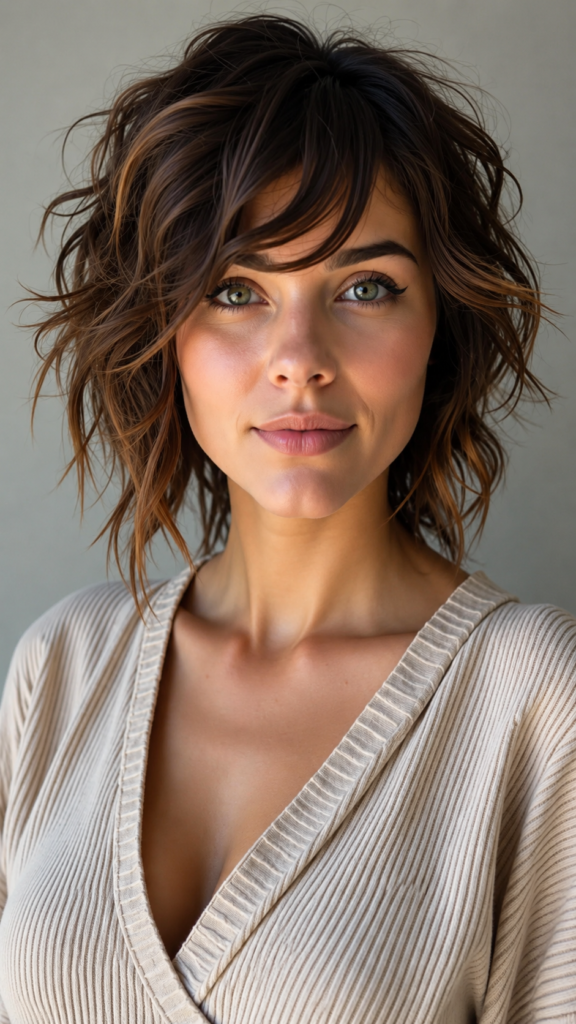
A disconnected shag creates more separation between top layers and the back section, adding dramatic definition. The undercut involves cutting lower back and sides significantly shorter than the top, creating a bold silhouette that lifts away from the face and adds crown height.
The disconnected shag works by establishing clear visual boundaries. The top section remains longer and textured, while sides and back are cut shorter. This shape counteracts horizontal facial proportions by creating essential height for round faces.
Styling requires more intentional effort. The top layers need texture and movement via blow dryer and texturizing products. The undercut should be clean and defined using styling cream or pomade to keep sections smooth and separated from longer top layers. This contrast creates a modern, edgy appearance.
This style suits fashion-forward people willing to style regularly. The undercut requires maintenance every three to four weeks. Thick hair makes this style particularly striking by removing bulk and creating a lighter appearance. Fine hair can work too, but discuss with your stylist how to create density illusion in the undercut area.
3. The Feathered Shag with Soft Layers
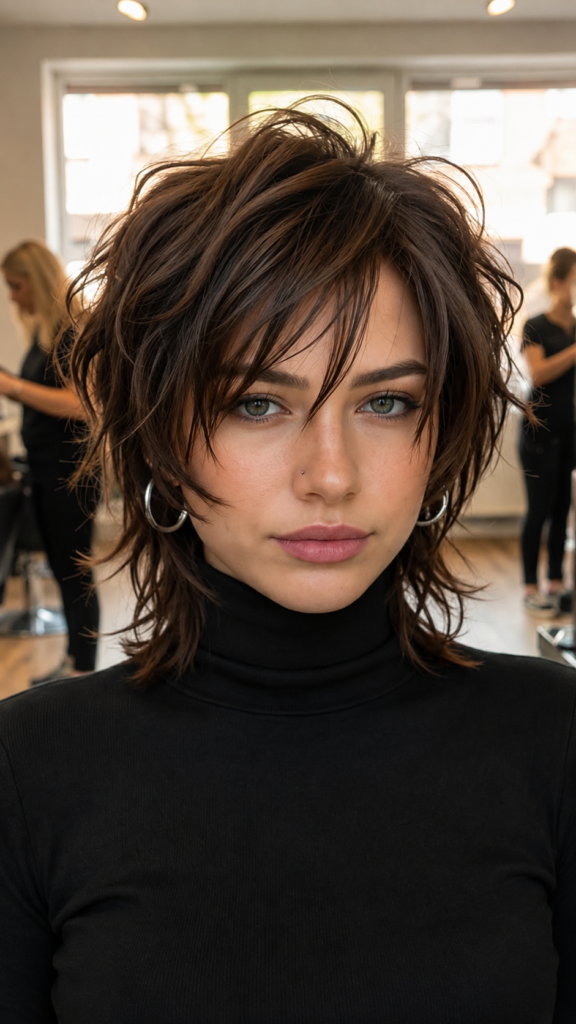
The feathered shag is a softer, romantic take on the classic shag. Layers cut at angles create a feathered effect where each layer flows into the next. The result looks light and airy while providing definition round faces need. Feathering creates subtle texture without harsh choppiness.
This style is achieved through careful layering that removes weight gradually from crown to ends. Each layer is cut at a specific angle so that when styled, hair appears to have movement and flow. Feathering is particularly effective for round faces because it creates soft lines that frame without adding bulk at sides or cheeks.
Styling is straightforward. Blow dry with a round brush, directing layers away from your face and toward the back. Use light texturizing spray or dry shampoo to enhance the feathered effect. You can also use a curling iron for subtle waves that emphasize layered structure.
This shag works beautifully on all hair types. Naturally wavy or curly hair will show even more pronounced feathering with less styling effort. Maintenance is low to moderate, requiring trims every six to eight weeks. This is an excellent choice for a feminine, approachable aesthetic while gaining face-flattering benefits.
4. The Choppy Shag with Textured Crown
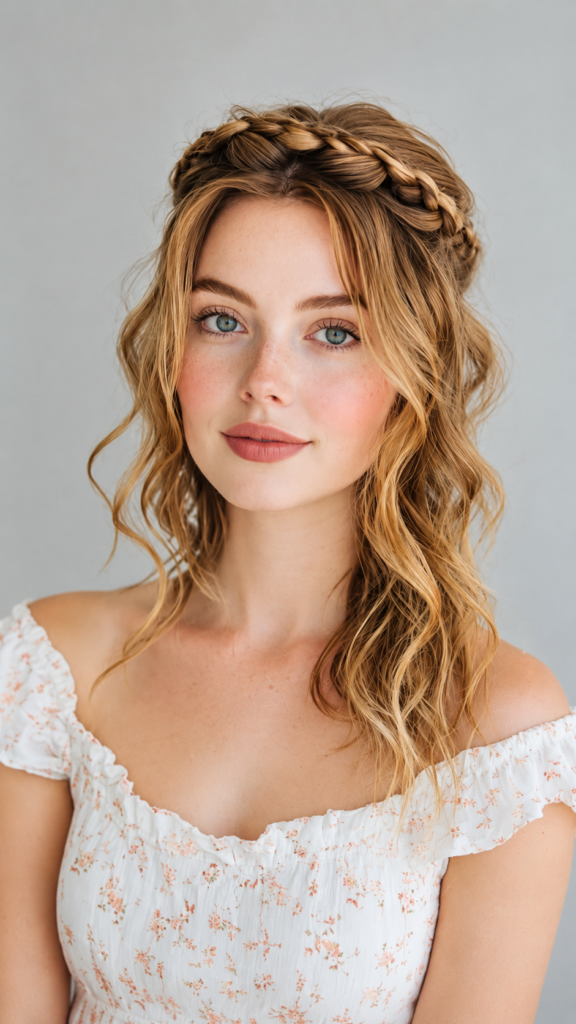
The choppy shag emphasizes texture and movement through aggressive layering. Shorter, choppier layers throughout—particularly at the crown—create maximum texture and height. This bold, modern approach clearly defines face shape.
Choppiness is created by cutting hair at various angles and lengths, sometimes cutting into the hair rather than across it. This creates separation between strands and prevents flat appearance. For round faces, this texture breaks up smooth, rounded appearance and creates visual interest drawing the eye upward.
The textured crown is the star. Concentrating choppiest layers at the top creates height and volume exactly where needed. This height makes the face appear longer and less round. Sides and back can be slightly longer and less choppy, creating a fuller crown that tapers toward the nape.
Styling requires texturizing products and a blow dryer. Apply texturizing spray or mousse to damp hair, then blow dry while using fingers to lift and separate layers. You can also use a curling iron for waves that enhance choppy texture. This style looks best when intentionally tousled.
The choppy shag suits people with medium to thick hair who enjoy edgy, contemporary aesthetics. Fine hair requires discussion with your stylist about creating texture illusion without appearing thin. Maintenance requires trims every four to six weeks to keep choppy layers sharp and defined.
5. The Shag with Long Face Framing Layers
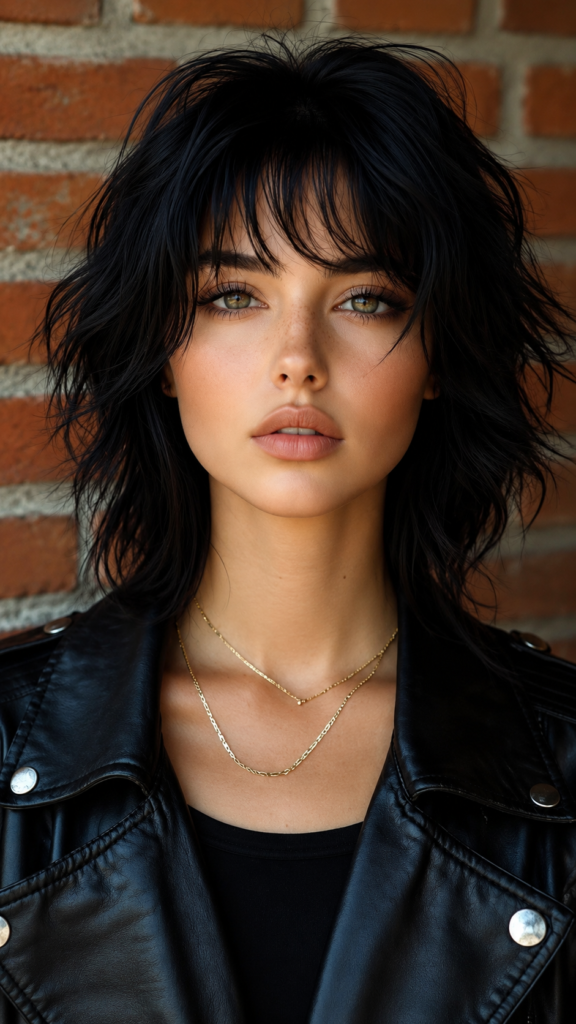
Face framing layers are strategic tools for round face shapes. This shag keeps layers around the face longer than the back, creating a frame that draws attention to eyes and cheekbones rather than facial width. Longer face framing layers create diagonal lines that visually lengthen the face.
The technique involves cutting shorter layers at the crown for height and texture, then allowing face layers to extend longer. These pieces should start at cheekbones and angle slightly forward, creating a shape that hugs the face without adding width. The longer length creates a visual line moving downward and inward, counteracting horizontal proportions.
Styling requires attention to directing these pieces. Blow dry them away from the face initially, then use a curling iron to create subtle waves that frame. You can also straighten them for sleeker appearance. The key is ensuring they move and have texture rather than lying flat.
This style works on all hair types and feels somewhat conservative or professional. Face framing layers add sophistication and polish while textured crown maintains modern shag aesthetic. Maintenance is moderate, requiring trims every five to seven weeks to keep face framing layers at the right length and angle.
6. The Tousled Shag with Textured Bangs
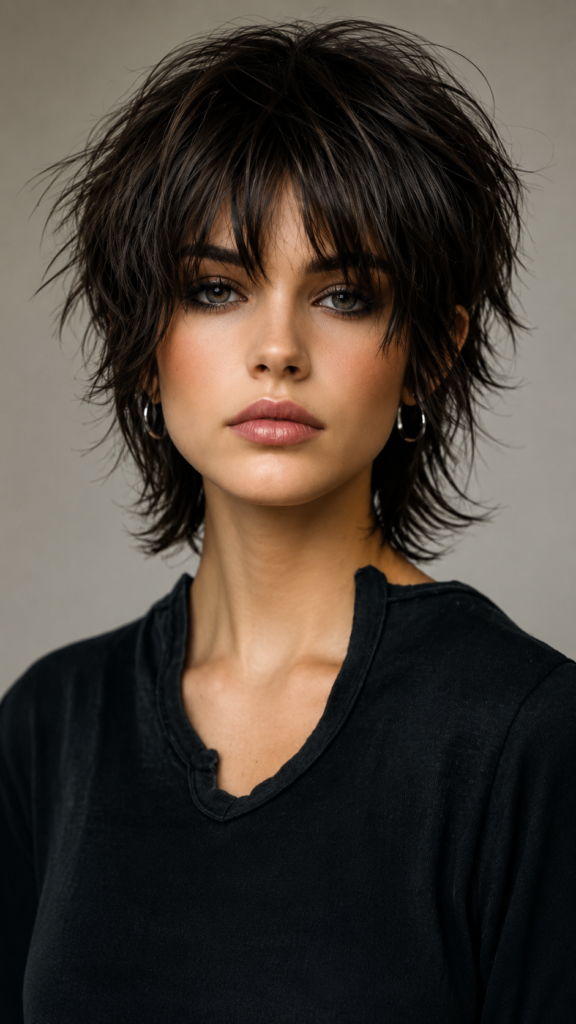
Textured bangs are game changers for round faces. This shag features choppy, layered bangs cut to create texture rather than blunt lines. Textured bangs break up the horizontal line across the forehead and add visual interest drawing attention upward. Combined with a tousled shag throughout, this creates a cohesive, modern look.
Textured bangs use the same choppy techniques as the rest of the shag. Rather than creating straight lines, the stylist cuts bangs at various angles and lengths, creating feathered or choppy effects. These bangs should fall just above eyebrows or slightly longer, depending on face shape and preference. Texture prevents them from looking heavy or blunt.
The tousled quality comes from layering and styling. Blow dry with a round brush or fingers to create movement and separation. Use texturizing spray or sea salt spray to enhance tousled appearance. You can also use a curling iron for waves that emphasize layers and bangs.
This style is bold and fashion forward, ideal for people who enjoy experimenting and styling regularly. Textured bangs require maintenance every three to four weeks to keep them at the right length and texture. Straight hair may need styling tools more frequently to maintain tousled appearance. Naturally wavy or curly hair will look effortlessly tousled with minimal effort.
7. The Shag with Subtle Layers and Minimal Texture
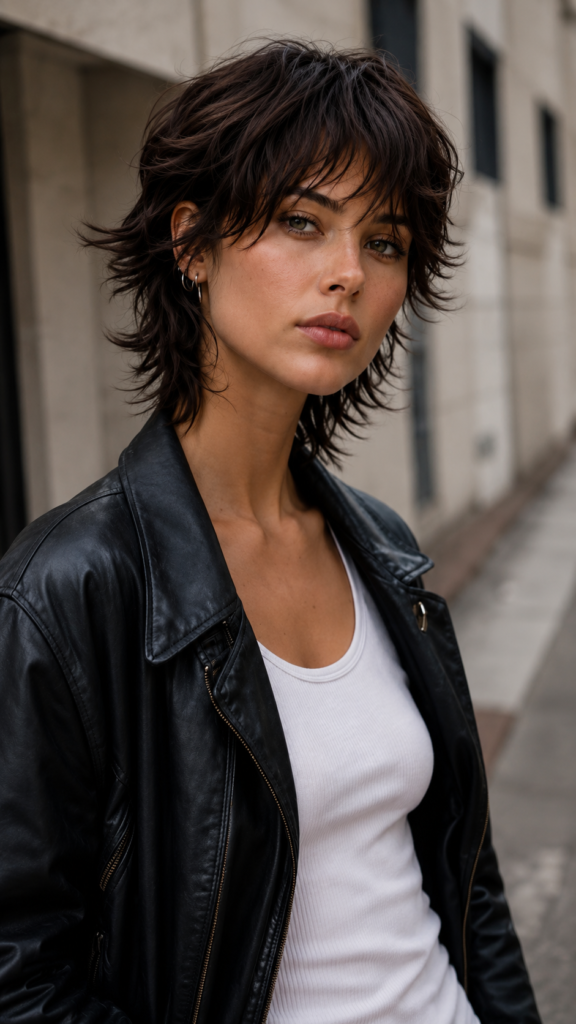
Not everyone wants heavily textured, choppy shags. This style offers a refined approach with subtle layers and minimal texture. Layers still create height and definition, but they are softer and less pronounced. This shag works for round faces by creating gentle movement and dimension without bold, edgy aesthetics.
Subtle layering is achieved through careful cutting that removes weight gradually and creates soft transitions between lengths. Layers blend together rather than creating obvious separation. This approach is excellent for people preferring polished, classic aesthetics while gaining shag benefits.
Styling is simple. Blow dry with a round brush for volume and shape, or air dry for relaxed appearance. You can use light texturizing spray if you want to enhance layers, but it is not necessary. This style looks good with minimal styling, making it practical for busy lifestyles.
This shag suits all hair types and is particularly flattering for conservative professional environments. Subtle layers add dimension and movement without appearing too trendy. Maintenance is straightforward, requiring trims every six to eight weeks to keep layers defined and shape intact. This is an excellent choice if you want shag benefits without high maintenance commitment.
8. The Shag with Textured Pixie Top and Longer Sides
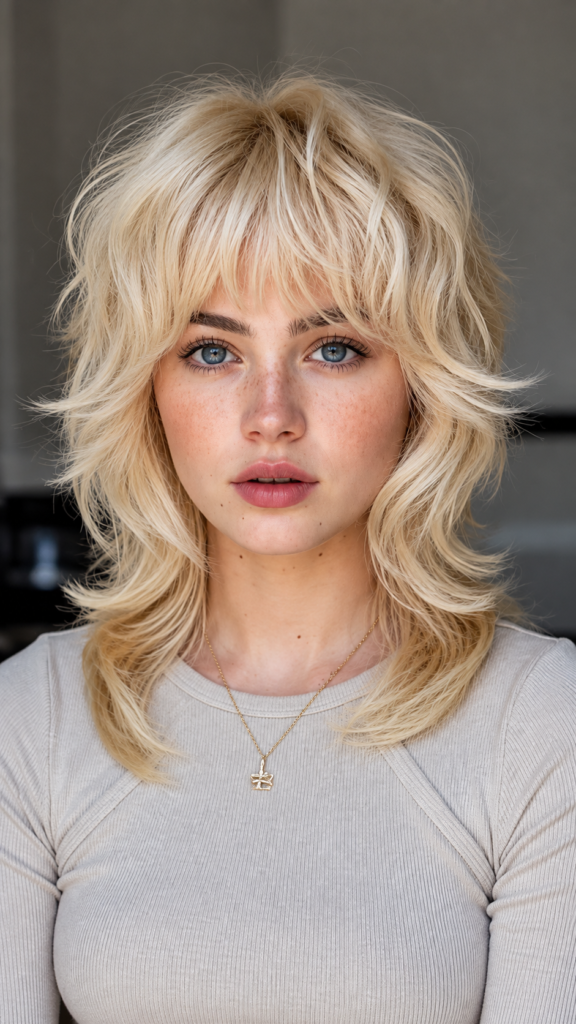
This style combines pixie cut elements with a shag, creating a bold, modern look. The top is cut very short and textured like a pixie, while sides remain longer and layered like a shag. This creates maximum crown height and a shape that tapers toward the nape. For round faces, this extreme height is very flattering because it creates strong vertical lines.
The textured pixie top is achieved through very short, choppy layers that create texture and movement. Longer sides are cut with shag layers that frame the face and create dimension. The contrast between very short top and longer sides is dramatic and striking.
Styling requires texturizing products and a blow dryer for the top. Apply texturizing cream or pomade to the pixie top and use fingers to create separation and texture. Longer sides can be styled with a curling iron or blow dryer for waves and movement. This style requires regular styling to look its best.
This bold choice suits confident people who enjoy making statements with their appearance. The pixie top requires trims every three to four weeks. Longer sides need trims every five to six weeks. This is high maintenance, but dramatic results are worth the effort for people who love this aesthetic.
9. The Shag with Soft Waves and Dimensional Color
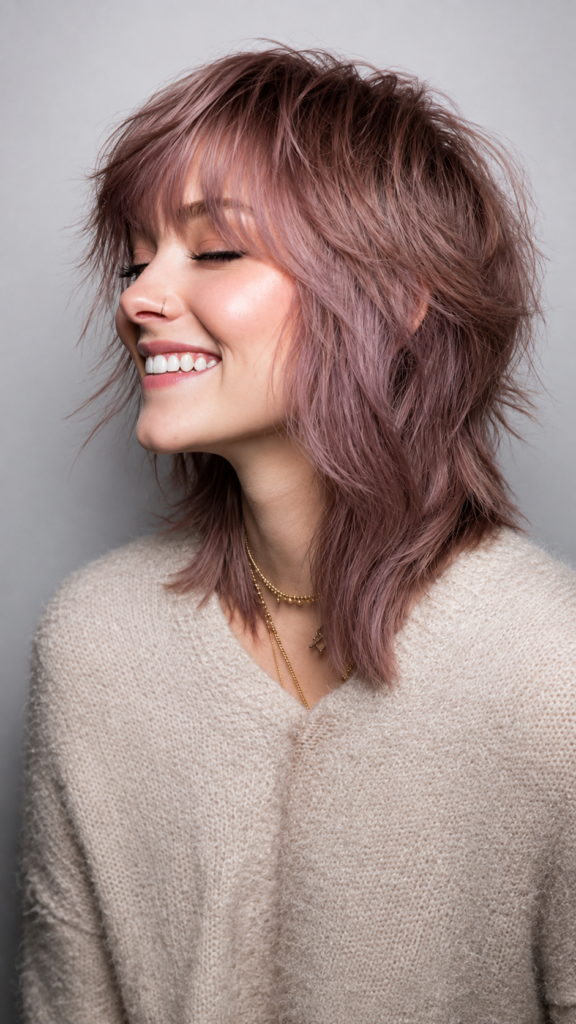
While cut is crucial, color plays an important role in how a shag flatters round faces. This style emphasizes combining a well-cut shag with dimensional color. Soft waves are created through styling, and dimensional color adds depth and visual interest that enhances cut texture.
Dimensional color involves adding highlights or lowlights throughout the hair to create depth and movement. Lighter pieces around the face brighten and draw attention to eyes. Darker pieces in the back add depth and create dimension illusion. This color work combined with a shag cut creates a sophisticated, multidimensional look.
Soft waves are created through styling with a curling iron or wand. You can also use wave spray or sea salt spray to enhance natural waves. Waves should be soft and flowing rather than tight curls, creating movement that emphasizes shag layers.