
Minimalist nail art has become the go-to choice for anyone seeking elegance without excess. In 2025, the trend continues to dominate because it works for every lifestyle, every budget, and every occasion. Whether you’re heading to the office or out for the weekend, simple designs deliver sophistication through restraint.
The beauty of minimalist nails lies in their versatility. You can wear them for months without boredom. Clean lines, soft colors, and subtle details create a timeless look that never feels dated. No need for glitter, rhinestones, or complicated techniques. Just quality polish, steady hands, and an eye for balance.
This guide walks you through 19 distinct minimalist nail designs you can recreate at home or request at your salon. Each style proves that less truly is more. You’ll find options for every mood, season, and personal aesthetic. From soft pastels to bold accents, from geometric shapes to organic textures, there’s something here that speaks to you.
The designs featured below are achievable for beginners and satisfying for experienced nail artists. Most require only basic tools: a brush, a few quality polishes, and patience. No special equipment needed. No advanced skills required. Just the desire to keep your nails looking sharp and refined.
1.Matte Finish Minimalist
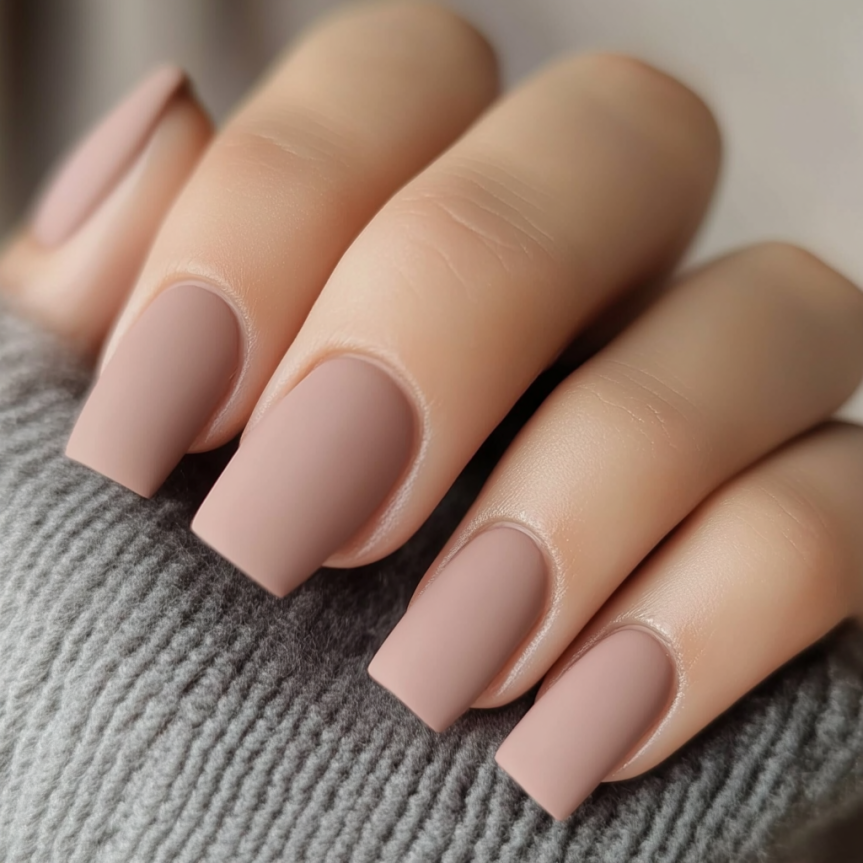
A matte finish transforms any color into something more sophisticated and modern. Apply a matte top coat over your chosen shade for a velvety appearance. The finish hides fingerprints and minor imperfections better than glossy options.
Matte works beautifully with neutrals, pastels, and even bold colors. The finish alone creates enough visual interest that you might not need additional design elements. Matte nails feel intentional and considered, perfect for people who appreciate understated elegance.
2. Soft Ombre Gradient Effect
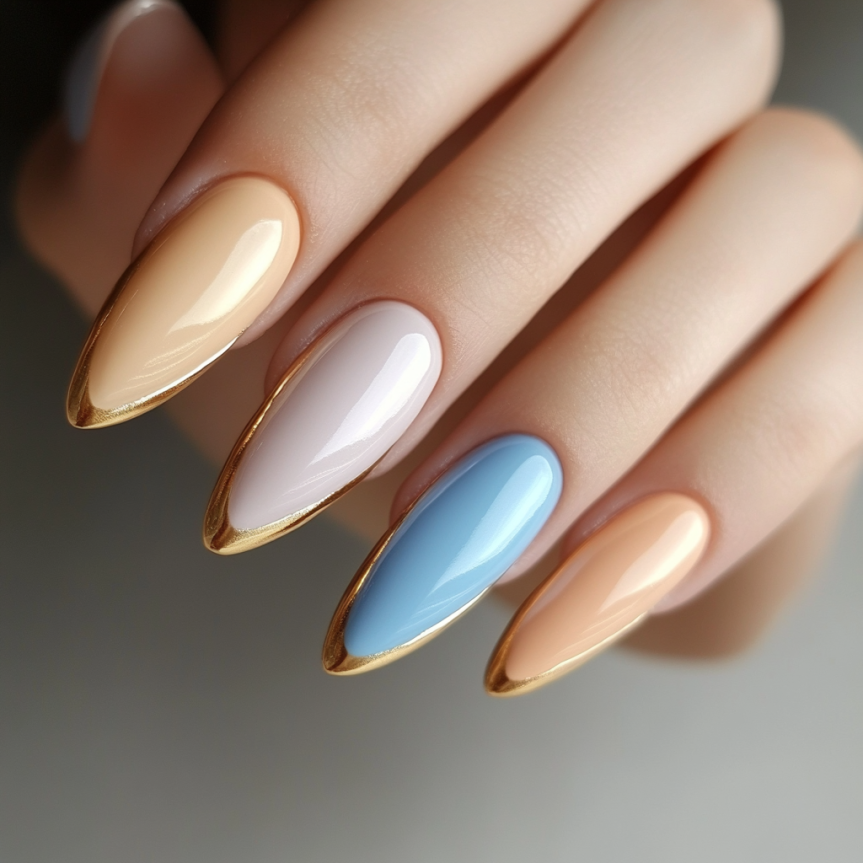
Ombre nails blend two or more colors in a soft, gradual transition. The effect looks complex but requires only a sponge and patience. Start with your lightest shade at the base and gradually deepen toward the tip.
This technique works beautifully with pastels, neutrals, or even muted jewel tones. The gradient creates visual interest without busy patterns or multiple designs. One nail can showcase the full spectrum while others remain solid, creating balance across your hand.
3. Negative Space Design
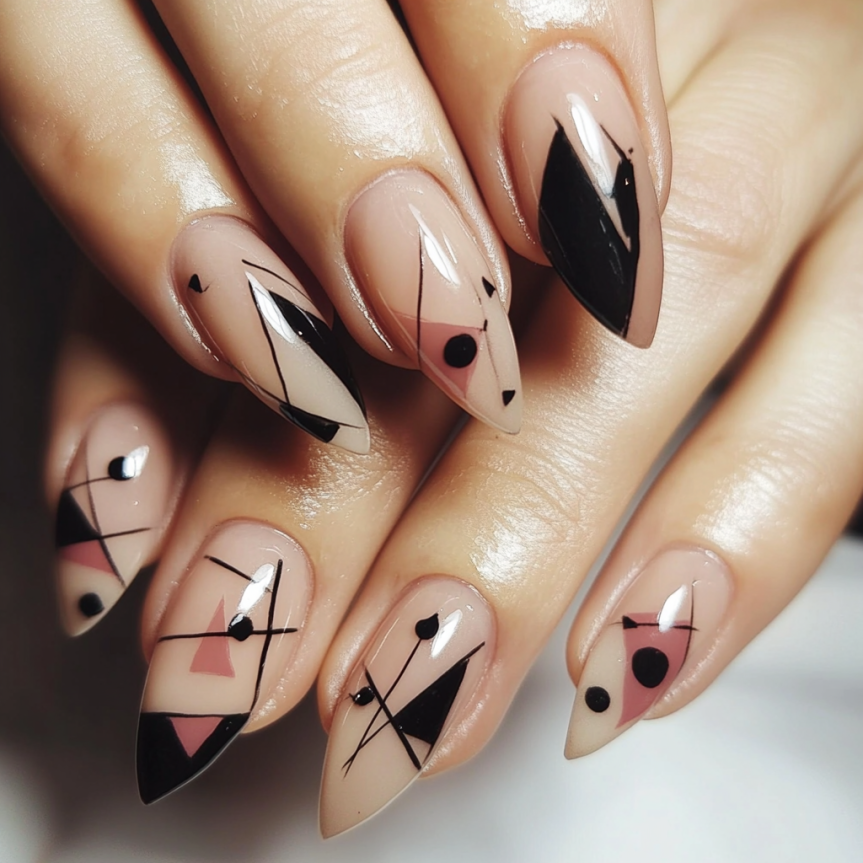
Negative space nail art uses the natural nail color as part of the design. Paint a base color, then leave sections bare to reveal the nail underneath. This creates striking contrast with minimal effort.
Geometric shapes work best for this technique. Try a thin line down the center, a corner triangle, or a half-moon at the base. The unpainted areas feel intentional and modern. This approach also means your nails stay shorter and stronger since less surface area gets covered in polish.
4. Soft Ombre Transition
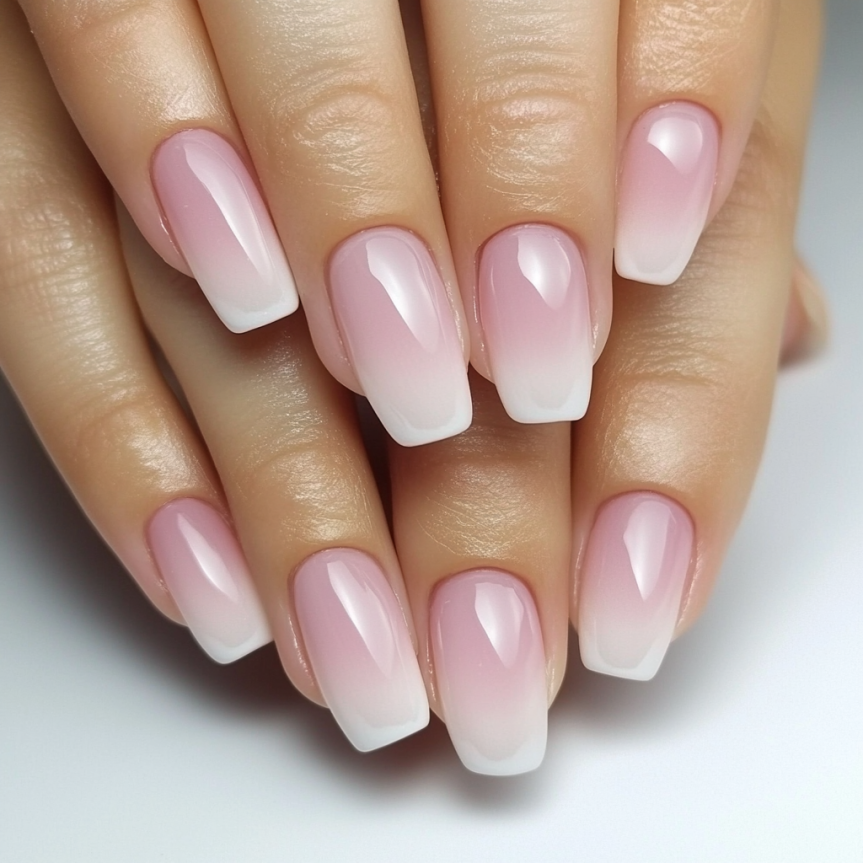
A true ombre creates a seamless color journey across the nail. Use a makeup sponge to dab and blend two shades together. The result feels organic and flowing rather than striped or blocked.
Pastels to white, nude to taupe, or blush to mauve all create calming effects. The technique works on any nail shape but looks especially striking on longer nails where the gradient has room to develop. Apply a glossy top coat to enhance the blended effect and add shine.
5. Single Solid Color Statement
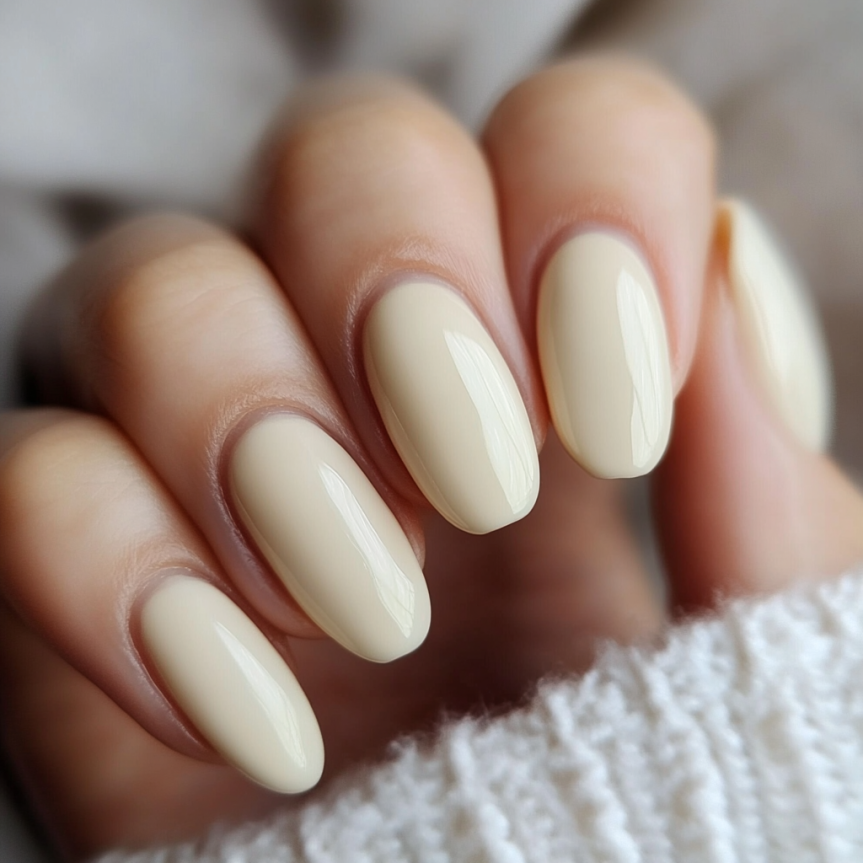
Sometimes the simplest choice is the strongest. A single, well-chosen color on all ten nails requires no design skills and delivers maximum impact. The key is selecting a shade that complements your skin tone and works with your wardrobe.
Soft nudes, warm taupes, cool grays, and muted terracottas all read as sophisticated and intentional. A quality formula with good opacity means you need only two coats for full coverage. This approach also means your nails stay healthy longer since you’re not layering multiple products or using complex techniques.
6. Neutral Base with Subtle Accent
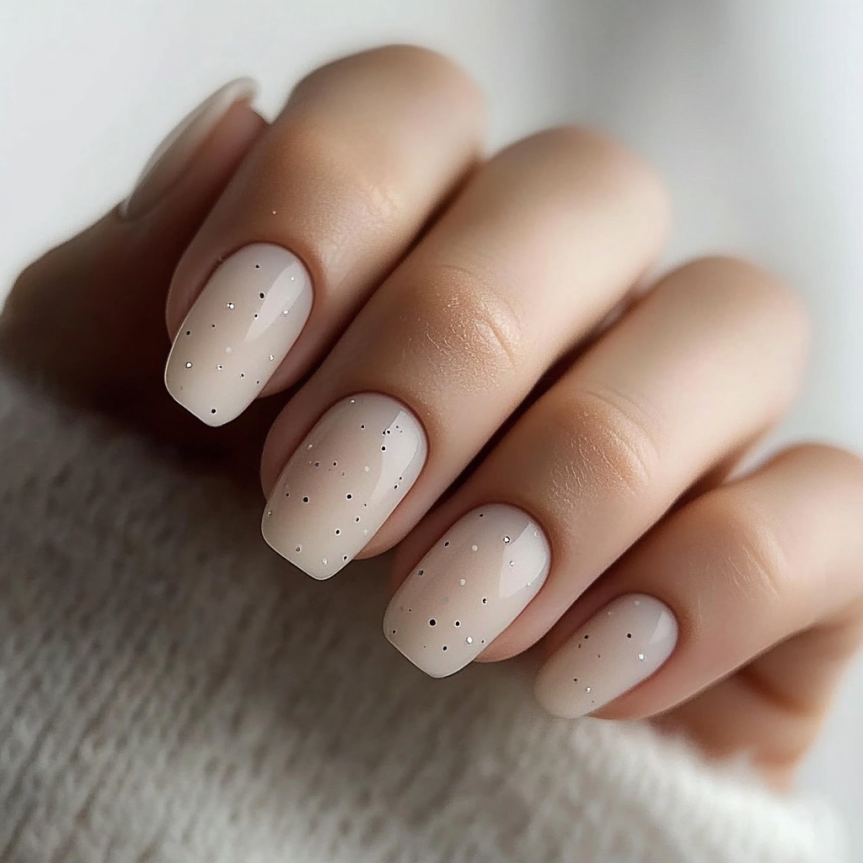
Start with a neutral base across all nails, then add a tiny detail to just one or two. This creates focal points without overwhelming the overall look. The accent might be a thin line, a small dot, or a delicate shape.
The contrast between simplicity and detail draws attention to your hands in a refined way. This design works for professional settings where bold nails might feel out of place. You get personality and style while maintaining an understated appearance that reads as polished and intentional.
7. Minimalist Neutral with Fine Detail
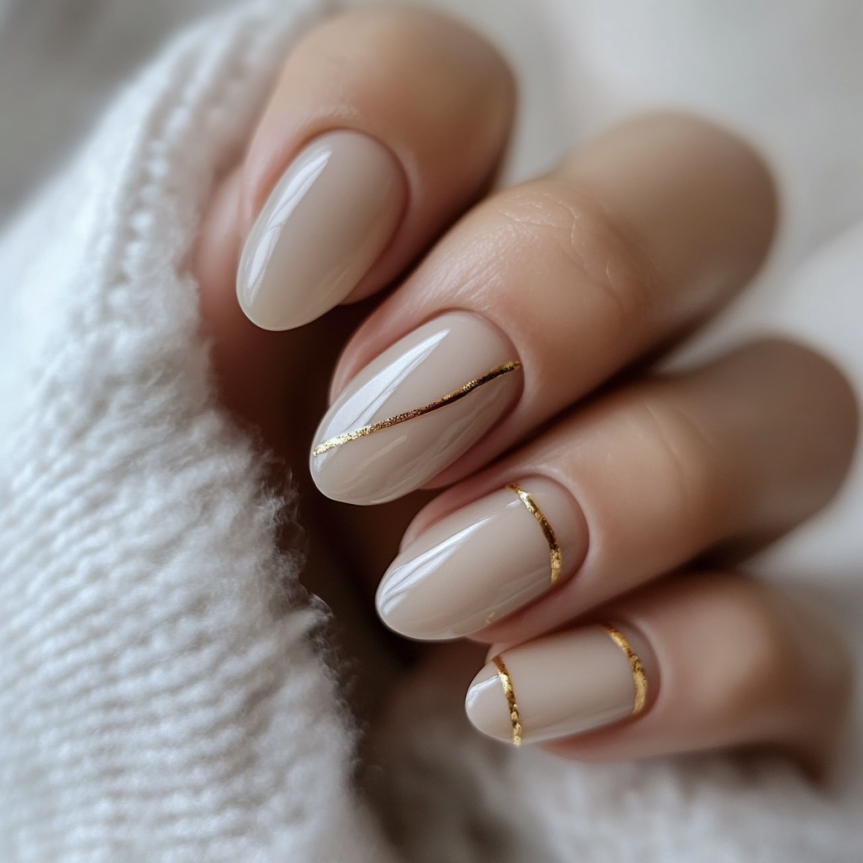
A neutral foundation paired with one thin, precise line creates architectural interest. Use a thin brush or nail art pen to draw a single stripe down the center, along the edge, or across the tip. The line should be clean and confident.
This design celebrates precision and control. It works on any nail length and shape. The line can be black for contrast, or match your base color for a more subtle effect. Either way, the result feels intentional and modern without requiring advanced artistic skills.
8. Modern French Tip Variation
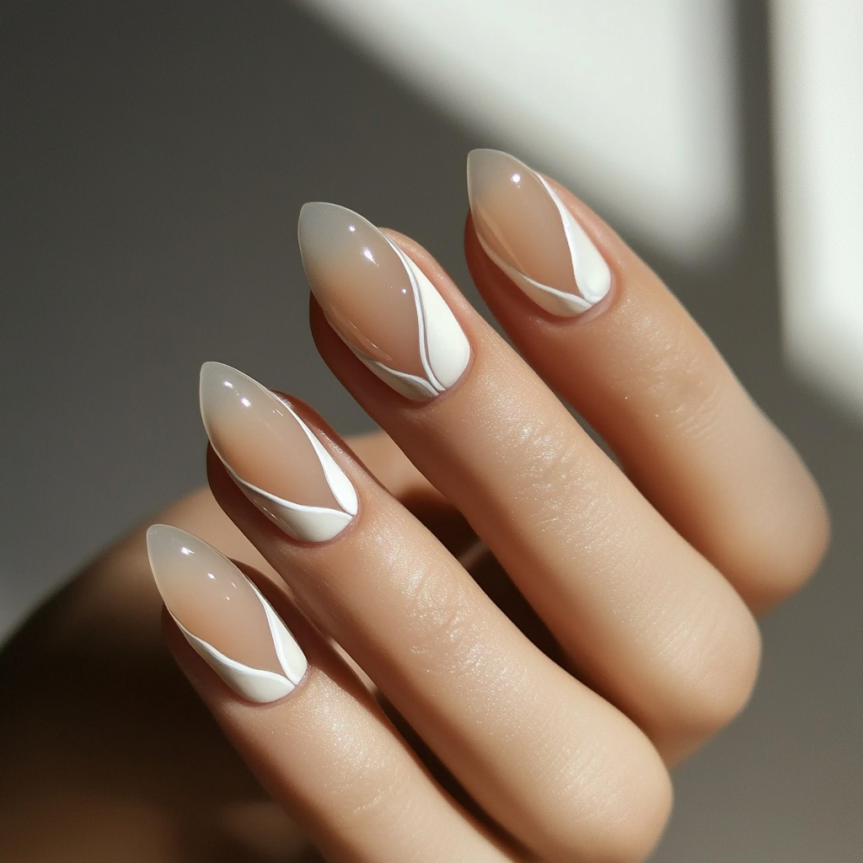
French tips have evolved beyond the classic white line. Modern versions feature colored tips, offset lines, or asymmetrical designs. The key is keeping the execution clean and the color palette restrained.
Try a nude base with a thin colored tip, or reverse the concept with a colored base and nude tip. Some versions feature the line off-center or angled rather than straight across. These subtle variations feel fresh while maintaining the elegance that makes French tips timeless.
9. Pastel Gradient Design
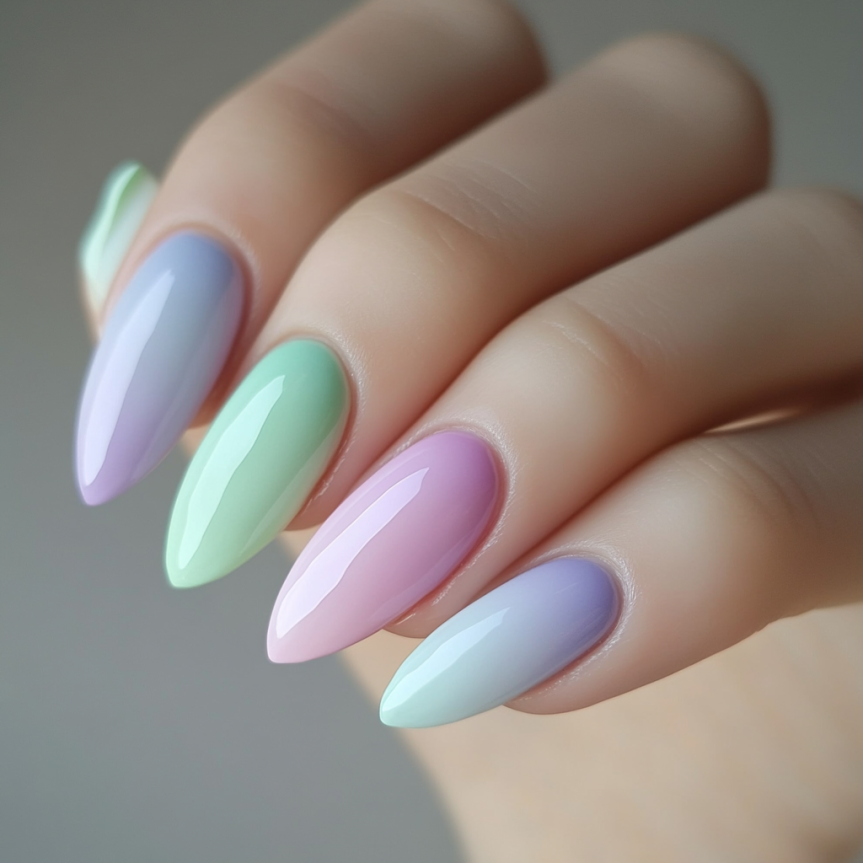
Pastel gradients combine the softness of pale colors with the visual interest of blended tones. Choose two complementary pastels like lavender and pale pink, or mint and soft yellow. Blend them together using a sponge for a dreamy effect.
The result feels gentle and approachable rather than bold or dramatic. Pastel gradients work especially well for spring and summer looks. They pair beautifully with casual outfits and professional settings alike. The soft colors feel calming while the gradient technique adds enough complexity to feel intentional.
10. Clean Geometric Shapes
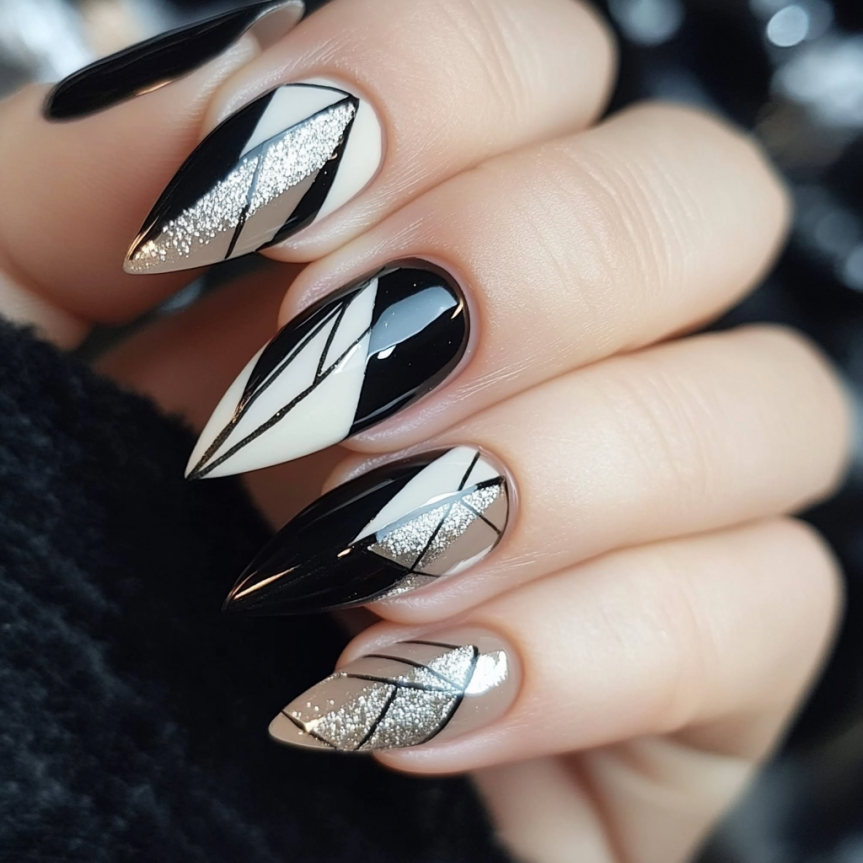
Geometric designs use simple shapes like triangles, squares, and lines to create visual interest. Keep the shapes clean and the color palette limited to two or three shades. Precision matters more than complexity.
A single triangle in one corner, a thin line down the center, or a small square at the tip all work beautifully. Use a thin brush or nail art pen for accuracy. The geometric approach feels modern and intentional. It appeals to people who love structure and clean design.
11. Minimalist Marble Effect
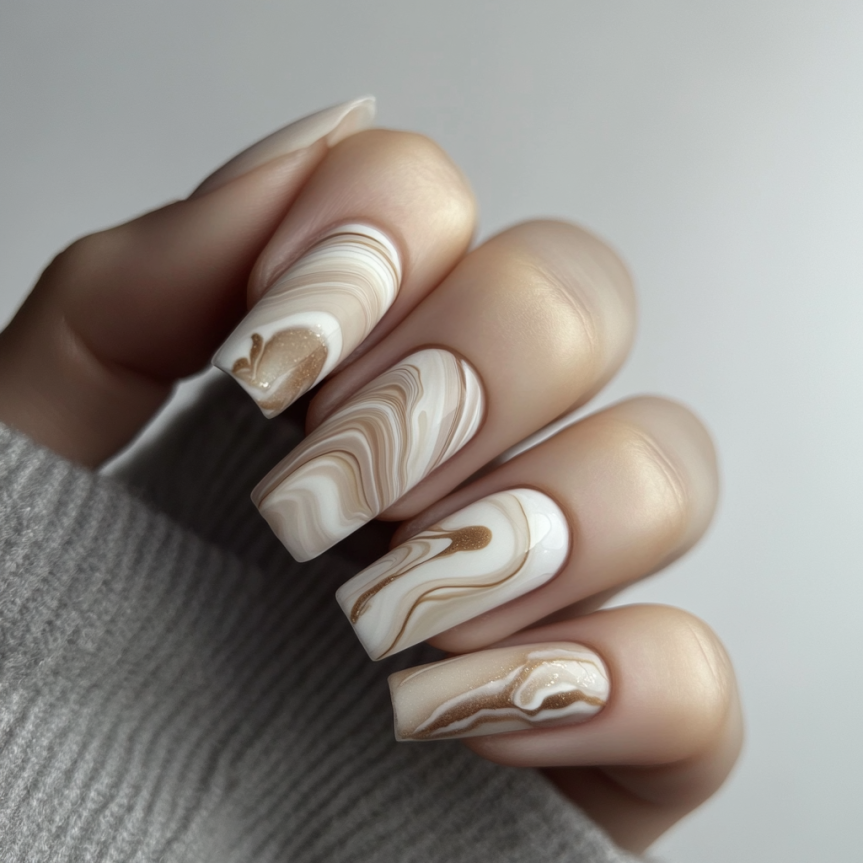
Marble nails feature soft, organic swirls that mimic natural stone. The key to minimalist marble is restraint in color and pattern. Use a neutral base with just one accent color for the swirls.
Create the effect by dropping small amounts of polish into water, swirling gently, then dipping your nail into the pattern. Alternatively, use a thin brush to hand-paint subtle veins. The result feels sophisticated and natural. Minimalist marble works for any occasion and pairs well with any outfit.
12. Textured Minimalist Element
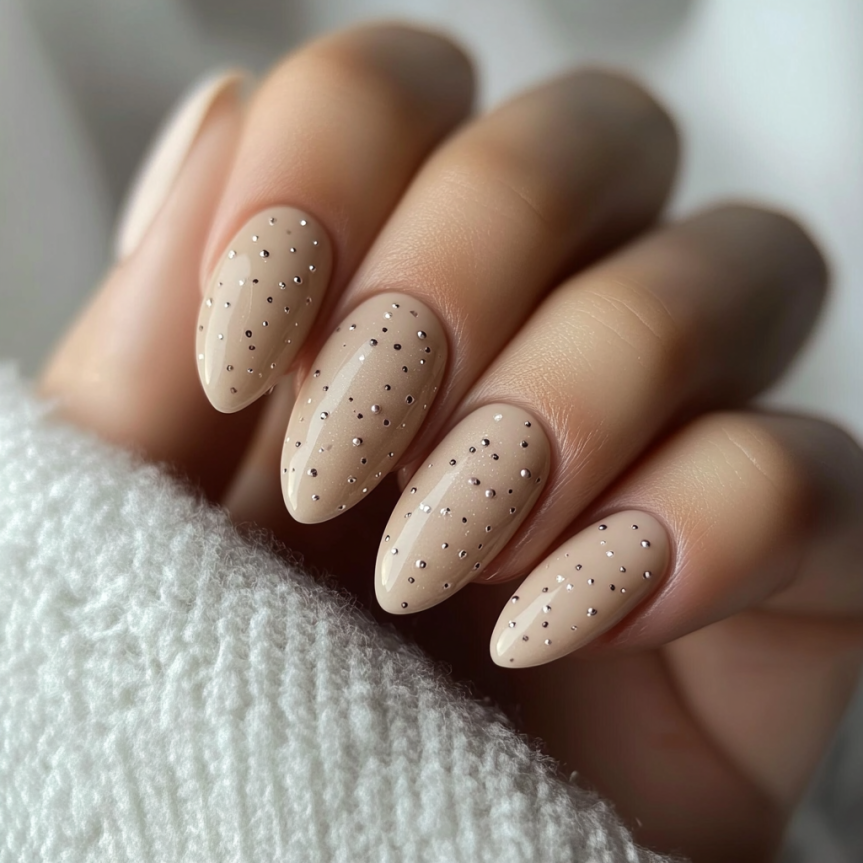
Texture adds dimension without requiring complex designs. A matte top coat over a glossy base creates visual interest through finish contrast. Some textured polishes offer a velvet or sand-like appearance.
Apply texture to just one or two nails while keeping others glossy, or texture all nails for a cohesive look. The tactile quality makes your nails feel intentional and considered. Textured finishes also hide minor imperfections better than high-gloss options.
13. Clear Nails with Single Line
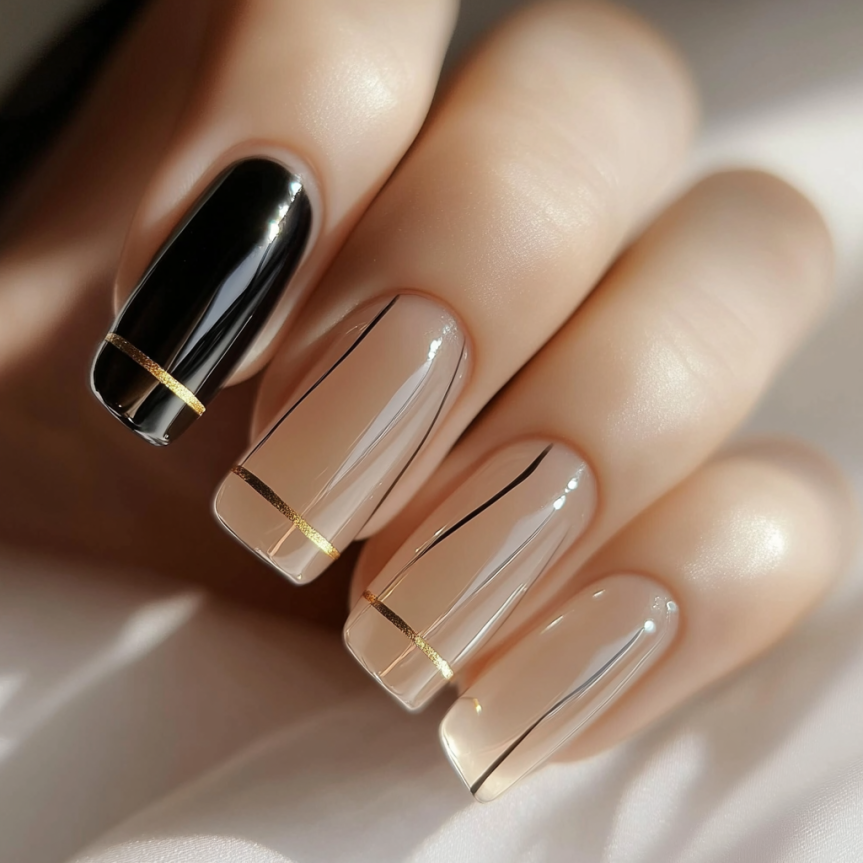
Clear or barely-there base colors let your natural nail show through while a single line provides definition. Use a thin brush to draw one precise line horizontally, vertically, or diagonally. The line might be black, nude, or a soft color.
This design celebrates the natural nail while adding intentional detail. It works beautifully for people who prefer understated looks or professional environments with strict nail policies. The simplicity feels modern and confident rather than plain.
14. Bold Colored French Tip
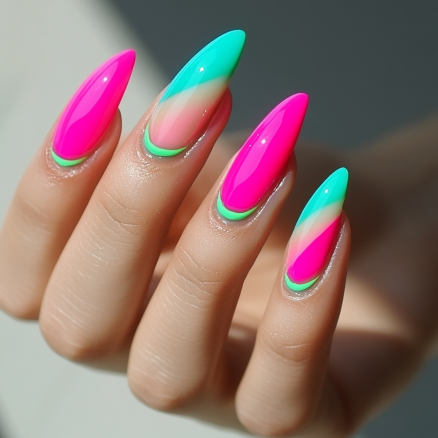
A bold French tip pairs a neutral or soft base with a striking colored tip. Instead of white or nude, try a deep burgundy, forest green, or navy tip. The contrast creates impact while the French tip format keeps the overall look refined.
This design works for people who want personality without going full color. The bold tip draws attention to your hands in a sophisticated way. It pairs well with both casual and professional outfits depending on the color you choose.
15. Minimalist Floral Accent
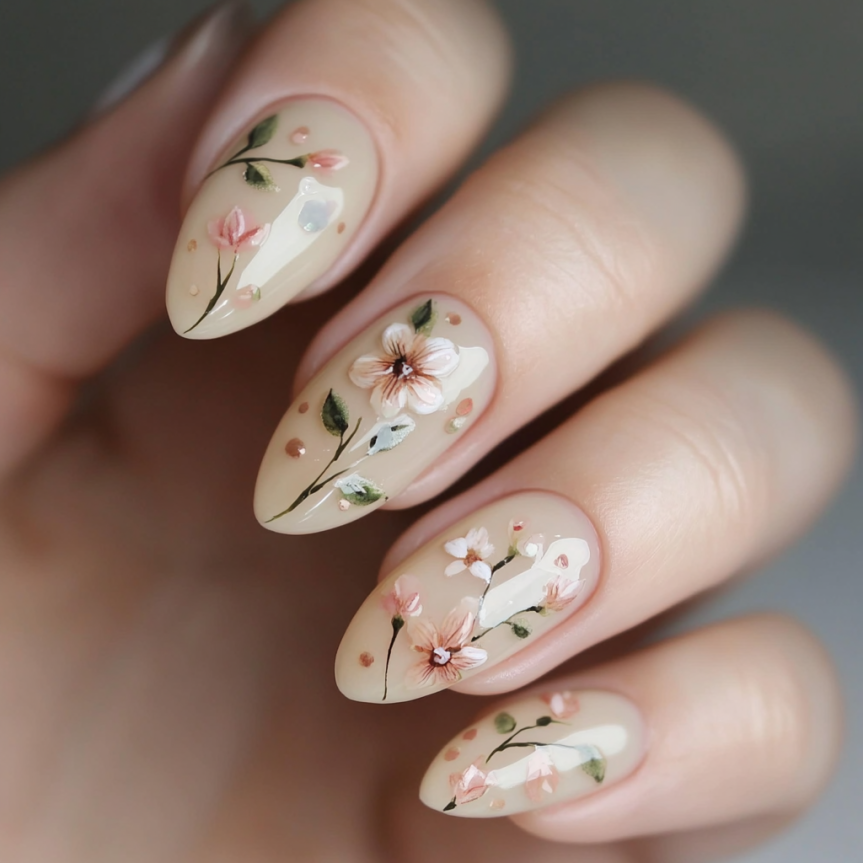
Tiny flowers on a neutral base create botanical interest without feeling busy. Paint small, simple blooms on just one or two nails while keeping others solid. The flowers should be small enough to feel like accents rather than the main focus.
Use a thin brush or dotting tool to create petals and centers. Keep the color palette soft and natural. This design appeals to people who love nature and delicate details. It works for spring and summer especially well, though neutral tones make it wearable year-round.
16. Single Thin Stripe Detail
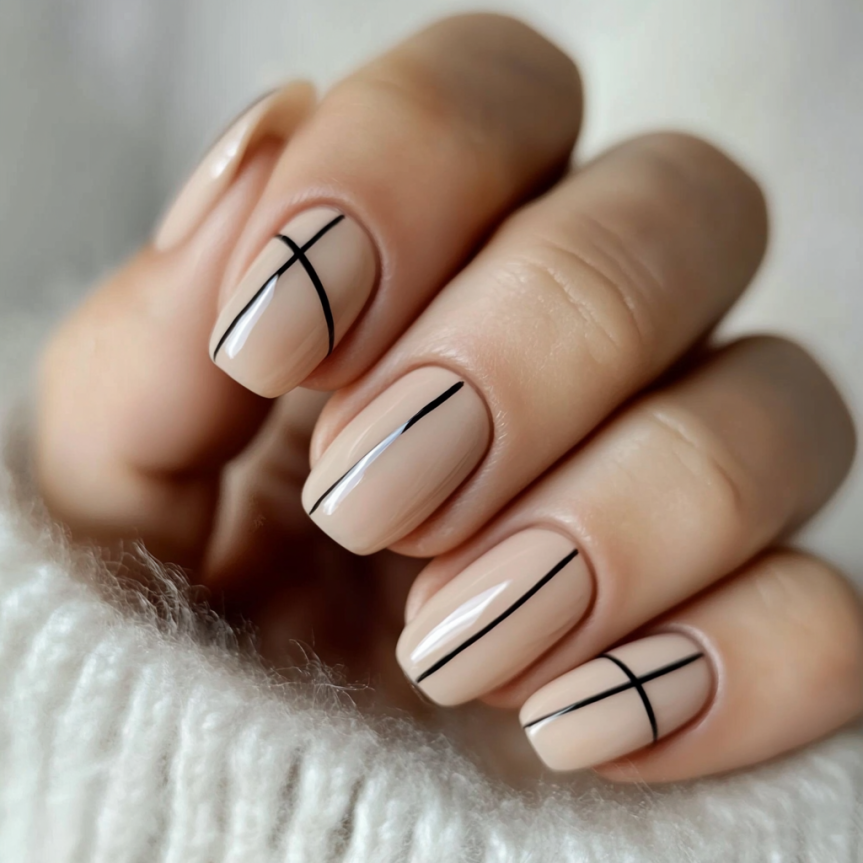
A single thin stripe offers architectural simplicity. Draw one line down the center of each nail, or place it off-center for asymmetry. The line might run the full length or stop short of the tip.
This design requires only a thin brush and steady hand. The result feels intentional and modern. A contrasting color creates more impact, while a matching shade offers subtlety. Either approach delivers sophistication through restraint.
17. Small Delicate Details
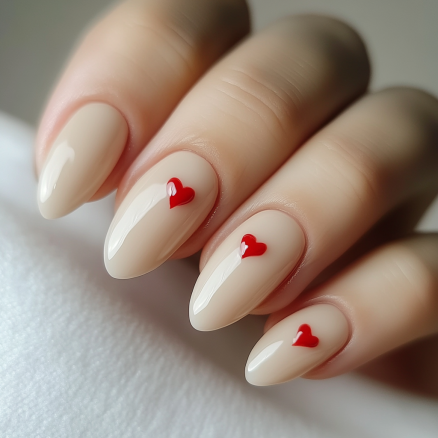
Small details scattered across nails create visual interest without overwhelming the design. Tiny dots, short lines, or small shapes placed strategically on one or two nails work beautifully. Keep the overall effect balanced and intentional.
These details might be placed at the cuticle, along the edge, or near the tip. The key is making them feel purposeful rather than accidental. This approach works for people who want personality without bold statements.


Leave a Reply