Long shag haircuts have made a strong comeback, and older women are leading the charge. This style works beautifully for women over 50, 60, and beyond. It adds movement, texture, and a relaxed energy that shorter cuts sometimes miss. The shag is not a one-size style. It can be tailored to suit fine hair, thick hair, wavy hair, or straight hair. Layers are the heart of this cut. They lift the roots, reduce bulk, and frame the face in a flattering way.
The Long Shag Cut: What Makes It Work for Older Women
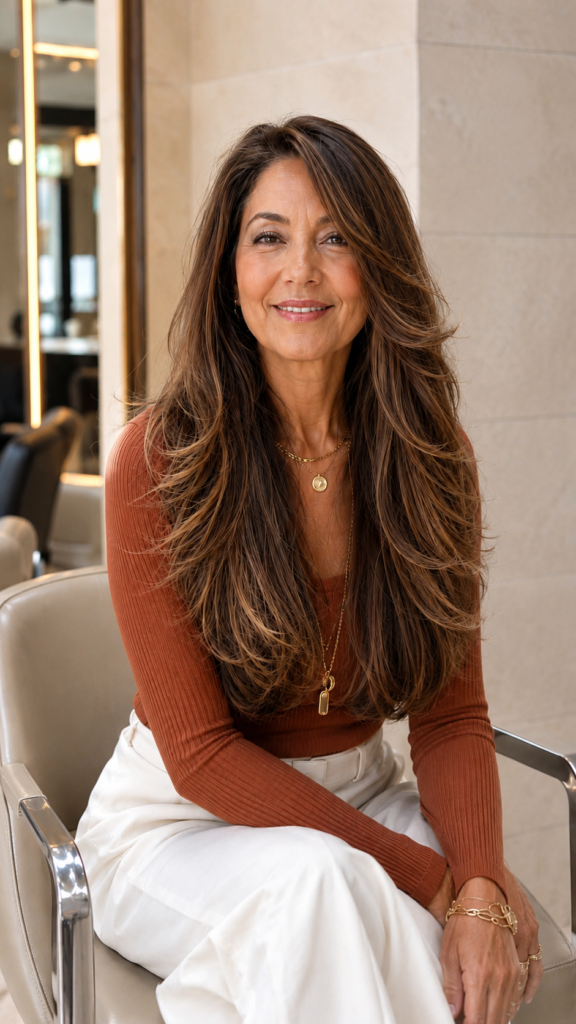
The long shag is built on layers. A stylist cuts the hair at multiple lengths, starting shorter at the crown and gradually lengthening toward the ends. This creates a cascading effect that adds dimension and movement. For older women, this structure is especially useful because it works with the natural changes hair goes through over time.
Hair tends to lose density as we age. The follicles produce thinner strands, and the overall volume decreases. A blunt cut can make this thinning more obvious. The shag, by contrast, uses layers to redistribute weight. The result is hair that looks fuller and more alive, even when the individual strands are fine.
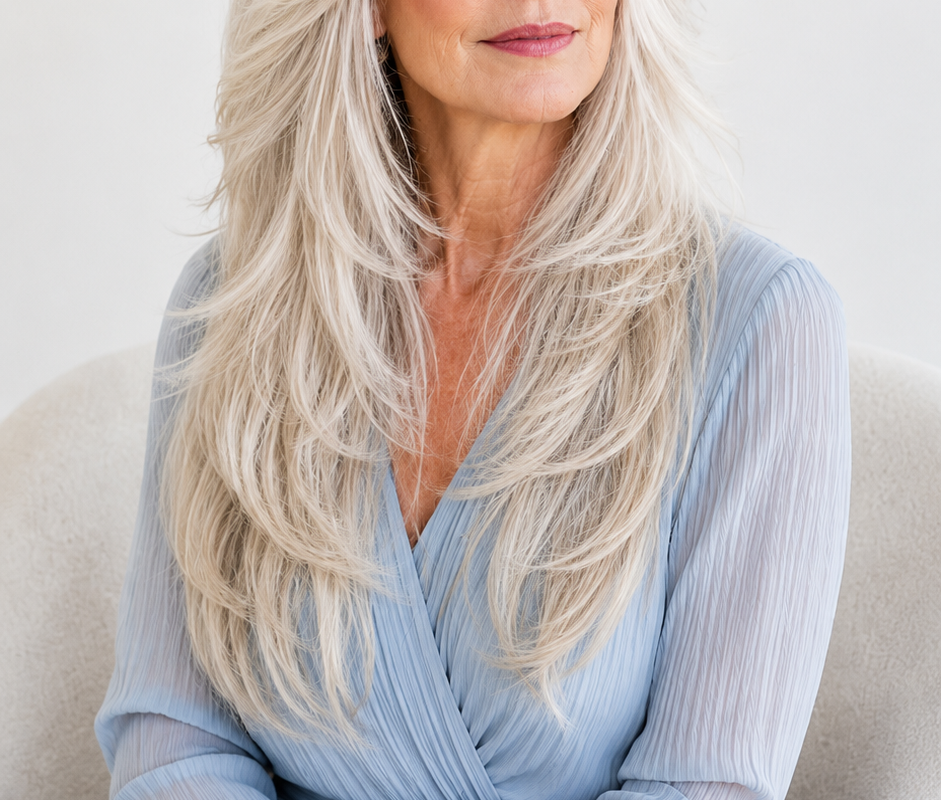
The cut also works well with gray hair. Gray and silver tones often have a coarser texture than pigmented hair. Layers help manage that texture and prevent the hair from looking puffy or shapeless. Many women find that going gray is actually the moment their shag looks its best. The natural contrast between lighter and darker tones within gray hair adds visual depth that layers only enhance.
Styling a long shag does not require a lot of effort. A small amount of texturizing spray or mousse, scrunched into damp hair and left to air dry, produces a relaxed, lived-in look. For a more polished result, a round brush and a blow dryer can add smoothness and lift at the roots. The cut is forgiving. It does not demand precision styling every day.
Choosing the Right Layer Placement
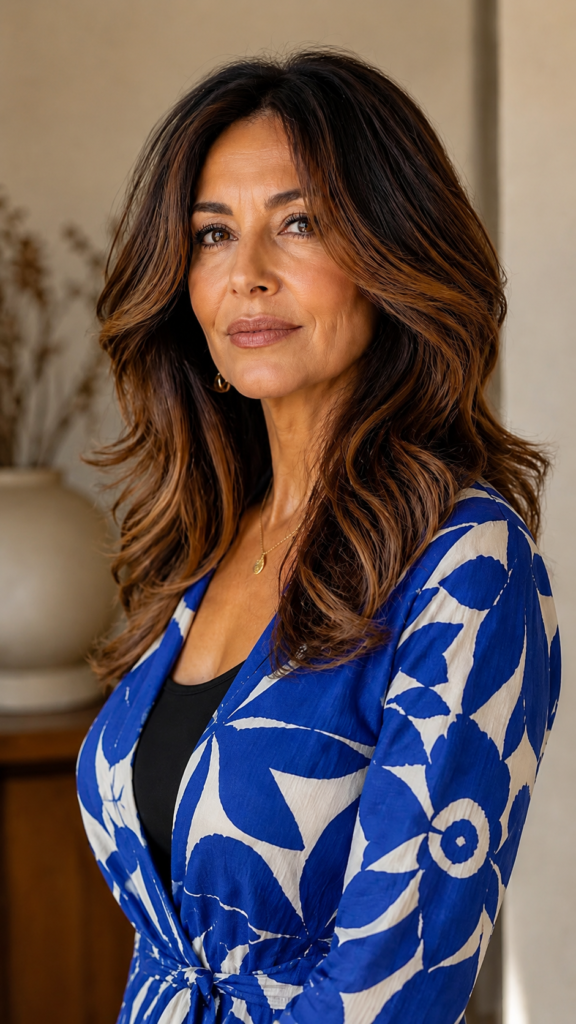
Not all shag cuts are the same. The placement of layers changes the entire feel of the style. For older women, the goal is usually to add volume at the crown, soften the jawline, and create movement through the length. A skilled stylist will assess your face shape and hair texture before deciding where to place the layers.
Face shape plays a big role in this decision. Women with round faces benefit from layers that start higher on the head, drawing the eye upward and creating the appearance of length. Women with square or angular faces often do well with softer layers around the cheekbones and jaw, which rounds out the angles gently. Oval faces are the most versatile and can carry almost any layer placement with ease.
Hair texture also guides the cut. Fine hair needs layers that are not too aggressive. If the layers are cut too short or too close together, fine hair can look stringy rather than voluminous. Thick hair, on the other hand, can handle more dramatic layering. Removing bulk through the mid-lengths and ends helps thick hair move freely instead of sitting heavy and flat.
The length of the shag matters in relation to your lifestyle too. If you are active and prefer low-maintenance styling, a longer shag that can be tied back easily is a practical choice. If you enjoy spending a few minutes on your hair each morning, a slightly shorter long shag with more defined layers gives you more to work with.
Curtain Bangs and the Long Shag
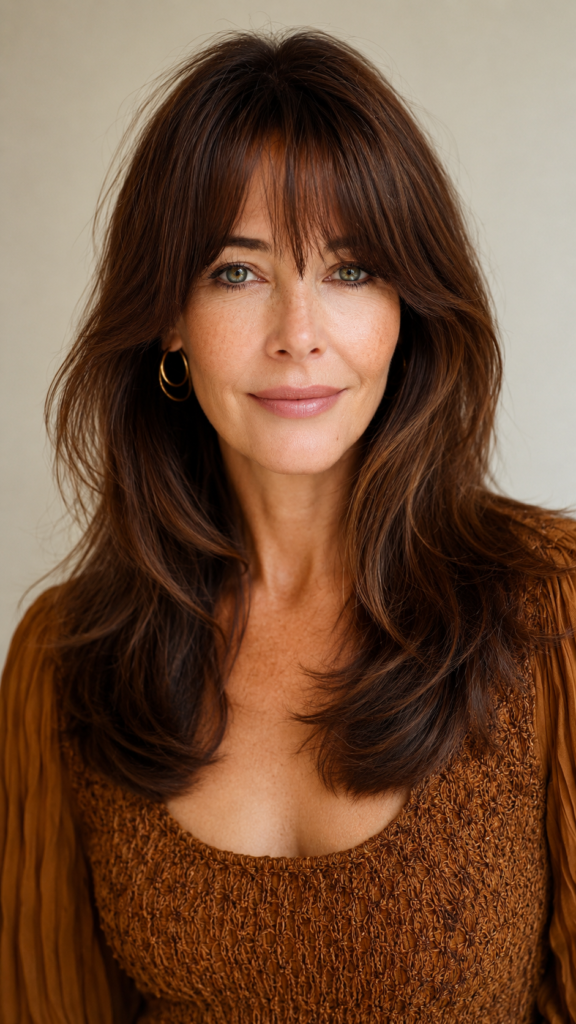
Curtain bangs are one of the most popular additions to a long shag for older women. These are soft, face-framing bangs that part in the middle and sweep gently to each side. They get their name from the way they open like curtains around the face.
For women over 50, curtain bangs offer a subtle way to address forehead lines without committing to a full fringe. They cover the upper forehead while remaining light and airy. They do not create a heavy, blunt wall across the brow the way traditional bangs can. Instead, they blend into the layers of the shag and move naturally with the rest of the hair.
Curtain bangs are also low maintenance compared to other bang styles. They do not need to be trimmed as frequently because they are designed to grow out gracefully. As they lengthen, they simply become part of the face-framing layers. This makes them a smart choice for women who do not want to visit the salon every few weeks just to maintain their fringe.
Styling curtain bangs is straightforward. A small round brush and a blow dryer can sweep them into place in under two minutes. On days when you skip the dryer, they tend to fall naturally into a soft, slightly tousled position that still looks intentional. A tiny amount of lightweight serum can smooth any frizz without weighing them down.
Color and the Long Shag
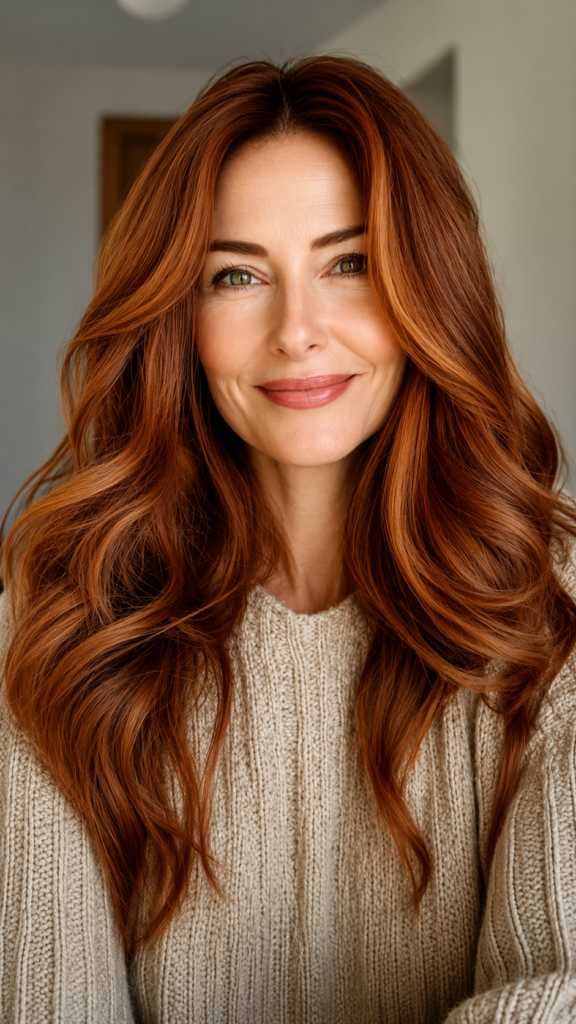
Color choices can transform a long shag from a simple haircut into a full style statement. For older women, the relationship between color and cut is especially important. The right color can enhance the layers and make the movement of the shag more visible.
Balayage is one of the most popular color techniques for long shags. It involves hand-painting lighter tones onto sections of the hair, concentrating the brightness around the face and through the mid-lengths. The result is a sun-kissed, dimensional look that highlights the layers beautifully. Balayage also grows out naturally, which means fewer touch-up appointments.
For women embracing their gray, a toning treatment can enhance the silver tones and reduce any unwanted yellow or brassiness. A cool-toned gloss applied over gray hair makes it look intentional and polished rather than faded. Combined with a long shag cut, toned gray hair looks modern and confident.
Some women prefer to add warmth to their color as they age. Soft caramel, honey, or auburn tones can brighten the complexion and add richness to the layers of a shag. These warmer shades work particularly well for women with warm or olive skin tones. The key is to keep the color soft and blended rather than stark and contrasting.
Styling Tools That Work Best
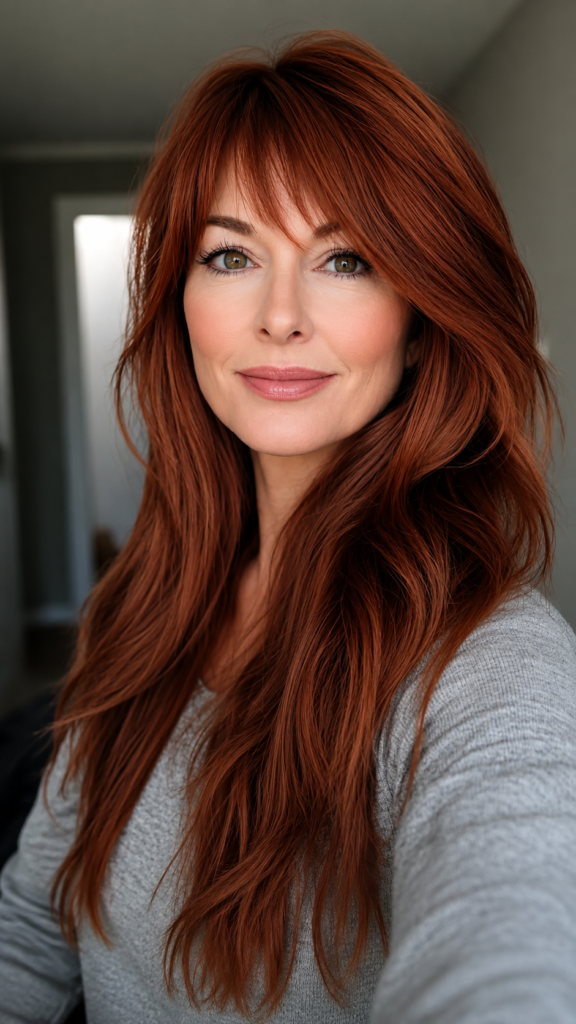
The right tools make a long shag easier to style and help the layers look their best. A diffuser attachment for your blow dryer is one of the most useful tools for this cut. It distributes heat evenly and encourages natural wave and texture without creating frizz. For women with naturally wavy or curly hair, a diffuser can bring out the best in a long shag with minimal effort.
A large barrel curling iron or wand is another great option. Wrapping sections of the hair loosely around a one-and-a-half-inch or two-inch barrel creates soft, relaxed waves that complement the layers of the shag. The key is to keep the curls loose and varied rather than uniform. Alternate the direction of each curl and leave the ends slightly uncurled for a more natural result.
For women who prefer straight styles, a flat iron with rounded edges can smooth the hair while preserving some of the natural movement in the layers. Avoid pressing the iron all the way to the ends, as this can make the tips look flat and lifeless. Leaving a slight bend at the ends keeps the style looking fresh.
Finishing products are the final step. A light-hold hairspray keeps the style in place without stiffening it. A small amount of hair oil or serum applied to the ends adds shine and prevents dryness. Dry shampoo at the roots can refresh the style on the second or third day and add a bit of extra volume.
Maintenance and Salon Visits

One of the practical advantages of the long shag is that it does not require constant salon visits to stay looking good. The layered structure means that as the hair grows, the layers simply lengthen rather than losing their shape entirely. Most women find that a trim every eight to twelve weeks is enough to keep the cut looking intentional.
Between salon visits, at-home care makes a big difference. Using a sulfate-free shampoo helps preserve color and keeps the hair from drying out. A weekly deep conditioning treatment adds moisture and reduces breakage, which is especially important for older women whose hair may be more prone to dryness.
Sleeping on a silk or satin pillowcase reduces friction and helps prevent frizz and breakage overnight. This small change can noticeably improve the condition of the hair over time. Loose braids or a low bun secured with a soft scrunchie are good options for protecting the hair while sleeping.
Regular trims also prevent split ends from traveling up the hair shaft. Split ends make the hair look dull and frayed, which undermines the clean movement of a shag cut. Keeping the ends healthy ensures that the layers fall cleanly and the overall style looks polished.
Why the Long Shag Suits Women Over 50
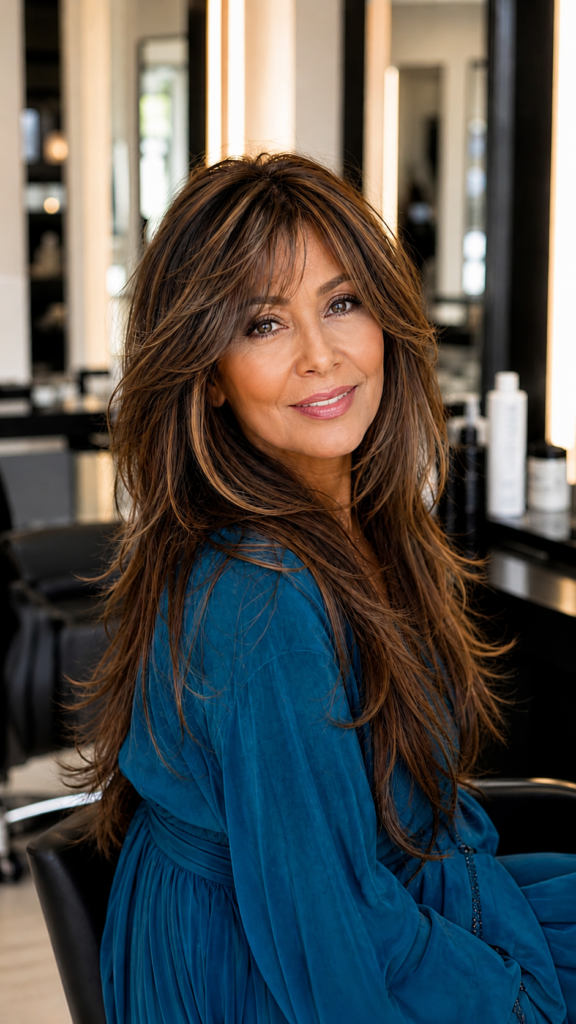
There is a reason the long shag keeps appearing on women over 50 in salons and on social media. It is a cut that respects the natural state of aging hair while actively working to make it look its best. It does not fight against thinning or texture changes. It uses them.
The movement built into a long shag is also deeply flattering for mature faces. As the face changes with age, soft framing becomes more important. Hard lines and blunt cuts can draw attention to areas that have lost volume or definition. The soft, layered framing of a shag does the opposite. It draws the eye to the best features and creates a gentle, flattering silhouette.
There is also something to be said for the confidence that comes with a style that feels current without being trendy. The long shag has roots in the 1970s, but it has been reinterpreted so many times that it now feels timeless. It is not a style that will look dated in two years. It is a classic that continues to evolve.
Women who have worn their hair in the same style for years often find that switching to a long shag feels like a revelation. The added movement and texture change the way the hair interacts with light and air. It feels lighter, more alive, and more expressive. That shift in how the hair feels can have a real effect on how a woman feels about herself.
Talking to Your Stylist
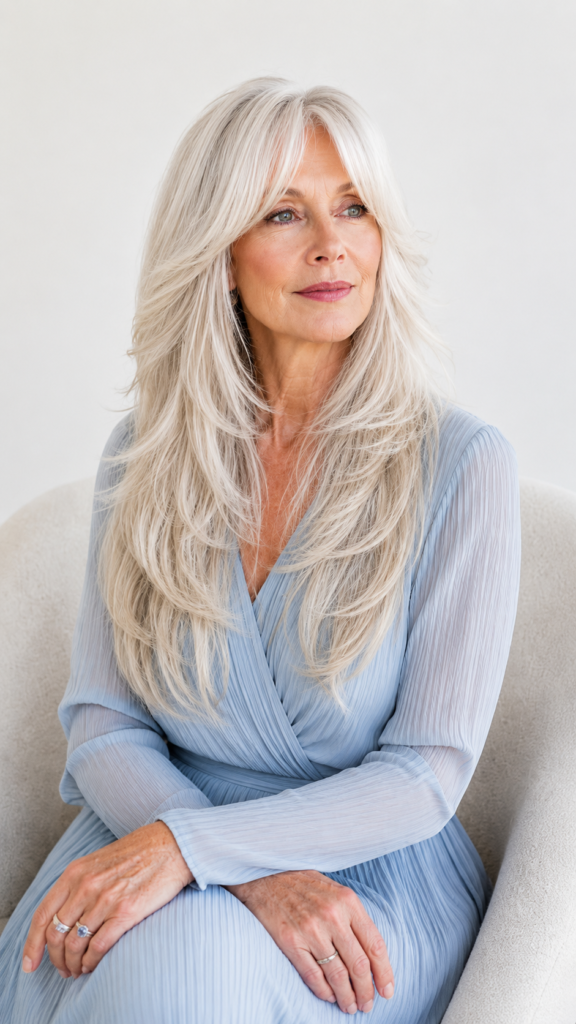
Getting the most out of a long shag starts with a clear conversation with your stylist. Bring reference photos if you can. Show them the length you want, the type of layers you are drawn to, and any specific concerns you have about your hair texture or density.
Be honest about your styling routine. If you spend five minutes on your hair in the morning, tell your stylist that. A good stylist will tailor the cut to suit your actual lifestyle, not an idealized version of it. A shag that requires thirty minutes of styling every day is not going to work for someone who prefers to wash and go.
Ask about the bang situation too. Curtain bangs are not for everyone. Some women prefer to keep the face-framing layers longer and skip the bang entirely. Others want a full fringe. Your stylist can show you options and help you decide what will work best for your face shape and hair type.
Finally, ask about the grow-out plan. Understanding how the cut will evolve over the next few months helps you feel more confident about committing to it. A long shag is a low-risk choice in this regard. It grows out gracefully and can be adjusted at each visit without requiring a dramatic change.