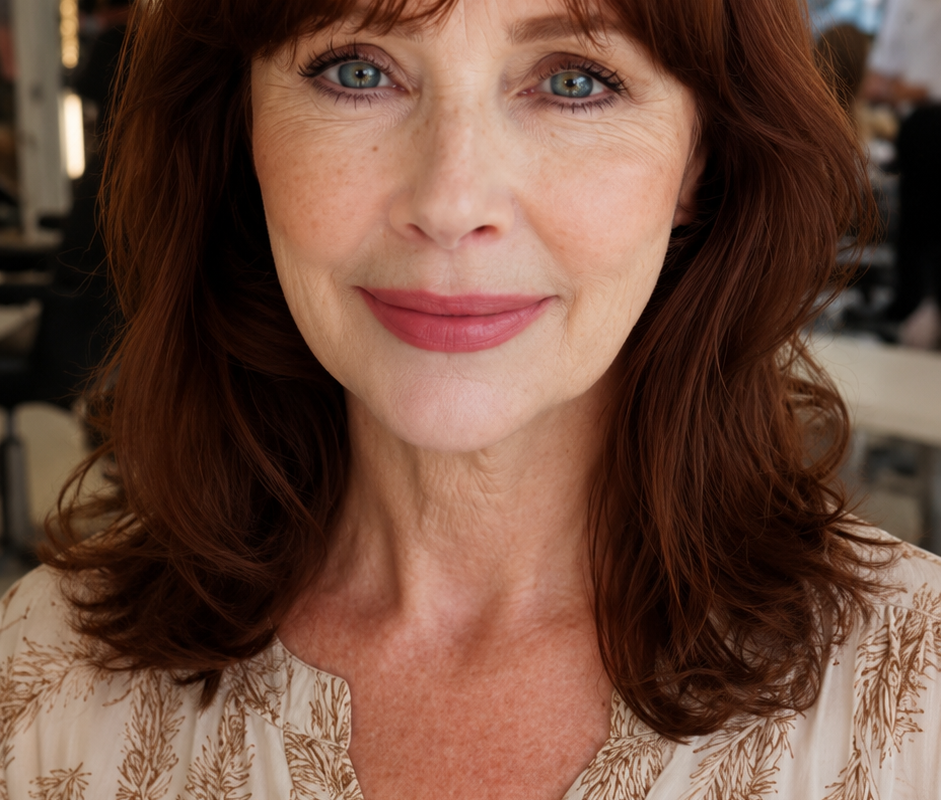
Thin hair after 50 is more common than most people realize. Hormonal shifts, aging, and years of styling can all reduce volume and density. The good news is that the right bob cut can completely change how your hair looks and feels.
A bob works especially well for fine hair because the blunt or layered ends create the appearance of thickness. Shorter lengths also reduce the weight that pulls fine strands flat against the head. The result is hair that looks fuller, bouncier, and more alive.
Choosing the right bob depends on your face shape, your lifestyle, and how much time you want to spend styling. Some bobs need very little effort. Others reward a few extra minutes with a round brush or a curling iron. Either way, there is a bob out there that fits your routine.
Women over 50 often feel pressure to keep hair short and simple. That pressure is worth ignoring. A well-chosen bob can be bold, elegant, or effortlessly casual. It can frame your face beautifully and highlight your best features.
This guide walks through the most flattering bob styles for thin hair after 50. Each section covers a specific cut, explains why it works for fine hair, and gives you practical tips for styling and maintenance. Read through all of them before booking your next appointment. The right cut can make a real difference.
1. The Classic Chin-Length Bob for Fine Hair
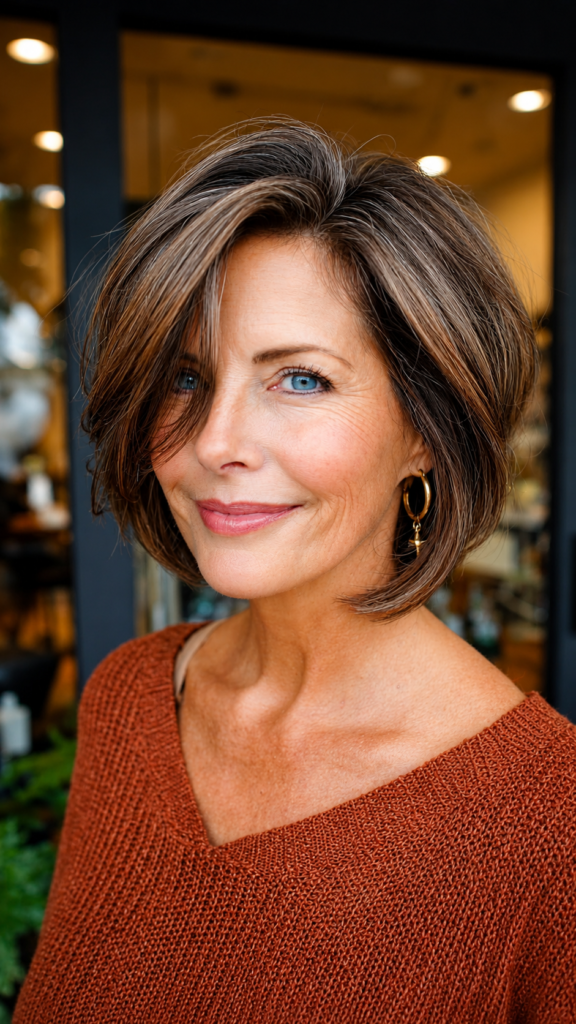
The chin-length bob is one of the most reliable cuts for thin hair. It sits right at the jawline, which creates a natural frame for the face. The blunt ends at this length give the illusion of more density without any extra product or effort.
For women over 50 with fine hair, this cut removes the weight that longer styles carry. Long hair pulls fine strands downward and makes them look limp. Cutting to the chin lets the hair sit with more body and movement.
This style works across most face shapes. For round faces, ask your stylist to keep the sides slightly longer than the front. This adds a subtle elongating effect. For oval and heart-shaped faces, a straight chin-length cut looks clean and balanced.
Styling is straightforward. Blow dry with a round brush, lifting at the roots for volume. A small amount of volumizing mousse applied before drying adds extra lift. Finish with a light-hold spray to keep the shape without weighing the hair down.
Maintenance is easy too. A trim every six to eight weeks keeps the ends sharp. Sharp ends are what create that full, dense look. Once the ends start to split or feather, the illusion of thickness disappears.
Color can enhance this cut further. Ask your colorist about adding a few lighter pieces around the face. This technique draws the eye outward and makes the hair appear thicker at the perimeter.
2. The Layered Bob for Added Volume
Source:@Project Hairstyles | Creative Hair Ideas & Beauty Inspiration
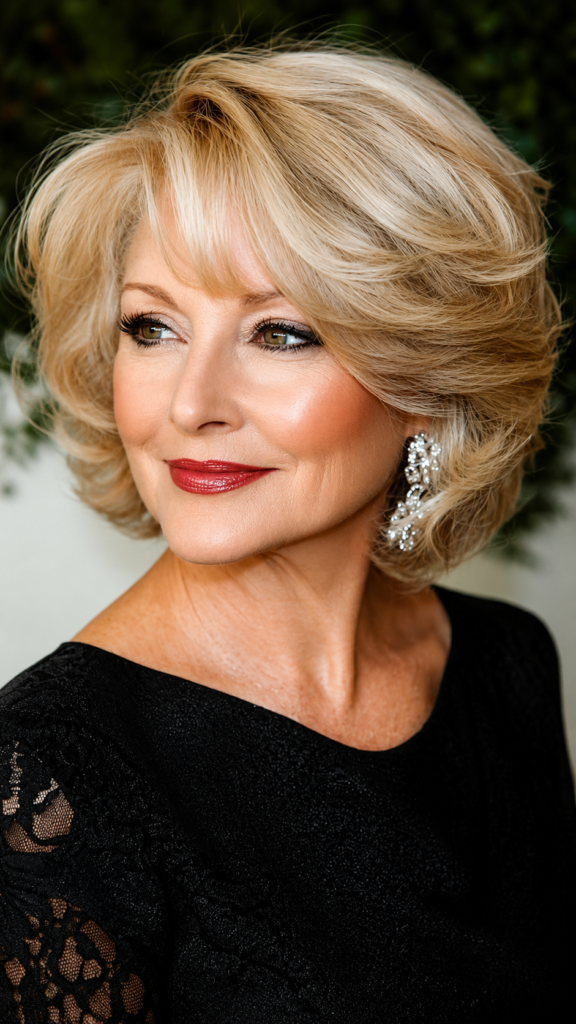
Layers are one of the best tools for creating volume in fine hair. A layered bob removes bulk from the interior of the cut while keeping length and movement at the surface. The result is hair that lifts away from the scalp instead of lying flat.
The key with layers in fine hair is restraint. Too many layers can make thin hair look even thinner. Ask your stylist for soft, graduated layers rather than heavy or choppy ones. The layers should blend smoothly from the crown down to the ends.
A layered bob works especially well for women whose fine hair also has some natural wave or texture. The layers allow that texture to show up more clearly. Even a slight wave becomes more visible when the weight is removed from the cut.
For straight fine hair, layers still help. They create movement that makes the hair look less flat. Pair this cut with a diffuser attachment on your blow dryer to encourage lift at the roots.
One styling tip that makes a big difference: flip your head upside down while blow drying. Dry the roots first in this position. Then flip back up and smooth the ends. This simple technique adds significant root lift without any extra products.
Ask your stylist to keep the back slightly shorter than the front. This creates a stacked effect at the nape that adds visual fullness. It also keeps the silhouette clean and modern.
3. The Stacked Bob for Fullness at the Back
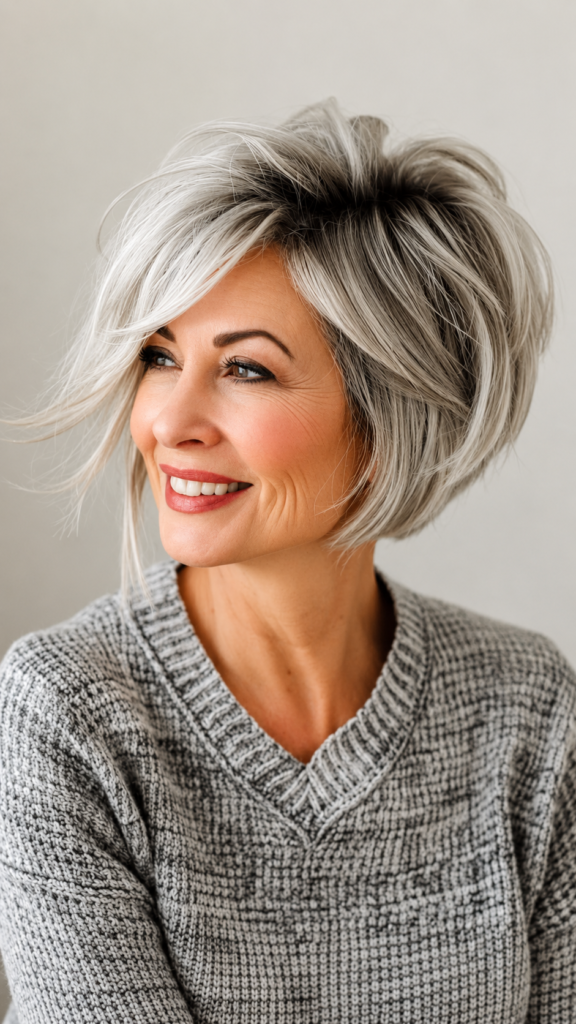
The stacked bob is built specifically to add volume where fine hair needs it most. The back is cut shorter and stacked in graduated layers. This creates a rounded, full shape at the crown and nape. The front panels are left longer, framing the face with a sleek line.
This cut is particularly useful for women whose hair is thinnest at the crown. The stacking technique builds visual mass right at the top of the head. It compensates for the lack of natural density in a very direct way.
The stacked bob requires a skilled stylist. The graduation needs to be precise for the shape to look intentional rather than accidental. Bring reference photos to your appointment so your stylist understands the exact silhouette you want.
Styling a stacked bob is simple. Blow dry the back sections upward and outward to maximize the rounded shape. Use a vent brush or a small round brush for this. The front sections can be smoothed with a flat brush or curled slightly inward for a polished finish.
This cut grows out gracefully too. As the back grows, the stacking effect softens rather than disappearing entirely. Regular trims every five to six weeks keep the shape at its best.
Color choices matter here. A slightly lighter shade at the crown and darker at the nape creates depth and enhances the three-dimensional shape of the cut. Talk to your colorist about a subtle shadow root technique to achieve this effect.
4. The Textured Bob for Natural Movement
Source:@Latest Hairstyles – Cute Hairstyles, Haircuts and Hair Colors
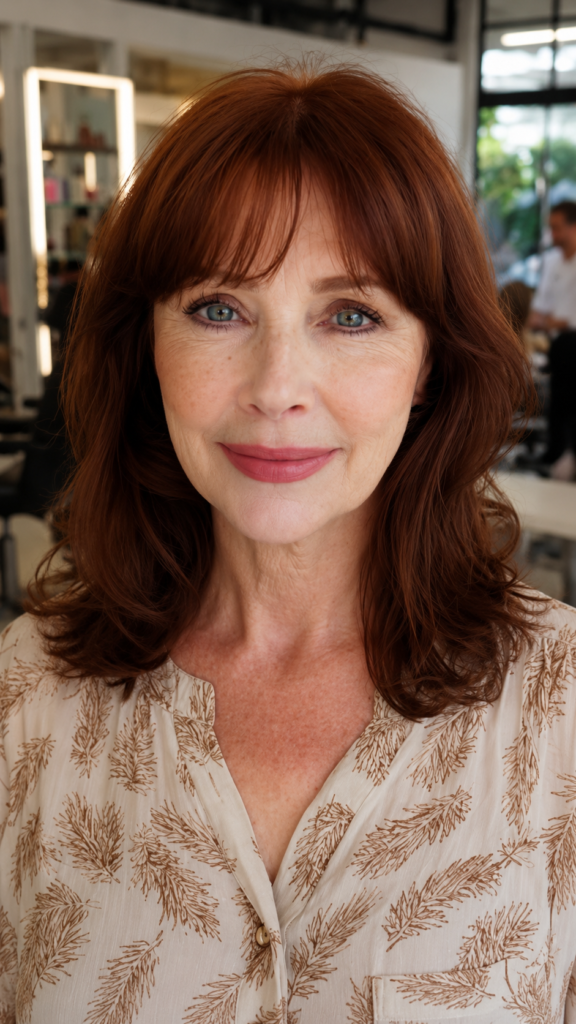
A textured bob uses point cutting and piece-y ends to create the look of more hair. The ends are not blunt but slightly irregular. This irregularity catches light differently across the surface of the hair and creates the impression of density.
For fine hair after 50, texture is a powerful tool. It breaks up the flatness that fine hair tends to show. Even a small amount of texture at the ends makes the overall style look more alive and dimensional.
This cut suits women who prefer a relaxed, low-maintenance look. It does not require precise styling every day. Air drying works well with a textured bob, especially if you apply a small amount of sea salt spray or texturizing cream while the hair is still damp.
If you prefer to blow dry, use a diffuser on a low heat setting. Scrunch the ends gently as you dry. This encourages the textured ends to separate and show their movement rather than drying flat.
One thing to keep in mind: textured ends need regular trims to stay looking intentional. Without trims, the ends can start to look ragged rather than styled. Every six weeks is a good schedule for this cut.
Ask your stylist to use point cutting throughout the cut, not just at the ends. This technique removes weight from the interior of the style and allows the surface layers to move more freely.
5. The Asymmetrical Bob for a Modern Edge
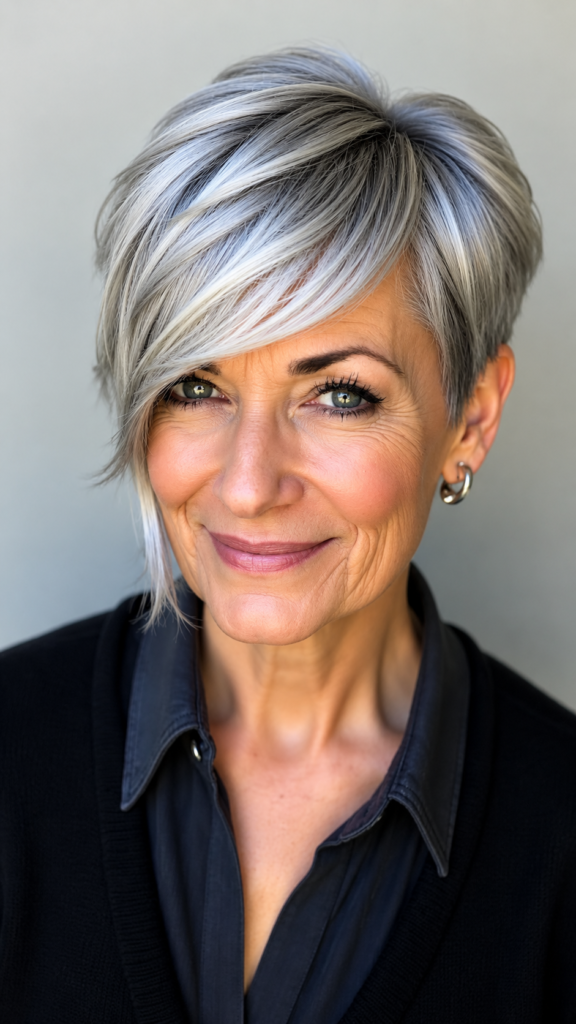
The asymmetrical bob has one side longer than the other. This creates a diagonal line that draws the eye across the face rather than straight down. For fine hair, this diagonal movement adds visual interest and makes the hair look more dynamic.
This cut works especially well for women with strong facial features. The longer side can be tucked behind the ear or swept forward depending on the occasion. This versatility makes it a practical choice for women who want one cut that works for multiple settings.
The asymmetry also creates the illusion of more volume. When the hair falls at different lengths on each side, the eye reads the overall shape as fuller than it actually is. This is a simple optical trick that works consistently.
Styling an asymmetrical bob is easy. Blow dry with a round brush, directing the longer side forward and the shorter side back. This emphasizes the diagonal line and keeps the shape clean. A small amount of smoothing serum on the longer side prevents frizz without adding weight.
For a more casual look, let the longer side air dry and tuck it behind the ear. The shorter side can be left loose or pinned back. This gives the cut a relaxed feel that still looks intentional.
Color can enhance the asymmetry. A slightly deeper shade on the shorter side and lighter on the longer side draws attention to the diagonal line. Ask your colorist about a subtle two-tone technique to achieve this.
6. The Blunt Bob for a Polished Look
Source:@Project Hairstyles | Creative Hair Ideas & Beauty Inspiration
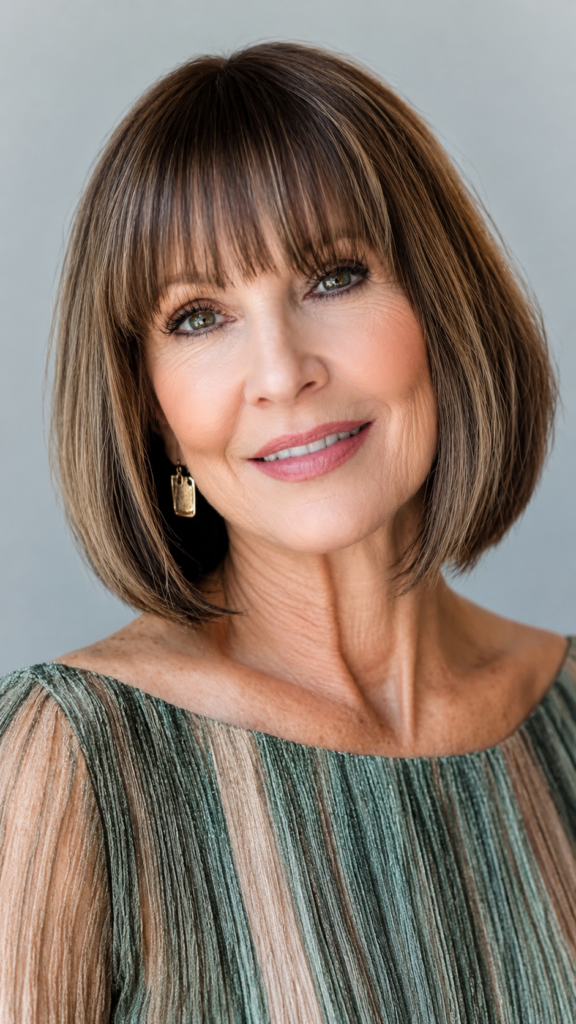
The blunt bob is cut straight across with no layers. Every strand ends at the same length. This creates a dense, solid line at the ends that makes fine hair look significantly thicker than it actually is.
This is one of the most effective cuts for fine hair because it concentrates all the hair at one point. Instead of the ends tapering off in different directions, they all meet at the same line. The visual effect is a full, weighty edge that reads as thick hair.
The blunt bob works best at chin length or slightly below. At this length, the ends are visible and the full effect of the blunt cut is clear. If the cut is too short, the blunt line can look severe. If it is too long, the weight of the hair can pull fine strands flat.
Styling is minimal. Blow dry with a round brush for a smooth, polished finish. A flat iron can be used for extra sleekness on days when you want a more formal look. Keep products light. Heavy serums or oils will weigh the ends down and reduce the visual impact of the blunt line.
This cut requires consistent trims. The blunt line only looks its best when the ends are sharp and even. Split ends or uneven growth will break up the line and reduce the effect. Plan for a trim every five to six weeks.
The blunt bob pairs well with a single-process color or a glossy toner. A uniform color enhances the clean, polished look of the cut and makes the blunt line even more striking.
7. The Wavy Bob for Effortless Body
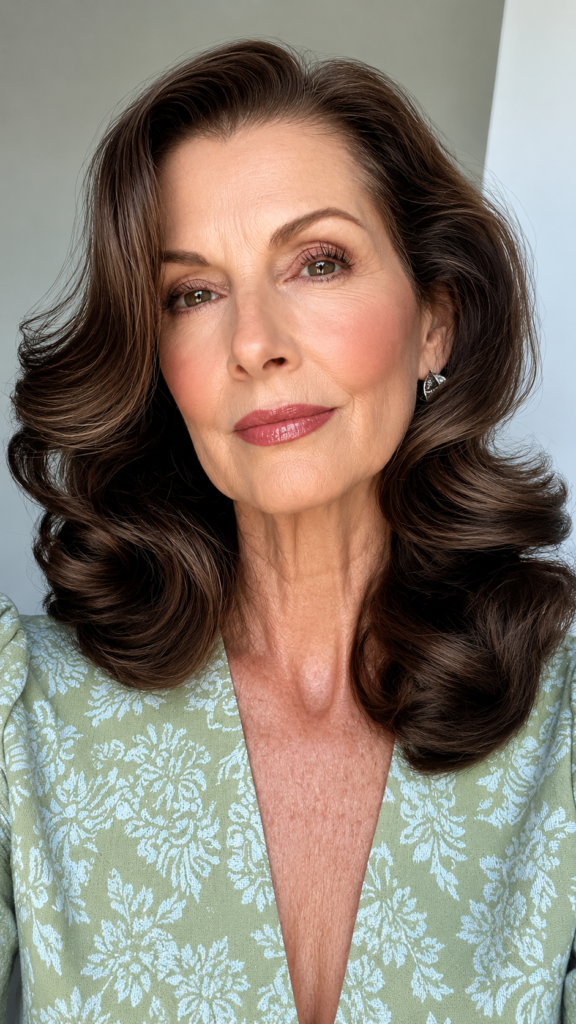
Waves add volume to fine hair in a way that straight styles cannot match. A wavy bob creates curves throughout the length of the hair, and each curve adds visual bulk. The result is a style that looks full and bouncy without relying on products or teasing.
For women over 50 with fine hair, a wavy bob is one of the most forgiving styles available. It does not require precise styling every day. Waves can be created with a curling iron, a wand, or even overnight braids. The style looks intentional even when it is not perfectly uniform.
The key is to keep the waves loose and natural looking. Tight curls can make fine hair look frizzy rather than full. Use a one-inch curling iron or wand and wrap sections loosely. Let the curl cool completely before releasing it. Then run your fingers through the waves to loosen them.
A light-hold mousse applied before styling helps the waves hold their shape without stiffness. Apply it to damp hair before blow drying, then use the curling iron to finish. This two-step approach gives the waves more staying power throughout the day.
For women with naturally wavy hair, this cut is especially easy to maintain. Ask your stylist to cut the bob with the natural wave pattern in mind. The cut should follow the direction of the wave rather than fighting against it.
Finish with a light-hold flexible spray. This keeps the waves in place without making the hair feel crunchy or stiff.
8. The Side-Parted Bob for Face Framing
Source:@Pretty Locks | Get Inspiration For Your Next Hairstyle
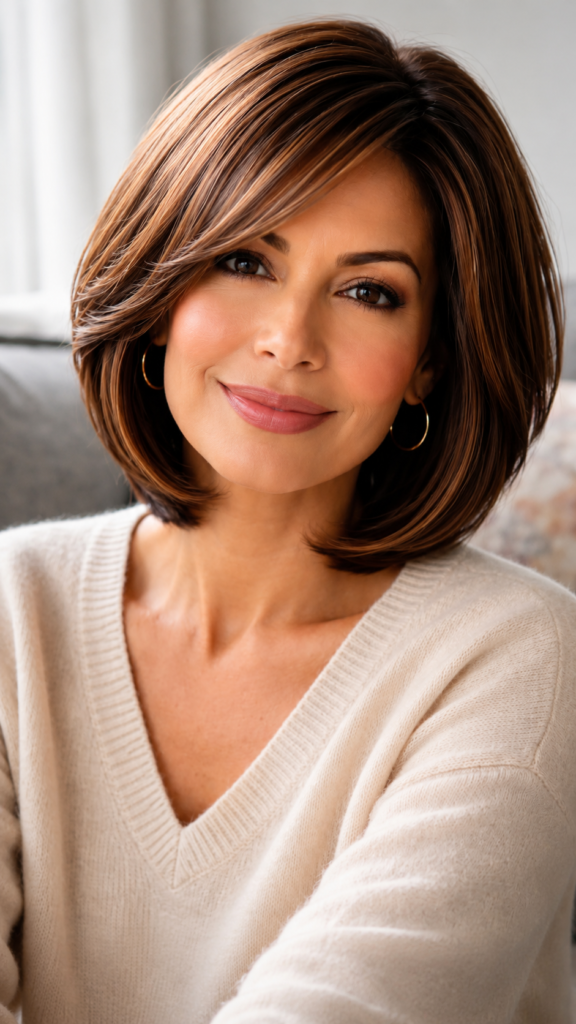
A side part changes the entire look of a bob. It creates asymmetry and movement that a center part does not. For fine hair, a deep side part also adds volume at the crown by lifting the hair away from the scalp on one side.
This styling choice works with almost any bob cut. A blunt bob, a layered bob, or a textured bob all look different and more dynamic with a side part. It is one of the simplest ways to refresh a cut without changing the length or shape.
The side part works especially well for women over 50 because it softens the face. The sweep of hair across the forehead creates a gentle diagonal that is more flattering than a straight horizontal line. It also draws attention to the eyes and cheekbones.
To style a side-parted bob, blow dry the hair with the part in place from the beginning. Use a round brush to lift the roots on the heavier side of the part. This is where most of the volume will sit, so give it extra attention during drying.
Finish by directing the heavier side forward and slightly under. This creates a smooth, face-framing curve. The lighter side can be tucked behind the ear or left loose depending on your preference.
A side part also helps disguise thinning at the crown. By sweeping hair across the top of the head, you cover areas where the scalp may be more visible. This is a practical benefit that many women over 50 find genuinely useful.