
Clean nails are more than cosmetic. Dirt, bacteria, and debris accumulate under your nails throughout the day, creating breeding grounds for infection. Whether you work with your hands, garden, cook, or live an active life, nail hygiene deserves attention.
This guide walks you through proven methods using tools you likely already have. You’ll learn nail anatomy, why debris accumulates, and effective cleaning techniques. From basic brushing to natural soaking solutions, these strategies work for everyone.
Taking care of your nails is taking care of your health.
1.Teaching Children Proper Nail Hygiene
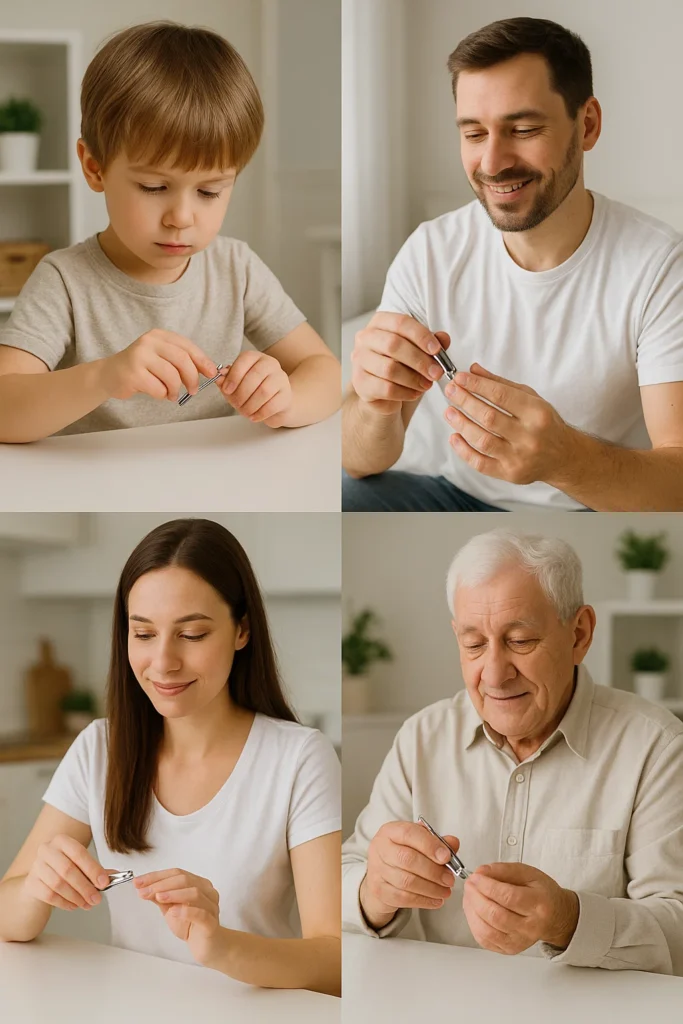
Teaching children early creates lifelong healthy habits. Show them how to use a soft brush and warm water. Make it a fun routine rather than a chore. Children learn by watching and doing, so demonstrate the technique yourself first.
Use simple language and praise their efforts. Make it part of their daily routine, like brushing teeth. Children who learn good nail hygiene early are less likely to develop infections and more likely to maintain these habits into adulthood.
Make nail cleaning fun by letting children choose their own nail brush or creating a reward chart. Some children respond well to challenges, like seeing who can clean their nails fastest or most thoroughly. Others prefer to clean their nails alongside a parent or sibling.
2. Before and After Comparison
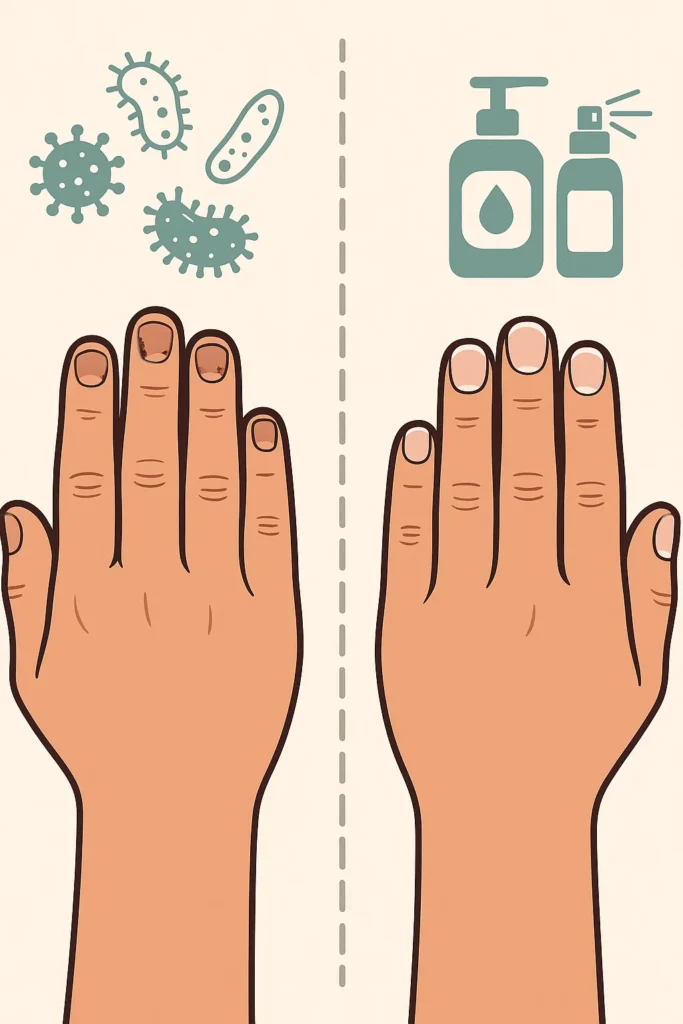
Visual comparison shows the dramatic difference between neglected and well-maintained nails. One hand displays visible dirt and discoloration under the nail bed, while the other shows clean, clear nails with healthy appearance.
This image reinforces why nail cleaning matters. Dirty nails harbor bacteria and fungi that spread to other body parts or to people you touch. Clean nails look better, feel better, and protect your health.
The transformation visible in before and after photos demonstrates what consistent nail care achieves within two weeks. Many people are shocked by how much their nails improve when implementing a proper routine. The discoloration fades, the nail bed appears healthier, and overall appearance becomes noticeably brighter.
Taking a photo of your nails today and comparing it to photos taken two weeks later provides concrete evidence that your efforts work. This tangible proof builds confidence and reinforces the habit.
3. Nail Anatomy Explained
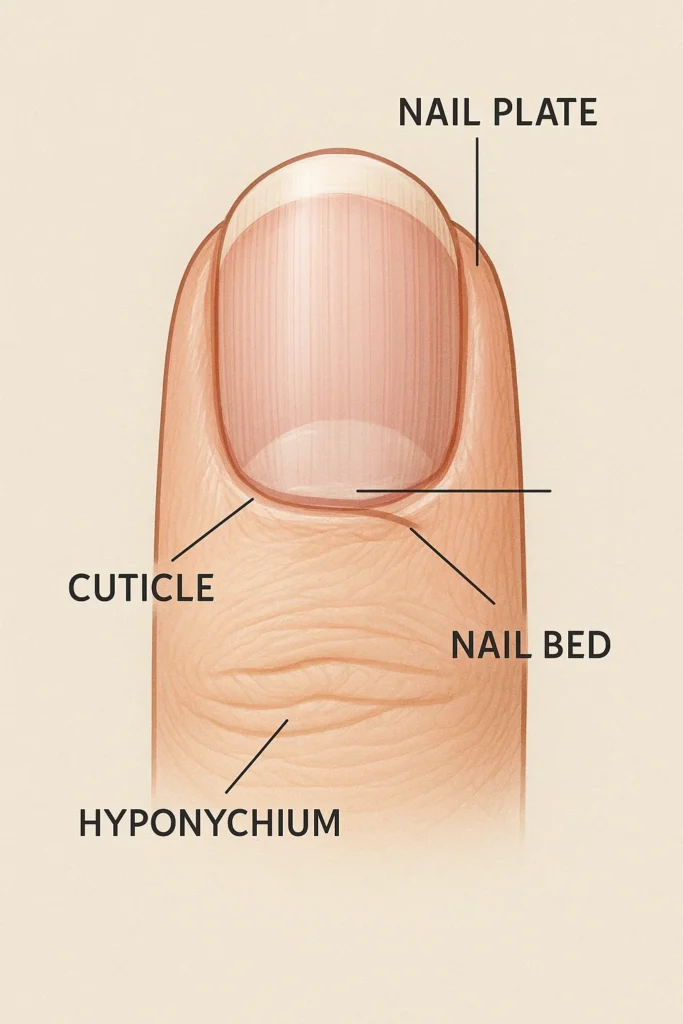
Understanding your nail structure helps you clean more effectively. The nail bed sits beneath the visible nail plate. The space under the free edge, where the nail extends past your fingertip, is where most debris collects.
The nail fold, cuticle, and surrounding skin all play roles in nail health. Knowing these parts helps you target cleaning efforts correctly while avoiding damage to sensitive areas. This knowledge transforms nail cleaning from random habit into purposeful routine.
The nail matrix, located beneath the cuticle, is where new nail cells form. This delicate area should never be scrubbed aggressively. The hyponychium is the skin directly under the free edge of your nail. This area is particularly prone to debris accumulation and bacterial growth. Cleaning this zone requires gentle technique to avoid separating the nail from skin beneath it.
4. Macro View of Accumulated Debris
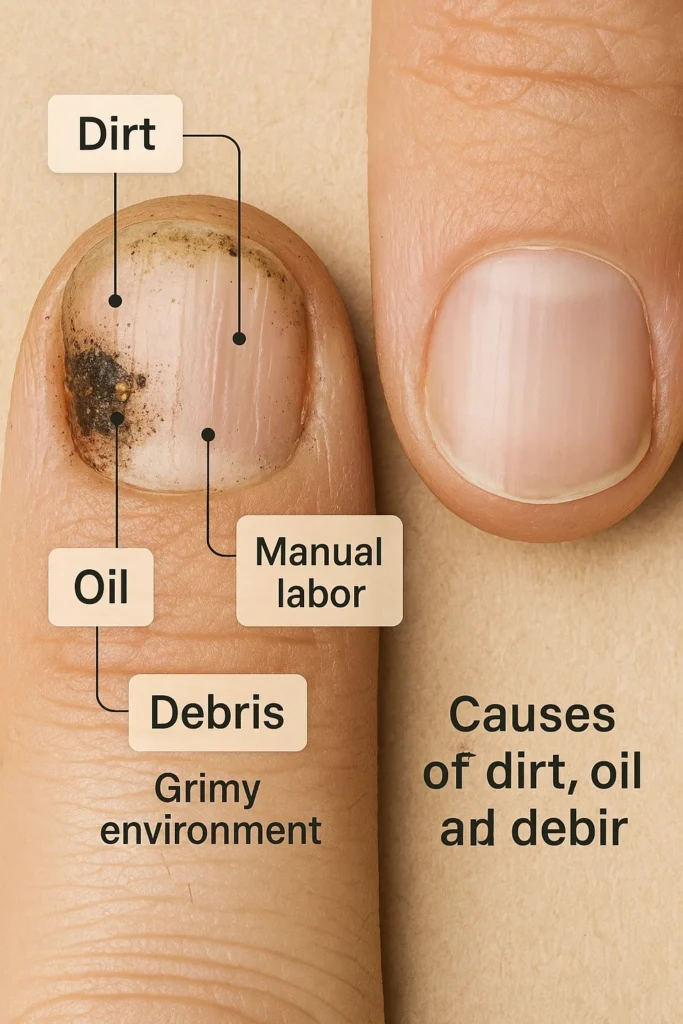
A magnified view reveals what the naked eye misses. Dirt particles, dead skin cells, and bacterial colonies hide under your nails. This accumulation happens faster than most realize, especially if you work outdoors or handle soil.
Even office workers accumulate debris from typing and daily contact. The magnified perspective shows why casual hand washing alone isn’t enough. You need targeted cleaning under nails to remove what regular soap and water leave behind.
Under magnification, you can see how bacteria form biofilms, protective layers that resist simple washing. These biofilms require mechanical action to break apart. This is why brushing and scrubbing are essential. Simply soaking won’t remove established biofilms. The combination of soaking to soften debris and brushing to mechanically remove it provides the most effective approach.
Daily cleaning is more effective than weekly deep cleaning. Removing fresh debris takes less effort and prevents buildup that leads to discoloration and infection.
5. Essential Nail Cleaning Tools
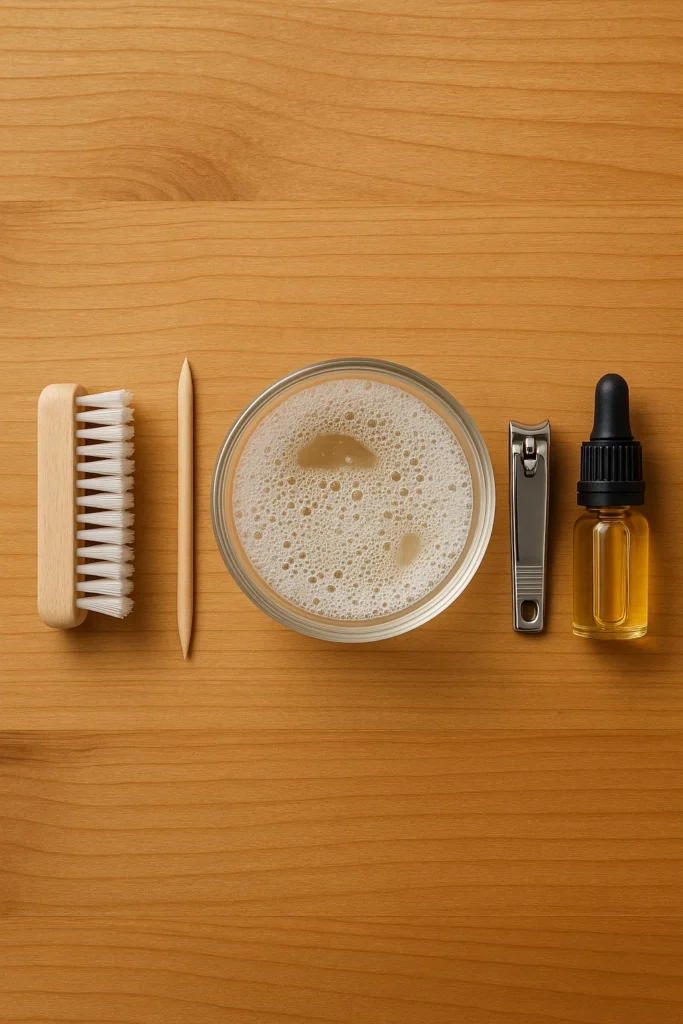
A few simple tools make nail cleaning easier and more thorough. A soft nail brush, metal nail file, wooden cuticle stick, and nail clipper form the basic toolkit. Each tool serves a specific purpose.
The brush removes loose debris. The file smooths rough edges where dirt hides. The cuticle stick gently lifts debris from under the nail without causing damage. Quality tools last years and cost very little. Keep them clean and dry to prevent bacterial growth on the tools themselves.
Invest in a dedicated nail brush rather than using an old toothbrush. Nail brushes have bristles specifically designed for the delicate nail area. A good nail brush costs just a few dollars and lasts six months to a year with proper care.
Metal nail files are superior to cardboard files because they don’t fray or shed particles. Stainless steel files resist rust and can be easily sanitized. Wooden cuticle sticks are gentler than metal alternatives and won’t scratch the nail bed.
6. Step by Step Hand Washing Technique
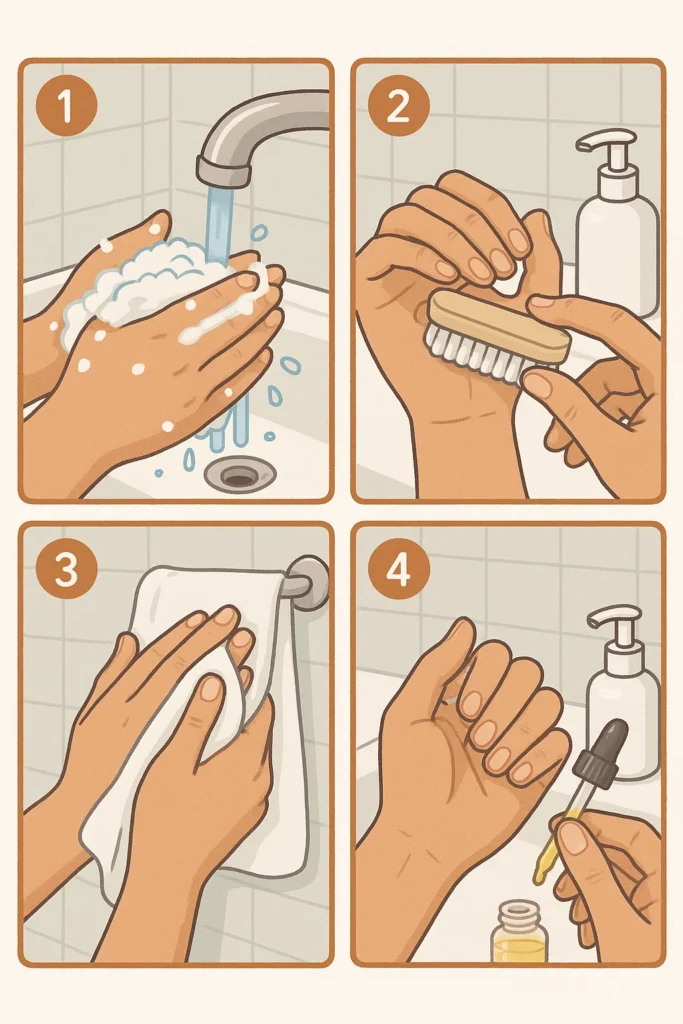
Proper hand washing includes cleaning under your nails. Wet your hands with warm water and apply soap. Rub your palms together, then interlace your fingers and rub between them. Scrub the back of each hand and your wrists.
Now focus on your nails. Use your opposite hand’s fingernails to gently scrub under each nail, or use a soft brush under running water. Rinse thoroughly until all soap is gone. Dry with a clean towel. This complete technique takes about thirty seconds but removes most daily debris.
The key to effective hand washing is duration and technique rather than water temperature. The important factor is spending enough time on each step. Health experts recommend at least twenty seconds for thorough cleaning.
Breaking your hand washing into distinct steps ensures you don’t miss any areas. Many people forget to wash between their fingers, under their nails, and on their wrists. By following a systematic approach, you ensure complete coverage.
7. Using a Nail Brush Effectively
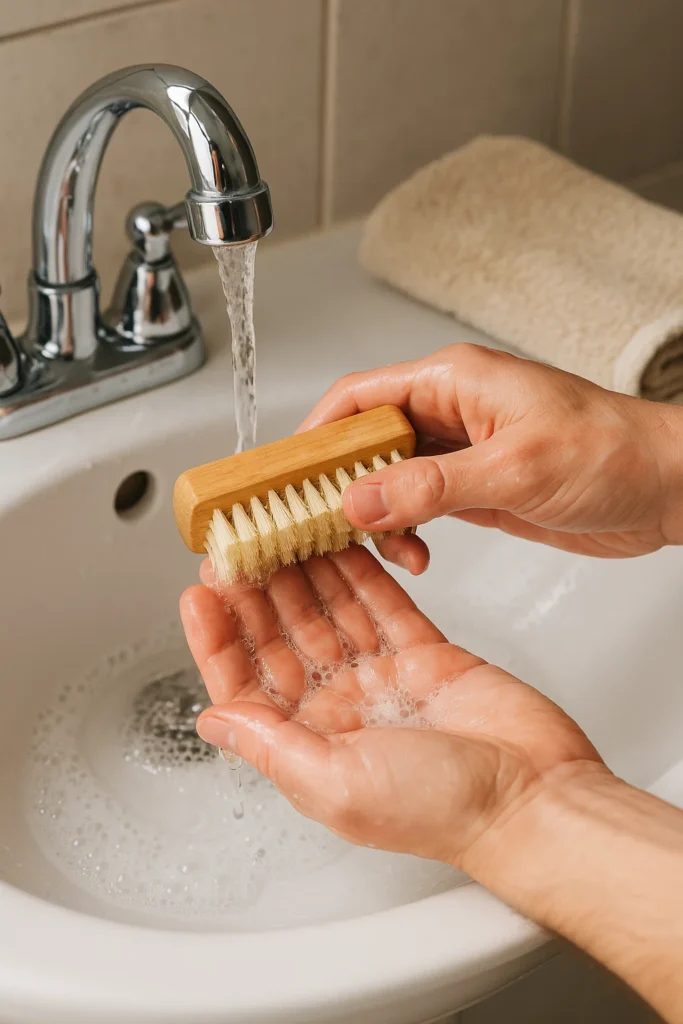
A nail brush works best with the right technique. Hold the brush at a slight angle and scrub gently under the nail edge. Use short, firm strokes rather than aggressive scrubbing that damages the nail bed.
Work on one nail at a time, moving from center outward. Pay extra attention to corners where debris collects. Wet the brush between nails to rinse away loosened particles. A soft bristled brush is gentler than stiff ones and still removes debris effectively. This method takes just a minute or two and can be done daily without risk of injury.
The angle at which you hold the brush matters significantly. Holding it perpendicular to the nail edge allows bristles to penetrate under the nail. Experiment with different angles to find what works best for your nail shape and size.
Pressure is another critical factor. You want enough pressure to remove debris but not so much that you damage delicate skin under your nails. If your brush causes any pain, you’re applying too much pressure. Over time, you’ll develop a feel for the right amount of pressure through practice.
8. Warm Water Foot Soak
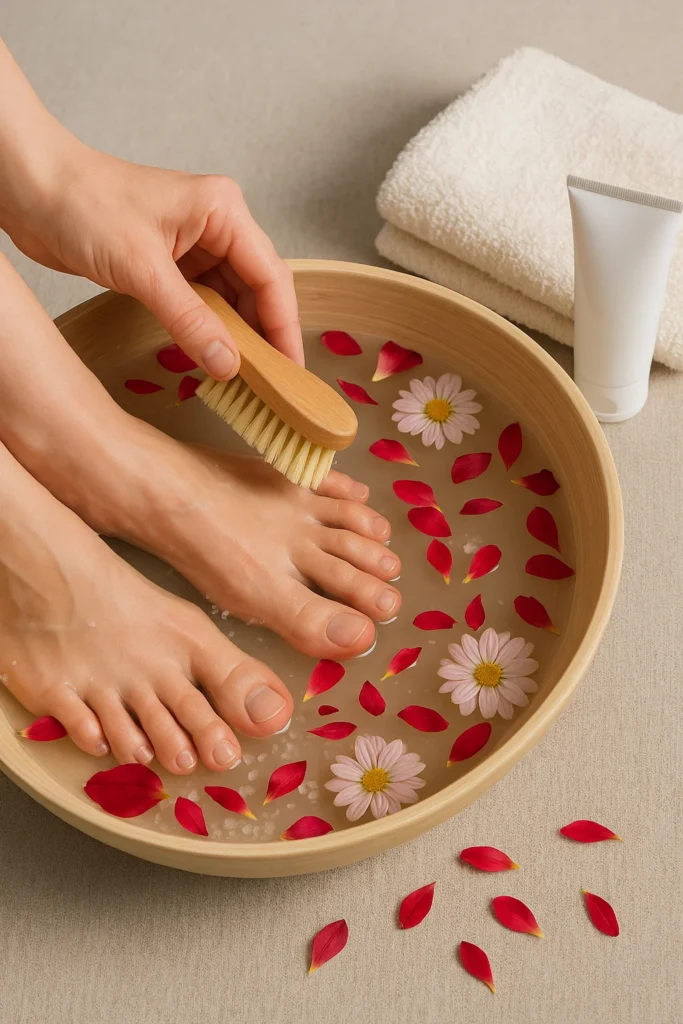
Toenails need the same attention as fingernails. A warm water soak softens skin and makes debris easier to remove. Fill a basin with warm water and soak your feet for ten to fifteen minutes.
The warmth relaxes your feet and loosens dirt under the toenails. After soaking, use a brush or cuticle stick to clean under each nail. Toenails are thicker than fingernails, so you can use slightly more pressure. Dry your feet completely afterward, especially between the toes, to prevent fungal growth. Weekly foot soaks combined with regular cleaning keep toenails healthy and strong.
Toenails accumulate more debris than fingernails because feet spend most of the day in shoes. The warm, moist environment inside shoes creates ideal conditions for bacterial and fungal growth. Regular cleaning prevents infections that can become serious if left untreated.
Adding Epsom salt to your foot soak provides additional benefits. Epsom salt reduces inflammation, softens calluses, and has mild antimicrobial properties. Use one cup of Epsom salt per gallon of water. Many people find that regular Epsom salt soaks improve overall foot health beyond just nail cleanliness.
9. Lemon Slice Preparation
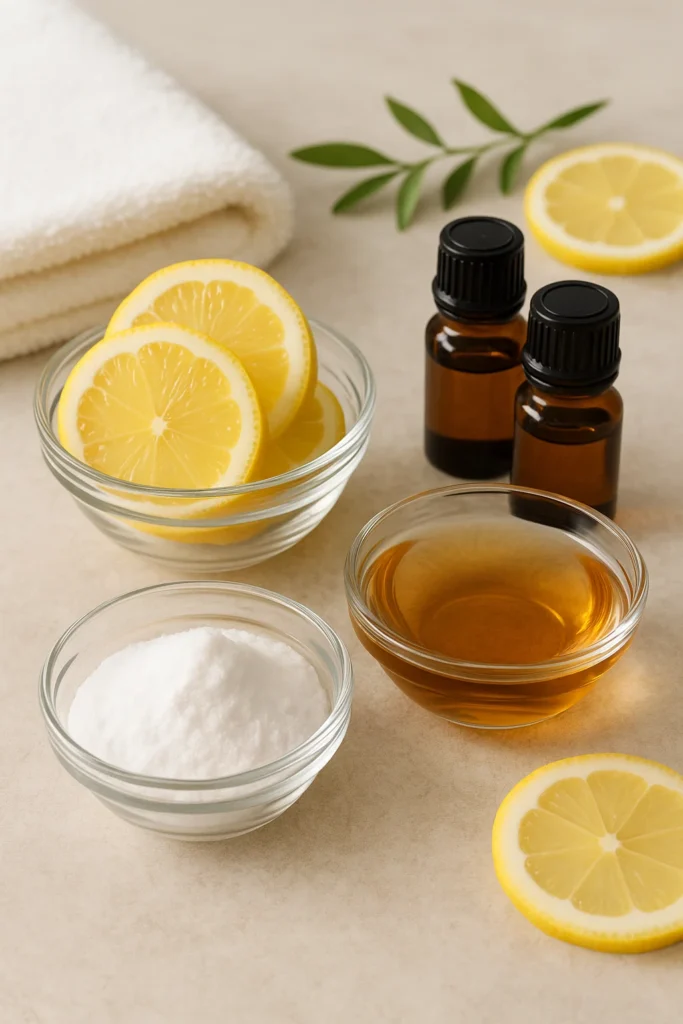
Fresh lemon slices create an effective natural cleaning solution. Cut a lemon into thin slices and place them in a bowl of warm water. The longer the lemon sits in the water, the stronger the solution becomes.
You can reuse the same lemon slices for multiple soaks throughout the day. After a few hours, replace them with fresh slices for maximum effectiveness. Some people add a pinch of salt to the lemon water for extra cleaning power. This natural approach avoids harsh chemicals while delivering real results.
The thickness of your lemon slices affects how quickly the citric acid releases into the water. Thinner slices release their compounds faster, creating a stronger solution in less time. If you’re in a hurry, cut your lemon slices very thin and let them soak for just five minutes.
Some people prefer lemon juice to slices because it mixes more evenly throughout the water. Squeeze half a lemon into a bowl of warm water for a consistent solution. However, fresh slices provide the added benefit of being able to rub them directly on your nails and cuticles for extra cleaning power.
10. Common Nail Problems Illustrated
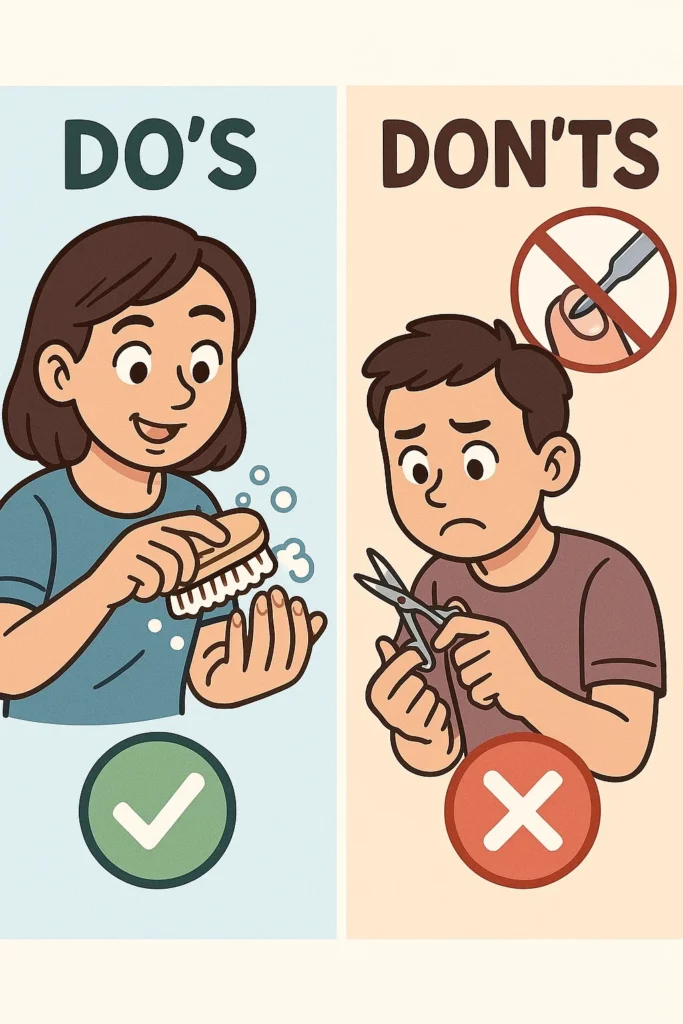
Visual guides help you identify nail problems early. Discoloration, thickening, separation from the nail bed, and brittleness all signal issues that need attention. Some problems result from poor cleaning habits, while others indicate fungal or bacterial infections.
Regular cleaning prevents many of these issues from developing. If you notice persistent problems despite good cleaning habits, consult a healthcare provider. Early intervention prevents minor issues from becoming serious infections.
Yellow or brown discoloration often indicates fungal infection or staining from dirt and bacteria. White spots or lines can signal trauma to the nail matrix or mineral deficiencies. Nails that separate from the nail bed require immediate attention as this can indicate serious underlying conditions.
Ridges running lengthwise down your nails are usually normal and become more pronounced with age. However, horizontal ridges can indicate serious illness or nutritional problems. Knowing the difference helps you determine when home care is sufficient and when you need medical attention.
11. Natural Ingredients for Nail Care
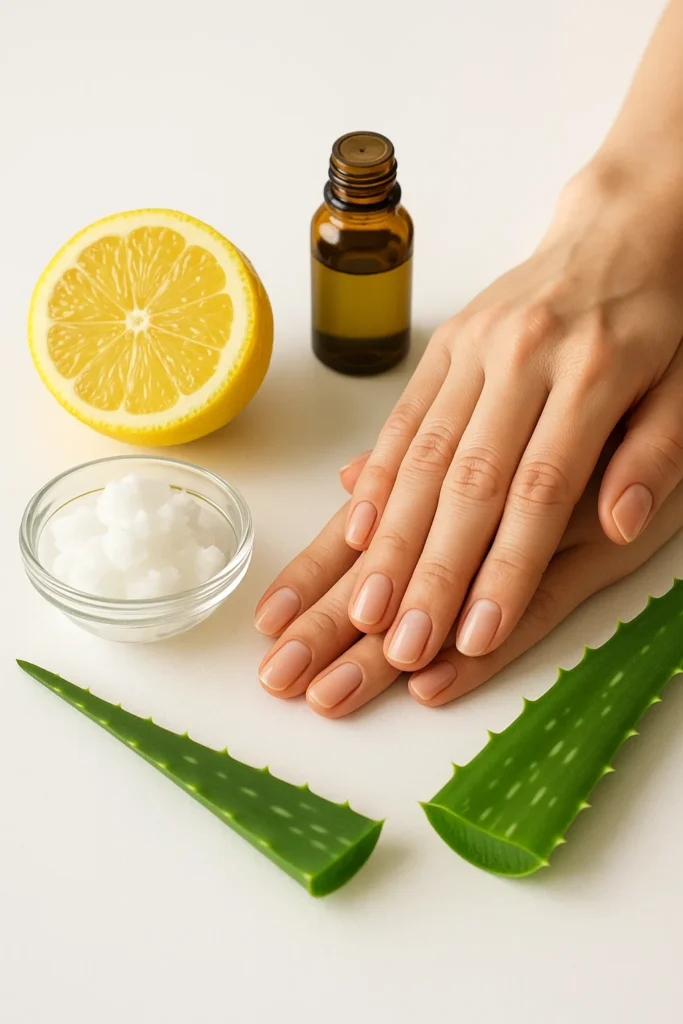
Natural ingredients offer safe, effective alternatives to commercial products. Lemon juice, coconut oil, tea tree oil, and baking soda all have antibacterial properties. Coconut oil moisturizes while fighting bacteria. Tea tree oil is particularly effective against fungal growth.
Mix these ingredients into simple solutions or use them individually. A paste of baking soda and water scrubs away stubborn debris. Coconut oil applied after cleaning nourishes the nail bed and cuticles. These ingredients cost less than commercial products and avoid synthetic chemicals.
Tea tree oil is one of the most potent natural antimicrobials available. Just a few drops mixed into your soaking water creates a powerful antifungal solution. However, never apply tea tree oil directly to skin without diluting it first, as it can cause irritation.



Leave a Reply